


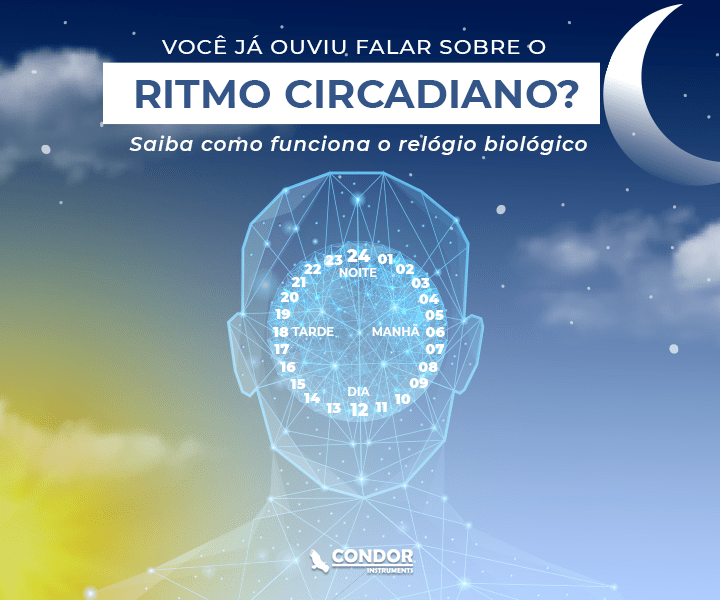
Various functions in the human body exhibit circadian periodicity, such as core body temperature, hormones like cortisol, melatonin, testosterone, and growth hormone. In addition to these, the sleep-wake cycle exhibits circadian periodicity. The latter is regulated by two processes: the circadian process (C) and the homeostatic process (S). Process C refers to the organism’s circadian regulation, while process S refers to the accumulation of fatigue throughout the day. Several factors regulate our endogenous rhythms, with sunlight being the primary one. Thus, the human body has evolved over time to remain active during the day, when there is sunlight, and to rest during the night.
However, we live in a society that never stops, which is why it is called a 24/7 society (operating 24 hours a day, 7 days a week). As a result, certain professions and operations must carry out their activities during the night, such as police officers, firefighters, doctors, nurses, miners, and industrial operations. Night work is defined as work that begins between 10 p.m. and 5 a.m., while shift work occurs at different times of the day (morning, afternoon, and night) on a rotating basis. Worldwide, approximately 25% of workers are engaged in some form of shift work. In Brazil, it is estimated that 15% of workers are engaged in some form of shift work (COSTA; FISCHER; MORENO; ROTENBERG, 2004)
Scientific evidence demonstrates that this population frequently suffers from circadian misalignment and sleep restriction, which negatively impacts the health of these workers. Sleep disorders, cardiometabolic disorders, psychological changes, and cancer are some of the problems generated by non-conventional work hours. Next, the consequences of night and shift work for health, and the possible causes of these ailments will be discussed.
Relationship between night and shift work and sleep
Shift workers frequently experience total sleep time below the recommended parameters for the general population (above 7 hours per light-dark cycle). A meta-analysis conducted in 2000 identified that workers sleep, on average, 5 hours and 50 minutes after night shifts, and 8 hours and 02 minutes after evening shifts (PILCHER; LAMBERT; HUFFCUTT, 2000On the other hand, it was identified that workers sleep an average of 6 hours and 37 minutes before morning shifts.AKERSTEDT, 2003These findings can be explained by circadian factors. During night shifts, workers perform their activities at a circadian time of greatest sleep propensity and, consequently, need to rest at a time of least sleep propensity (daytime). Thus, factors such as elevated core body temperature, increased cortisol levels, and reduced melatonin levels negatively impact the sleep of workers who need to sleep during the day. On the other hand, workers on morning shifts, especially those starting very early (between 5 and 7 AM), need to wake up in the early morning hours. In this case, sleep restriction can also be caused by the impossibility of advancing sleep times. Considering the characteristics of the endogenous rhythm (approximately 24.5 hours), it is easier to delay the onset of sleep than the reverse. Another factor contributing to sleep restriction in shift workers is the interval between shifts. There is evidence that very short intervals between work periods (less than 11 hours) drastically influence the total sleep time of workers.VEDAA; HARRIS; BJORVATN; WAAGE et al., 2016In addition, very long working hours also negatively influence workers’ sleep time by allowing little free time for leisure, household chores, and rest.
Health consequences related to sleep restriction
Sleep is responsible for maintaining fundamental functions in the body, such as immunological regulation, hormonal and metabolic balance, reduction of inflammatory patterns, and promotion of individual well-being. Thus, sleep restriction leads to various health detriments. Below, we will look at some consequences of this condition.
Cardiovascular diseases
A systematic review and meta-analysis conducted in 2012 demonstrated that shift workers are more prone to myocardial infarction and ischemic stroke.VYAS; GARG; IANSAVICHUS; COSTELLA et al., 2012Analysis of several work shifts demonstrated that the shift most prone to cardiovascular diseases was the night shift, while the evening shift was not related to cardiovascular diseases.
Metabolic disorders
Two systematic reviews concluded that night work increases the risk of weight gain and obesityPROPER; VAN DE LANGENBERG; RODENBURG; VERMEULEN et al., 2016; Van Drongelen; Boot; Merkus; Smid et al., 2011Moreover, there is evidence demonstrating that shift workers are more prone to developing type 2 diabetes.
Cancer
There are studies demonstrating that the evidence is insufficient to determine if there is indeed a link between shift work and cancer, while other studies have concluded that long-term exposures (greater than 20 years) increase the risk of developing cancer. However, there is evidence for prostate cancer (RAO; YU; BAI; ZHENG et al., 2015and colorectal cancerWANG; JI; ZHU; LIANG et al., 2015).
Workplace accidents
Shift workers are at increased risk for accidents both inside and outside the workplace. Circadian factors contribute to this scenario, as human performance correlates directly with core body temperature. Thus, during the early morning hours, core body temperature is at its nadir (lowest value found during the day) and, consequently, performance is reduced (longer reaction time, worse perception of the environment, and poorer decision-making ability), thereby increasing the risk of accidents.
In addition, factors inherent to the work scale, such as shift duration and successive shifts, interfere with this aspect. Evidence shows that night shifts present a higher risk of accidents, and that this risk increases as successive shifts accumulate. Furthermore, the risk of accidents is higher the longer the shift duration, with evidence demonstrating that shifts longer than 12 hours have double the risk compared to 6-hour shifts.FOLKARD; TUCKER, 2003). To learn more, read https://condor.fabbricaweb.com.br/fadiga-e-sono/.
In summary, evidence points to a higher risk of cardiovascular, metabolic, and cancer occurrences for shift workers, specifically for those who work the night shift. The similarity of results related to night work and insufficient sleep suggests that insufficient total sleep time and unsatisfactory sleep quality are responsible for the diseases and accidents observed in shift workers.
Mechanisms responsible for the adversities experienced by shift workers
The factors responsible for the problems experienced by workers can be grouped into behavioral, psychosocial stress, and physiological mechanisms.
Behavioral Factors
Shift work is responsible for altering several behavioral factors, such as sleep patterns, light exposure, eating patterns, physical activity levels, and alcohol and tobacco consumption. By staying awake during the night, there is a reduction in the secretion of melatonin, a hormone responsible for various functions in the body, including immune function.CIPOLLA-NETO; AMARAL, 2018). Inclusive, the reduction in melatonin secretion is one of the proposed mechanisms for the increased risk of cancer development in shift workers, as melatonin has antitumoral properties. A meta-analysis conducted in 2015 concluded that long weekly working hours (above 48 hours) are related to higher alcohol consumption (VIRTANEN; JOKELA; NYBERG; MADSEN et al., 2015Not only that, but there is evidence showing that shift workers report smoking more frequently.HÄRMÄ, 2006) and exercise less frequentlyVANDELANOTTE; SHORT; ROCKLOFF; DI MILLIA et al., 2015).
Psychosocial stress
Working non-traditional hours leads to an imbalance between work and family demands. Family and friend gatherings generally happen at times when workers need to rest or are performing their work activities. Thus, work-life imbalance is associated with poor health perception.Bambra; Whitehead; Sowden; Akers et al., 2008).
Physiological mechanisms
Circadian misalignment
Studies show that altering eating times, sleep patterns, and light exposure affects the secretion of regulatory hormones in the body, such as testosterone, growth hormone, melatonin, cortisol, insulin, and prolactin.
Neuroendocrine stress
Altered sleep patterns lead to disturbances in perceived stress, generating an increased stress response. Evidence indicates that shift workers have a greater stress response, as well as increased sympathetic nervous system activation.FARAUT; BAYON; LÉGER, 2013).
Cardiometabolic stress
Similarly, altered sleep patterns negatively impact glucose utilization and insulin sensitivity, thereby disrupting the body’s energy balance. Working shifts, particularly night shifts, facilitates food intake during periods outside the body’s natural cycle. Evidence shows that eating at night is associated with poorer lipid metabolism.RIBEIRO; HAMPTON; MORGAN; DEACON et al., 1998Furthermore, food preference during the night is characterized by higher caloric-value foods, such as snacks and fatty foods, over healthy foods like salads and fruits. This occurs due to the reduction in core temperature by circadian factors, which leads to seeking high-calorie foods, as well as dysregulation between the hormones leptin and ghrelin (increase in ghrelin, the hormone responsible for the feeling of hunger, and reduction in leptin, the hormone responsible for the feeling of satiety).
Studies indicate that poor sleep quality, as well as insufficient total sleep time, are related to high blood pressure.GUO; ZHENG; WANG; ZHANG et al., 2013Furthermore, there is also a relationship between shift work, a worse lipid profile, and blood clotting. Finally, there is evidence demonstrating that shift workers are at increased risk for the development of subclinical atherosclerosis, and this condition occurs even in workers under 40 years of age.PUTTONEN; KIVIMÄKI; ELOVAINIO; PULKKI-RÅBACK et al., 2009).
Altered immune function
Altered sleep patterns are related to higher levels of inflammatory markers, such as C-reactive protein and interleukin 6 (IRWIN, 2015It’s well established that sleep aids in the cellular response T helper 1 and sleep restriction leads to cell reactivity T helper 2, And this reaction is similar to other types of stress. Thus, sleep restriction and poor sleep quality are related to a higher probability of catching the common cold. Furthermore, Silva and colleagues explain that shift workers are more exposed to contracting the COVID-19 virus, and this fact is due to factors such as altered sleep patterns, sedentary behavior, and circadian misalignment.SILVA; GUERREIRO, 2020).
Individual tolerance to shift and night work
Some people tolerate shift and night work better than others (SAKSVIK; BJORVATN; HETLAND; SANDAL et al., 2011Differences in genes related to circadian and homeostatic regulation result in differences in sleep pressure, fatigue, and performance.ARENDT, 2010Thus, evidence indicates that evening chronotype workers seem to adapt better to shift and night work, as do those who can sleep at different times during the day. Furthermore, personality aspects such as neuroticism, low extraversion, low testosterone, and the need for long sleep hours appear to be related to poor adaptation to shift work. Therefore, these individuals become a risk group for night work.
How to assess the sleep of workers
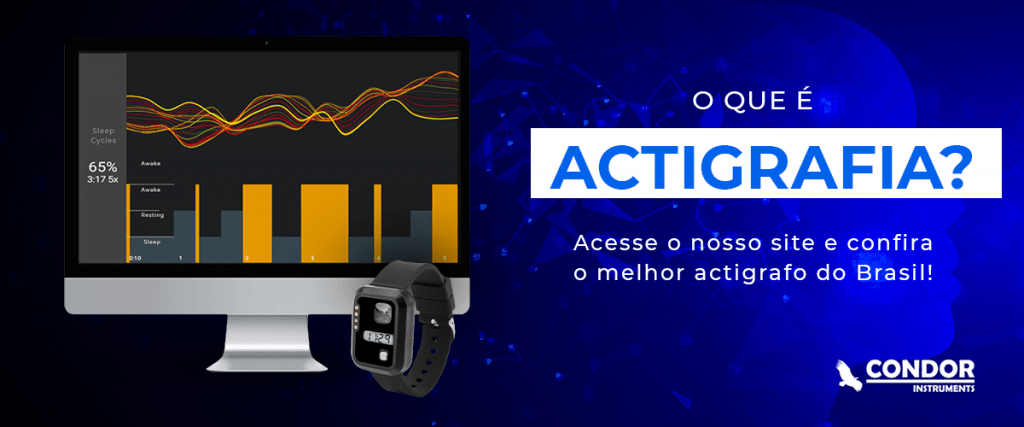
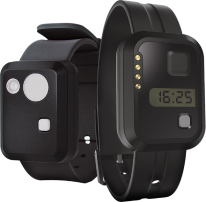
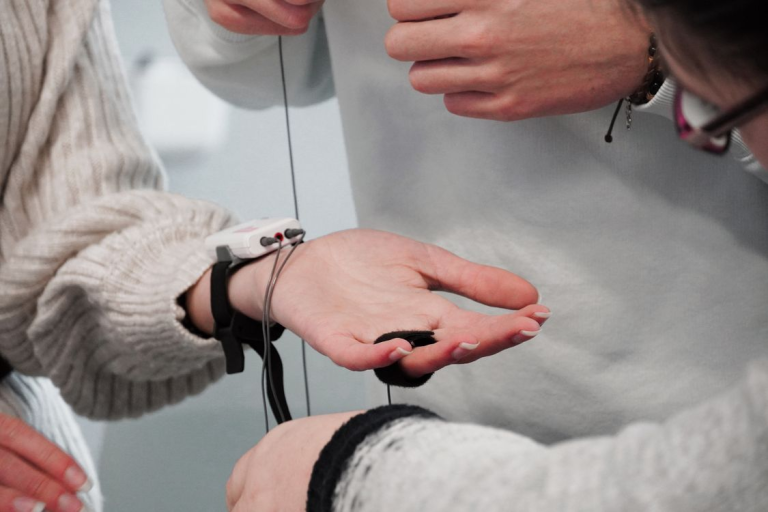
Evidence demonstrates that insufficient and unsatisfactory sleep is one of the main factors that harm workers’ health. Thus, assessing the sleep quality of this population becomes essential. In this regard, actigraphy is a useful and non-invasive technique that can be used for the evaluation of sleep and biological rhythms (Sadeh, 2011). An actigraph is a device similar to a wrist-worn watch and contains motion, light, and, in some more modern models, temperature sensors. Data analysis allows for obtaining variables such as total sleep time, sleep efficiency (ratio of time in bed to time the individual actually slept), sleep onset latency (time elapsed between the intention to sleep and the onset of sleep), wake time after sleep onset, and total wake time. For more information, see https://condor.fabbricaweb.com.br/o-que-e-actigrafia/.
Conclusion
Night and shift workers are exposed to conditions that substantially affect their health and quality of life. Circadian misalignment and poor quality and insufficient sleep lead to immunological, cognitive, and cardiometabolic alterations. Additionally, psychosocial stress resulting from schedules out of sync with family and friends, as well as sedentary habits and inadequate eating behaviors, contribute to this negative scenario. Therefore, it is important that this population be regularly evaluated to identify possible sleep disorders and adapt work schedules to a model that better suits worker profiles. In this regard, it is important to consider conditions such as the duration of the workday, the interval between shifts (which should be less than 11 hours), the speed and direction of shift rotation, as well as the number of successive night shifts, breaks between and during shifts, and to create strategies for a welcoming and friendly work environment.