

Human beings spend around 30% of their lives sleeping and, for this reason, the renowned researcher Allan Rechtschaffen wrote that “If sleep serves no vital function, then it is the biggest mistake the evolutionary process has ever made”. In this respect, sleep is an active, reversible phenomenon characterized by a reduction in the activity of vital functions (SIEGEL, 2008). It is differentiated into two main stages: REM (Rapid Eyes Movement) and NREM (Non-Rapid Eyes Movement). In addition, NREM sleep is divided into 3 stages: N1, N2 and N3 (slow wave sleep). Throughout evolution, humans have adapted to remain awake during the light cycle and rest during the dark cycle. This process, called the sleep-wake cycle, is regulated by a complex neural circuitry under the control of the suprachiasmatic nucleus (SCN) located in the hypothalamus, which is considered to be the body’s central clock.
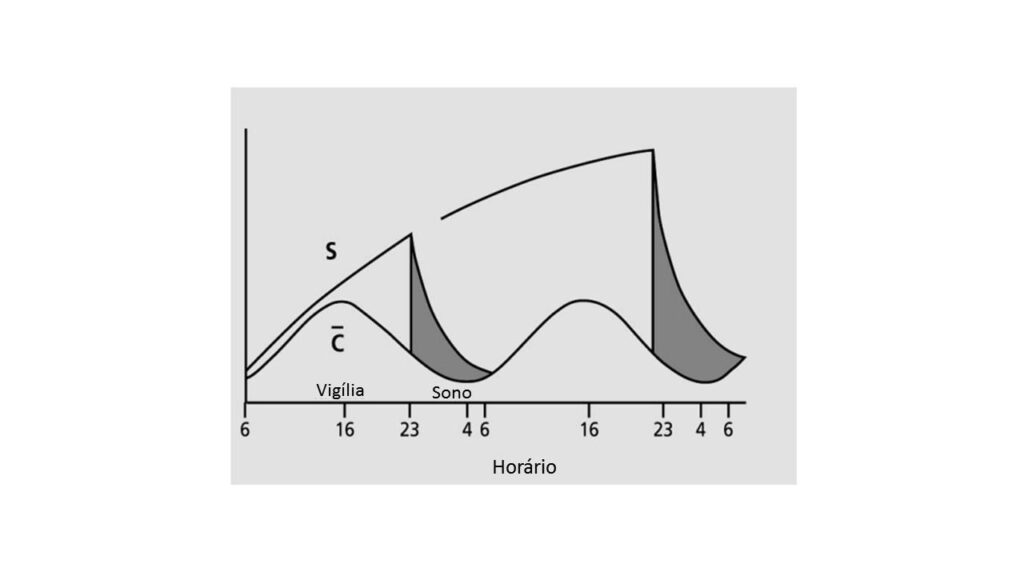
Thirty years ago, Borbély proposed a model of sleep regulation through two processes: homeostatic and circadian (BORBÉLY, 1982; BORBÉLY; DAAN; WIRZ-JUSTICE; DEBOER, 2016). This model has had a strong impact on several studies related to sleep and biological rhythms, and currently remains dominant in explaining how sleep regulation occurs. Therefore, this model will be used in this article
Homeostatic process (S)
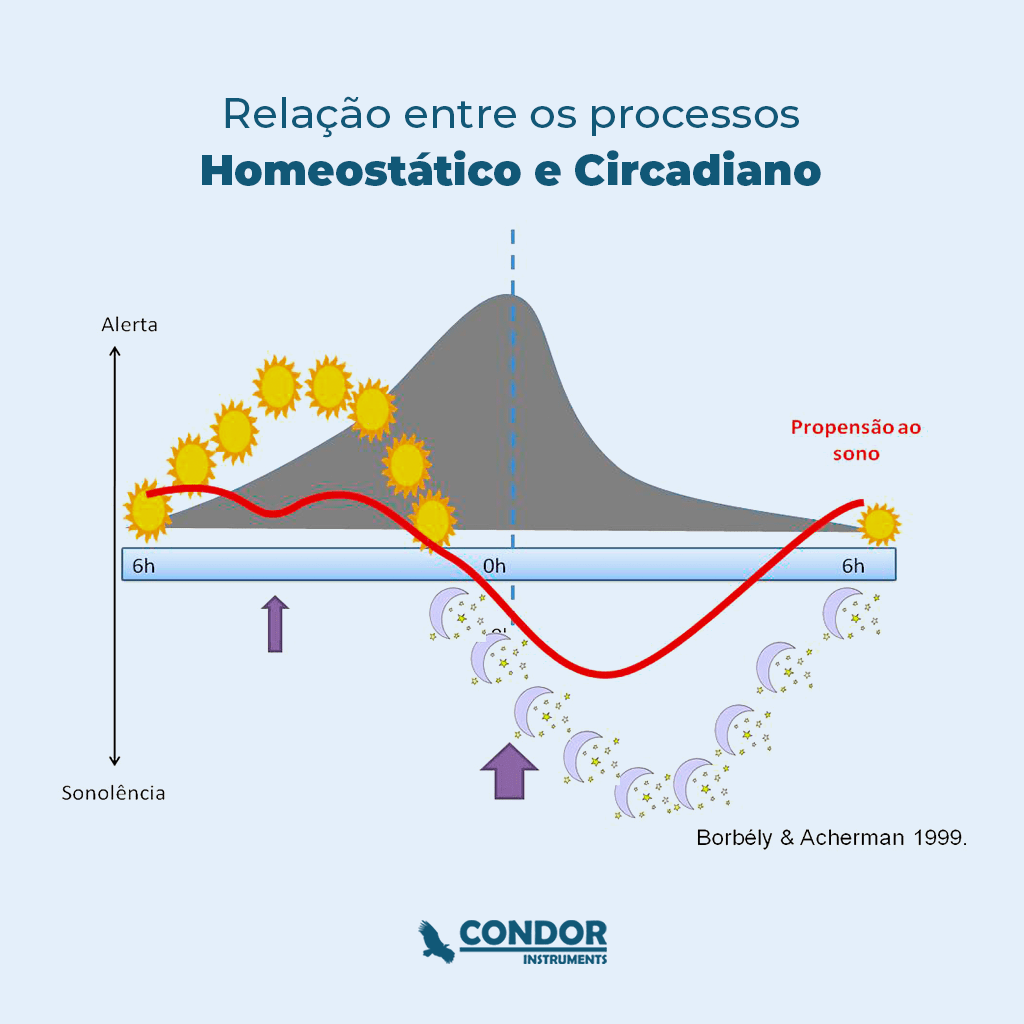
The author describes that the homeostatic process refers to the accumulation of fatigue throughout the day. Thus, the greater the level of fatigue, the greater the propensity to sleep. In addition, slow wave sleep is the main characteristic of the S process during sleep, while theta wave activity is a marker of this process during wakefulness (BORB; ACHERMANN, 1999).
Circadian process (C)
On the other hand, the author describes the circadian process as referring to factors that cannot be controlled voluntarily, such as the endogenous and rhythmic regulation of the body’s functions. For example, the oscillation of core temperature values throughout the day and the secretion of melatonin. When the C-process curve reaches its highest point, there is a greater propensity to wakefulness and, conversely, when it reaches its lowest point, there is a greater propensity to sleep.
As mentioned above, the sleep-wake cycle is controlled by the suprachiasmatic nucleus, which receives light information via the retinohypothalamic tract. Briefly, this regulation within the NSQ occurs through the CLOCK and BMAL1 genes, and the PER and CRY proteins. In the cell nucleus, the CLOCK and BMAL1 genes stimulate the synthesis of PER and CRY proteins, which are directed to the cytoplasm and, after being phosphorylated, are sent back to the nucleus. There, these proteins inhibit the action of CLOCK and BMAL1 through negative feedback. This looping lasts approximately 24 hours and these genes are responsible for regulating all organic functions during the light-dark cycle (PEREIRA; TUFIK; PEDRAZZOLI, 2009).
Bidirectional relationship between processes C and S
The two processes are regulated independently, but are nonetheless complementary and directly related. Specifically, the greater the distance between the curves of the C and S processes, the greater the propensity to sleep. In other words, the greater propensity to sleep occurs when the level of fatigue is high (characterized by the S process) and the projection of signals for maintaining wakefulness is low (characterized by the C process). The figure below illustrates this relationship.
Sleep deprivation studies show both circadian and homeostatic components (GOEL; BASNER; RAO; DINGES, 2013). In these studies, cognitive performance, characterized by reaction time, does not increase linearly as sleep deprivation progresses. Instead, improvements and losses occur throughout the day, due to the influence of circadian factors.
Model applications
Our society has changed its relationship with work since the advent of electricity. We now live in a society that works 24 hours a day, 7 days a week (known as the 24/7 society) and which, in order to be able to carry out all its obligations and responsibilities, has less and less time to sleep and rest. In this respect, some people need to carry out their work activities during the dark hours of the day when, in fact, they should be sleeping at that time. As a result, performance tends to be reduced at this time, as well as the likelihood of accidents and the development of illnesses (due to a reduction in the body’s immune defenses (FOLKARD; TUCKER, 2003; SILVA; GUERREIRO; ANDRADE; STIELER et al., 2020). Therefore, these workers are at high risk of accidents and this must be taken into account when organizing the work schedule, as well as structuring the entire environment (lighting, temperature, food and health assessment of sleep disorders and lifestyle habits).
On the other hand, similar misalignment is experienced by individuals who travel across more than 3 time zones. Symptoms include reduced cognitive performance, gastrointestinal disturbances, excessive daytime sleepiness, insomnia and nocturnal awakenings. This is due to the misalignment between the circadian process of the place of origin and destination in relation to the homeostatic process, which adapts at a rate of approximately 1 day for each time zone crossed (WATERHOUSE; REILLY; ATKINSON; EDWARDS, 2007).
Sleep pattern assessment
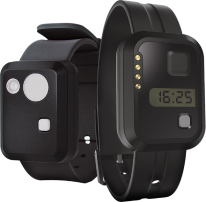
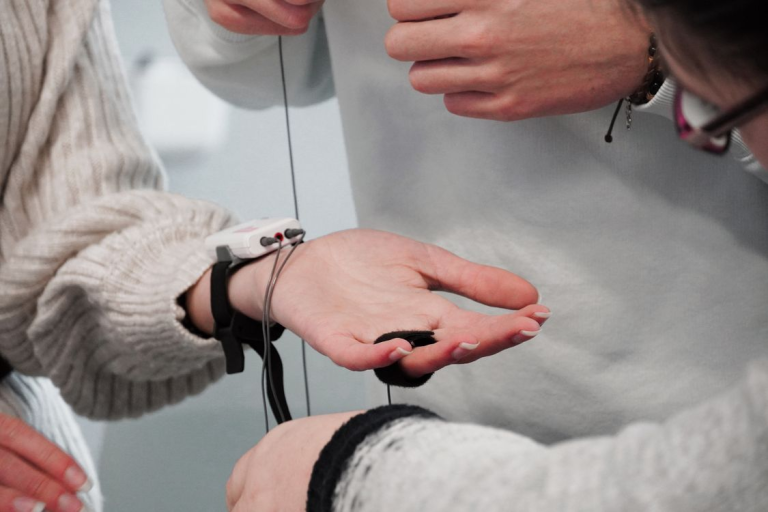
Actigraphy is a non-invasive technique that can be used to assess sleep patterns and the sleep-wake rhythm. The actigraph is a device similar to a wristwatch that contains light, movement and temperature sensors. Using this information, it is possible to extract data on variables such as total sleep time, sleep onset latency, time awake after sleep onset, sleep efficiency, time awake and rhythm-related variables such as cosinor, spectrogram, periodogram and non-parametric variables such as L5, M10, IS and IV.