


Physical exercise is considered fundamental for the promotion and maintenance of health and quality of life. Regular physical exercise is associated with a reduced risk of all-cause mortality, a reduced risk of developing cardiovascular and metabolic diseases, improved immune system function, reduced levels of depression and anxiety, pain reduction, among others.PIERCY; TROIANO; BALLARD; CARLSON et al., 2018The American College of Sports Medicine (American College of Sports Medicine (ACSM) It recommends as a minimum weekly recommendation the practice of physical exercise for adults and the elderly of at least 150 minutes of moderate aerobic physical exercise or 75 minutes of vigorous aerobic physical exercise.MEDICINE, 2013Furthermore, a minimum of 2 days is established for the development of muscular strength and endurance. However, it is worth noting that this recommendation is intended solely for the promotion and maintenance of basic health. Therefore, individuals who desire changes in body composition, as well as improvements in physical performance, will benefit from higher training volumes and intensities.MEDICINE, 2013).
Given its complexity and variety of benefits to the body, the objective of this article is to elucidate the effects of physical exercise on aspects related to sleep. Initially, the effects on sleep variables will be presented, followed by evidence demonstrating the effects of exercise on sleep disorders. Finally, some proposed mechanisms responsible for the observed effects on sleep after physical exercise will be presented. The description of the effects of acute and chronic physical exercise was based on the systematic review conducted by Kredlow et al.KREDLOW; CAPOZZOLI; HEARON; CALKINS et al., 2015).
Acute physical exercise
Studies that evaluated the effect of acute physical exercise point to increased total sleep time, sleep efficiency, and slow-wave sleep duration. Furthermore, on days when physical exercise was practiced, sleep onset latency was reduced. Not only that, but wake time after sleep onset and the proportion of stage 1 sleep were lower after physical exercise.
Regular physical exercise
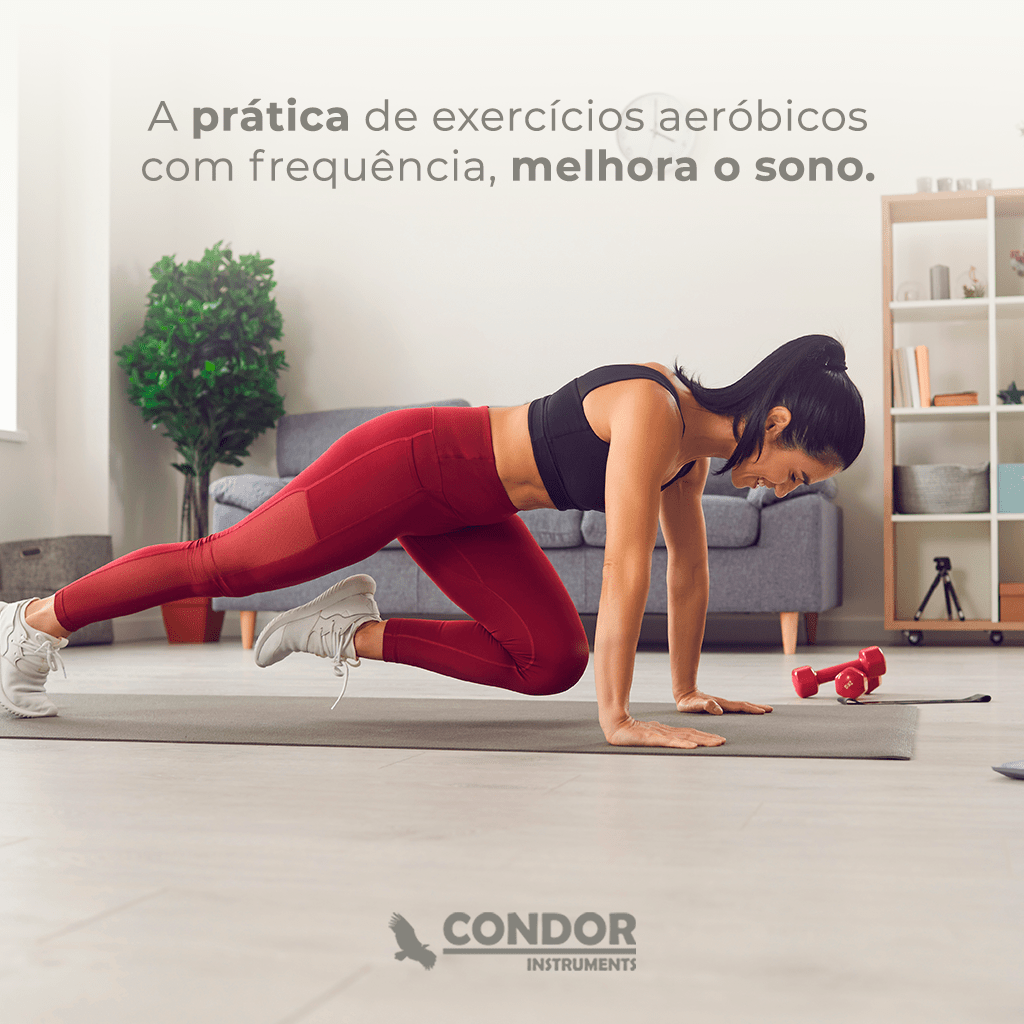
Similar to the effects of acute physical exercise, studies that evaluated the effects of regular physical exercise on sleep found increased total sleep time and sleep efficiency in individuals who engaged in physical exercise, compared to individuals allocated to control groups. Sleep onset latency was also lower in those who practiced physical exercise. Finally, there was a better perception of sleep quality after regular physical exercise. Most of the available studies used the Pittsburgh Sleep Quality Index (Pittsburgh Sleep Quality Index – PSQI (BERTOLAZI; FAGONDES; HOFF; DARTORA et al., 2011; Buysse, Reynolds, Monk, Berman et al., 1989) to assess the sleep quality of participants. This questionnaire contains seven subscales (daytime sleepiness, sleep disturbances, sleep duration, sleep efficiency, sleep latency, medication use, and subjective sleep quality). Regular physical exercise showed improvements in all subscales except medication use.
Effects of physical exercise on sleep disorders
A study conducted by Passos et al.STEPS; POYARES; SANTANA; GARBUIO et al., 2010) evaluated and compared the effects of three types of acute physical exercise in patients with chronic primary insomnia. The patients were randomized into four groups: moderate-intensity aerobic exercise, high-intensity aerobic exercise, moderate-intensity resistance exercise, and a control group. The patients’ sleep was assessed using polysomnography. Only the group that performed moderate-intensity aerobic exercise showed statistically significant changes in the parameters of sleep latency (reduction of 55%), total sleep time (increase of 18%), and sleep efficiency (increase of 13%). In addition, the researchers also assessed the patients’ mood, and the group that performed moderate-intensity aerobic exercise showed a reduction in anxiety levels.
Positive results after physical exercise practice were also observed for sleep movement disorders. De Mello and colleagues (DE MELLO; LAURO; SILVA; TUFIK, 1996) evaluated 11 volunteers with complete spinal cord injury between T7 and T12. Volunteers underwent maximal exercise testing, and sleep was assessed through polysomnography. It was observed that the sleep pattern significantly improved on the night following maximal exercise testing. Specifically, the occurrence of periodic limb movements and restless legs syndrome was reduced after physical exercise. Years later, De Mello and collaborators evaluated the effect of chronic aerobic exercise (45 days of moderate-intensity aerobic training performed three times a week with an average duration of 30 minutes per session) on the same parameters, and the results were similar, suggesting that a physical exercise protocol has the potential to reduce the incidence of movement disorders during sleep (DE MELLO; SILVA; ESTEVES; TUFIK, 2002).
Responsible mechanisms
Several mechanisms have been proposed to explain the beneficial effects of physical exercise on sleep. Among these, body temperatureMCGINTY; SZYMUSIAK, 1990), change in cytokine concentration (SANTOS; TUFIK; DE MELLO, 2007), increased energy consumption and metabolic rate (MORSELLI; GUYON; SPIEGEL, 2012), central nervous system fatigueUCHIDA; SHIODA; MORITA; KUBOTA et al., 2012mood swings/anxiety.BUMAN; KING, 2010; UCHIDA; SHIODA; MORITA; KUBOTA et al., 2012), changes in heart rate and heart rate variability (Sandercock, Bromley, and Brodie, 2005Growth hormone secretion (KANALEY; WELTMAN; VELDHUIS; ROGOL et al., 1997), brain-derived neurotrophic factor (BDNF) secretion (Zagaar; Dao; Levine; Alhaider et al., 2013), better physical condition (SHAPIRO; WARREN; TRINDER; PAXTON et al., 1984and changes in body compositionUCHIDA; SHIODA; MORITA; KUBOTA et al., 2012. In addition, there are indications that the responsible mechanisms differ between acute and chronic exercise.UCHIDA; SHIODA; MORITA; KUBOTA et al., 2012).
Sleep pattern assessment
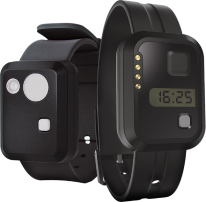
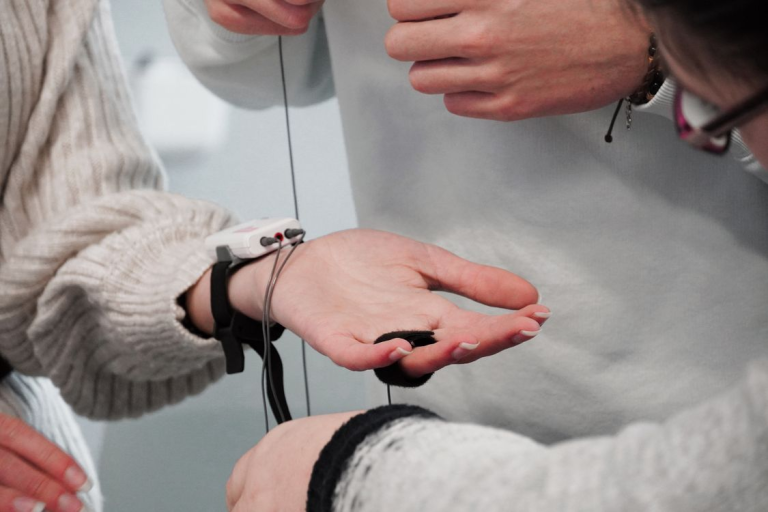
Actigraphy is a non-invasive technique that can be used to assess sleep patterns and the sleep-wake rhythm. The actigraph is a device similar to a wristwatch that contains light, movement and temperature sensors. Using this information, it is possible to extract data on variables such as total sleep time, sleep onset latency, time awake after sleep onset, sleep efficiency, time awake and rhythm-related variables such as cosinor, spectrogram, periodogram and non-parametric variables such as L5, M10, IS and IV.