


Sleeping is fundamental for maintaining human homeostasis and repairing various metabolic, cognitive, and hormonal processes. However, simply sleeping is not enough. It is necessary to sleep at the right time (FRANK; HELLER, 2019Our bodies are governed by rhythmic oscillations, known as circadian rhythms, which cycle approximately every 24 hours (to learn more, see https://condor.fabbricaweb.com.br/o-que-ritmo-circadiano/). Thus, various bodily functions exhibit oscillations throughout the day, such as core temperature, melatonin concentration, physical and cognitive performance, as well as the functioning of organs like the lungs, stomach, and intestines. In relation to the sleep-wake cycle, the body prepares to initiate sleep at night through a cascade of hormonal and neurochemical events, so that sleep obtained during the light phase of the day tends to be of unsatisfactory quality and quantity. Therefore, there is an ideal schedule for each bodily function, and when there is a misalignment between central and peripheral clocks, the body experiences a decrease in the performance of its functions. Thus, the objective of this text is to elucidate the effects that jet lag and social jet lag have on the human body.
Jet lag
Jet lag is a phenomenon that occurs when crossing 3 or more time zones abruptly, such as during an airplane trip, for example.ROACH; SARGENT, 2019Thus, there isn’t enough time for the circadian timing system to adjust to the new destination. Some symptoms caused by this condition include gastrointestinal disturbances, impaired cognitive performance, impaired physical performance (which follows the core body temperature curve, thus it is extremely important for athletes to pay attention to this point), excessive daytime sleepiness, and nighttime insomnia. Therefore, jet lag is undesirable for anyone who needs to travel and maintain performance at their new destination.
Jet lag differs from travel fatigue in that the latter is usually completely dissipated after a night’s sleep, proper nutrition, and hydration, while jet lag symptoms only disappear after the circadian timing system readapts to the new destination. Evidence indicates that for each time zone crossed, approximately 1 day is needed for complete readjustment.SUVANTO; HÄRMÄ; ILMARINEN; PARTINEN, 1993Therefore, it’s important that the trip be planned in advance.
Some strategies can be used to accelerate synchronization at the destination, but they should be considered cautiously, as each trip presents different characteristics. Factors such as direction of travel (east or west), number of time zones crossed, flight duration, number of airport connections, available time for adaptation to the destination, and direction of adaptation (whether endogenous rhythms will be advanced or delayed) must be analyzed.ROACH; SARGENT, 2019. Some strategies that can be adopted are:
- Start adapting endogenous rhythms before the trip begins. Evidence indicates that shifts of up to 2 hours are tolerable and beneficial.
- When boarding the plane, adjust your wristwatch to reflect the destination’s time. It is recommended that meals and sleep/nap times be as close as possible to what will be done at the new location.
- Use of supplements and drugs, such as melatonin and hypnotic medications, in addition to light therapy.
- Eat meals at the local time of your destination. That is, it’s natural that, depending on the number of time zones crossed, you won’t feel like eating at lunchtime. However, it’s important to make this effort, as these temporal cues help signal and synchronize the suprachiasmatic nucleus.
Thus, by using these strategies, it is expected that the adaptation time to the new destination will be shorter.
Ja social lag
In recent years, the term social jet lag has been coined to describe the condition of daily circadian misalignment. In other words, it arises from the misalignment between desired and practiced sleep and wake times.WITTMANN; DINICH; MERROW; ROENNEBERG, 2006. Similar to jet lag, the symptoms include gastrointestinal disorders, cognitive and physical impairments, daytime sleepiness, and sleep disturbances. However, the symptoms are aggravated by chronic exposure. A common example for this condition are individuals with an evening chronotype who need to wake up much earlier than desired to meet social commitments, such as study and work. On the other hand, and interestingly, individuals with a morning chronotype who express their circadian preference during workdays may become desynchronized on days off also due to social commitments, such as parties and gatherings with friends.

Due to the chronic nature of this condition, the long-term consequences tend to be more severe. Evidence indicates that shift workers, by the end of their lives, have a higher prevalence of cancer, and this occurs both due to chronic sleep restriction and circadian desynchronization.HU; HARPER; HEER; MCNEIL et al., 2020Thus, work and study routines should be adjusted as much as possible to the individual’s chronotype.
Conclusion
Jet lag and social jet lag are distinct phenomena, but both are caused by circadian desynchronization. The consequences include disruptions at all levels of the organism. Therefore, it is ideal that after a transmeridional trip crossing more than 3 time zones, endogenous rhythms are resynchronized as quickly as possible and that, on a daily basis, the sleep routine practiced is close to what the individual desires.
Sleep pattern assessment
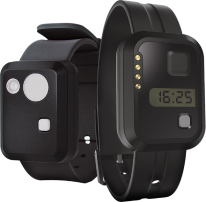
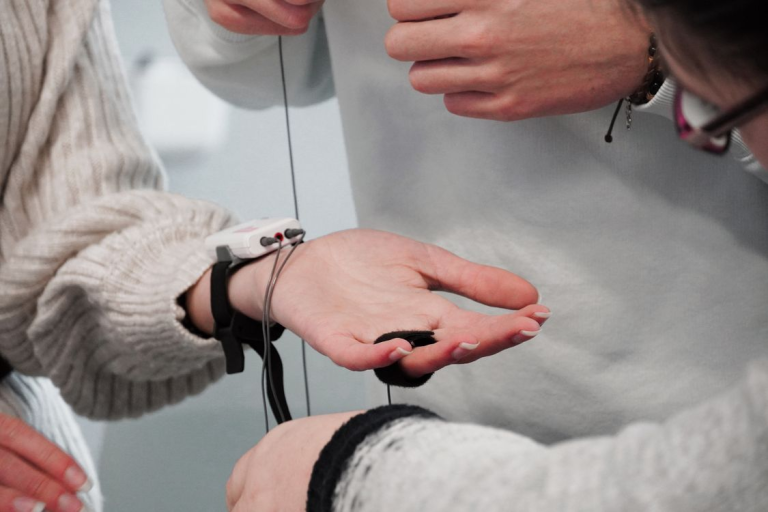
Actigraphy is a non-invasive technique that can be used to assess sleep patterns and the sleep-wake rhythm. The actigraph is a device similar to a wristwatch that contains light, movement and temperature sensors. Using this information, it is possible to extract data on variables such as total sleep time, sleep onset latency, time awake after sleep onset, sleep efficiency, time awake and rhythm-related variables such as cosinor, spectrogram, periodogram and non-parametric variables such as L5, M10, IS and IV.