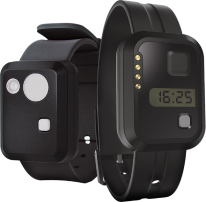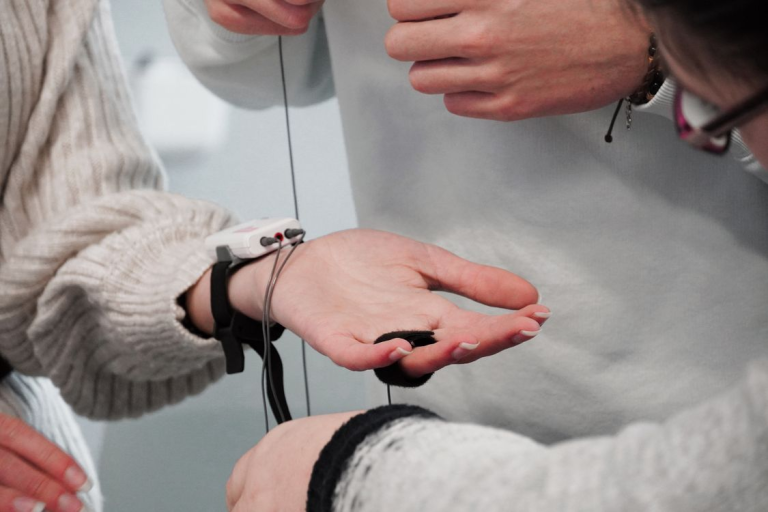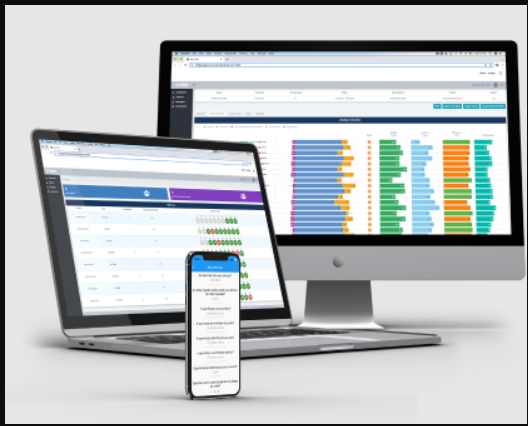



Actigraphy has evolved from a simple movement-tracking approach into a sophisticated signal-processing domain capable of revealing nuanced sleep-wake dynamics. At its core, an actigraph captures accelerometry data over extended periods, enabling longitudinal observation of rest-activity cycles in naturalistic settings. For researchers, the shift toward signal-level analytics represents a move beyond summary metrics such as total sleep time or sleep efficiency toward granular, time-resolved interpretations of physiological and behavioral rhythms.
Traditional actigraphy workflows often rely on epoch-based scoring, typically aggregating raw acceleration into 30- or 60-second intervals. While useful, this aggregation can obscure micro-arousals, transitional states, and circadian phase irregularities. Signal-level analytics addresses this limitation by leveraging raw or near-raw data streams, enabling the extraction of high-resolution sleep-wake patterns that align more closely with underlying neurophysiological processes.
Data Acquisition and Sensor Modalities
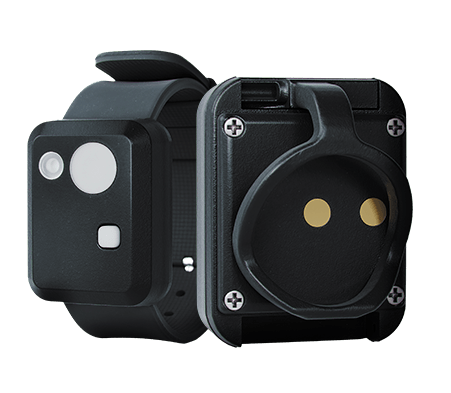
Modern actigraph devices integrate multiple sensing modalities, each contributing distinct layers of information. Accelerometers remain the primary sensor, capturing tri-axial movement data that can be transformed into activity counts or vector magnitude metrics. However, the inclusion of auxiliary sensors such as a light sensor has significantly enhanced contextual interpretation.
Light exposure plays a critical role in circadian entrainment. By incorporating light sensor data, researchers can quantify environmental illumination patterns and correlate them with sleep onset latency, wake timing, and phase shifts. This multimodal integration allows for a more comprehensive understanding of sleep regulation, particularly in studies examining circadian rhythm disorders or shift work adaptation.
In addition to hardware-derived signals, subjective inputs such as the sleep diary provide essential ground truth annotations. Sleep diaries capture self-reported bedtimes, wake times, and perceived sleep quality, serving as a calibration layer for algorithmic models. When aligned with high-resolution actigraph data, these annotations enable hybrid modeling approaches that combine objective and subjective measures.
Preprocessing of Raw Actigraphy Signals
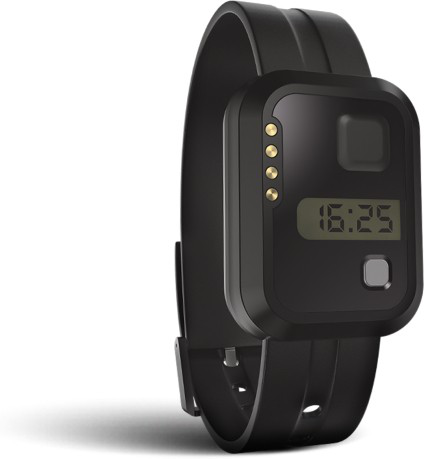
Signal-level analysis begins with rigorous preprocessing. Raw accelerometry data often contains noise artifacts arising from device orientation changes, non-wear periods, and environmental interference. Effective preprocessing pipelines typically include:
- Signal filtering to remove high-frequency noise
- Calibration adjustments for sensor drift
- Non-wear detection algorithms based on sustained inactivity thresholds
- Temporal alignment across multiple sensors, including Light Sensor channels
An important consideration is the preservation of signal fidelity. Over-smoothing can eliminate meaningful micro-movements associated with sleep fragmentation, while under-filtering can introduce false positives in wake detection. Researchers must balance these factors based on study objectives and population characteristics.
Feature Extraction at High Temporal Resolution
Once preprocessed, the actigraph signal can be decomposed into a range of features that capture both amplitude and temporal dynamics. Unlike traditional actigraphy metrics, signal-level features are often computed at sub-epoch resolutions, sometimes at the level of seconds or even milliseconds.
Key feature categories include:
Time-Domain Features
These include activity counts, zero-crossing rates, and movement intensity measures derived directly from accelerometer output. Time-domain features are particularly useful for identifying periods of sustained inactivity that correspond to sleep.
Frequency-Domain Features
Applying spectral analysis techniques such as Fourier transforms allows researchers to identify periodicities in activity patterns. These features are valuable for circadian rhythm analysis and for detecting ultradian cycles.
Nonlinear Dynamics
Measures such as entropy, fractal dimension, and recurrence quantification provide insights into the complexity of movement patterns. These metrics can differentiate between consolidated sleep and fragmented rest states more effectively than linear measures.
By integrating these features, researchers can construct multidimensional representations of sleep-wake behavior that extend far beyond traditional scoring methods.
Machine Learning and Pattern Recognition
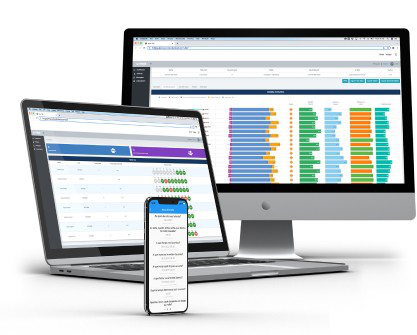
The transition to signal-level analytics has been accompanied by the adoption of machine learning techniques. Supervised learning models can be trained using labeled datasets that combine actigraph signals with sleep diary annotations or polysomnography references.
Common approaches include:
- Random forests for classification of sleep and wake states
- Support vector machines for boundary detection between states
- Deep learning architectures such as convolutional neural networks for end-to-end signal interpretation
These models benefit from high-resolution input data, which captures subtle transitions that are often missed in aggregated actigraphy. Incorporating light sensor data further enhances model performance by providing contextual cues about environmental conditions.
Unsupervised learning methods also play a role, particularly in exploratory research. Clustering algorithms can identify novel patterns in activity data, revealing subtypes of sleep behavior that may correspond to specific clinical phenotypes.
Integration of Circadian and Behavioral Context

High-resolution actigraphy is most powerful when interpreted within a broader behavioral and circadian framework. The inclusion of light sensor data enables precise mapping of light exposure profiles, which can be aligned with activity rhythms to assess phase relationships.
For example, delayed sleep phase patterns can be identified by examining the temporal offset between peak light exposure and activity onset. Similarly, irregular sleep-wake rhythm disorder may manifest as a lack of consistent alignment between these signals.
The sleep diary remains a critical component in this context. While objective data provides continuous measurement, subjective reports capture intent and perception, which are essential for interpreting behavioral interventions and compliance.
Detection of Micro-Events and Transitional States

One of the key advantages of signal-level analytics is the ability to detect micro-events that are typically lost in epoch-based analysis. These include:
- Brief awakenings lasting only a few seconds
- Sleep onset transitions characterized by gradual reductions in movements
- Restless periods within otherwise consolidated sleep
By analyzing raw actigraph signals, researchers can identify these events with high temporal precision. This capability is particularly valuable in studies of insomnia, sleep fragmentation, and neurodegenerative disorders, where micro-structure plays a critical role.
Advanced segmentation algorithms can partition the signal into distinct states, enabling the construction of detailed sleep architecture profiles without the need for full polysomnography.
Validation against Gold Standards
Despite its advantages, signal-level actigraphy must be validated against established gold standards such as polysomnography. Validation studies typically involve simultaneous recording, allowing direct comparison of sleep-wake classifications.
Key validation metrics include:
- Sensitivity to sleep detection
- Specificity for wake detection
- Agreement indices such as Cohen’s kappa
Incorporating sleep diary data can improve validation by providing additional context, particularly in cases where polysomnography is not feasible for extended monitoring.
It is important to note that while Actigraph devices excel in ecological validity and scalability, they may still face limitations in differentiating quiet wakefulness from sleep. Signal-level approaches mitigate this issue to some extent but do not eliminate it entirely.
Applications in Clinical and Research Settings
The ability to extract high-resolution sleep-wake patterns has expanded the applicability of Actigraphy across multiple domains:
Sleep Medicine
Signal-level analytics supports the diagnosis and monitoring of disorders such as insomnia, circadian rhythm disorders, and sleep apnea. While not a replacement for polysomnography, it provides valuable longitudinal insights.
Psychiatry and Neurology
Sleep disturbances are a common feature of many psychiatric and neurological conditions. High-resolution actigraph data can reveal patterns associated with depression, bipolar disorder, and neurodegenerative diseases.
Occupational Health
Shift work and irregular schedules can significantly impact sleep. By integrating Light Sensor data, researchers can assess the effectiveness of interventions aimed at circadian alignment.
Pediatric and Geriatric Research
Actigraphy is particularly useful in populations where traditional sleep studies are challenging. Signal-level analytics enhances its utility by providing detailed insights without increasing participant burden.
Challenges and Methodological Considerations
Despite its promise, signal-level actigraphy presents several challenges:
Data Volume and Computational Complexity
High-resolution data generates large datasets that require substantial storage and processing resources. Efficient algorithms and scalable infrastructure are essential.
Standardization
There is currently a lack of standardized protocols for signal-level analysis. Variability in preprocessing, feature extraction, and modeling approaches can limit comparability across studies.
Device Heterogeneity
Different actigraph devices may have varying sensor specifications and calibration methods. This heterogeneity can introduce bias and complicate cross-study analysis.
Interpretation
The richness of signal-level data can be both an advantage and a challenge. Extracting meaningful insights requires careful modeling and validation, particularly when integrating multiple data streams such as Light Sensor outputs and Sleep Diary entries.
Future Directions in Actigraphy Research
The field is moving toward increasingly integrated and intelligent systems. Advances in wearable technology are enabling the capture of additional physiological signals, such as heart rate variability and skin temperature, which can complement Actigraphy.
Emerging trends include:
- Real-time analytics for adaptive interventions
- Integration with digital health platforms
- Development of standardized frameworks for signal-level analysis
Machine learning models are also becoming more interpretable, addressing one of the key barriers to clinical adoption. As these technologies mature, the role of the Actigraph is likely to expand from passive monitoring to active participation in sleep management strategies.
Toward a Unified Analytical Framework
A key objective for the research community is the development of unified frameworks that integrate actigraphy, light sensor data, and sleep diary inputs into cohesive analytical pipelines. Such frameworks would enable reproducibility and facilitate large-scale studies.
Standardized datasets and open-source tools are beginning to emerge, supporting collaborative research and accelerating methodological innovation. These efforts are essential for translating signal-level analytics into practical applications that can inform clinical decision-making and public health strategies.
Extract Cutting Edge Research Insights with State of the Art Actigraphs from Condor Instruments
Advance your research with precision actigraphy solutions. Leverage high-resolution actigraph data, integrated light sensor capabilities, and validated sleep diary workflows to uncover accurate sleep-wake patterns and drive clinically relevant outcomes. Get in touch today to elevate your study design.
Frequently Asked Questions
1. What distinguishes signal-level Actigraphy from traditional approaches?
Signal-level Actigraphy uses high-resolution data from an Actigraph to capture micro-events and transitions that are often missed in standard epoch-based analyses.
2. How do Sleep Diary and Light Sensor data improve analysis?
A Sleep Diary provides subjective context for sleep timing and quality, while a Light Sensor captures environmental light exposure, enabling better circadian and behavioral interpretation.
3. Can Actigraphy replace polysomnography in research?
Actigraphy is valuable for long-term, real-world monitoring but does not replace polysomnography for detailed sleep staging. It is best used as a complementary tool.