

Chronobiology research has entered a new phase. Whereas researchers once relied on isolated physiological measurements or single-sensor wearables, the field now recognizes that circadian timing is a multidimensional phenomenon—one that requires multidimensional data to characterize accurately.
Activity patterns, peripheral temperature rhythms, and light exposure profiles each reflect distinct aspects of biological timing, and their convergence is what gives wearable actigraphy platforms their growing value in translational research.
Identifying reliable circadian biomarkers from real-world data requires continuous, longitudinal measurement in naturalistic environments. Laboratory-confined protocols cannot fully capture the everyday variability that shapes an individual’s circadian phenotype.
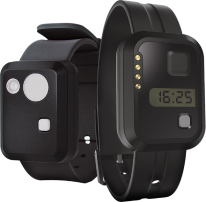
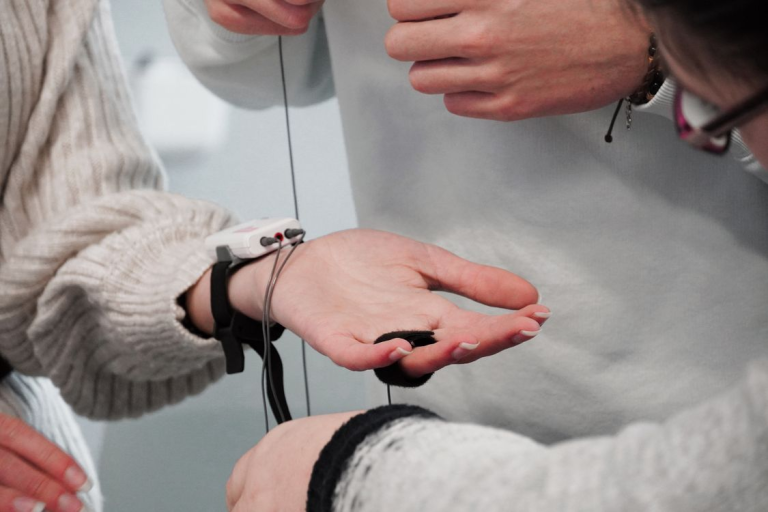
Modern actigraphy devices equipped with multi-sensor arrays now allow sleep specialists and researchers to collect the layered datasets needed to extract meaningful biological rhythm signatures—without confining participants to controlled settings or imposing excessive monitoring burdens.
This integration of sensor modalities is reshaping how circadian health is defined, quantified, and applied in clinical and research contexts. Together, these multimodal signals provide a more complete picture of circadian physiology than movement data alone. By aligning activity, temperature, and light exposure over time, researchers can reconstruct internal biological timing with greater precision, improving the identification of stable circadian biomarkers in both controlled and real-world environments. Advances in circadian biomarker monitoring enable sleep specialists and researchers to move beyond behavioral proxies toward objective, multi-signal characterization of biological rhythms.
Let’s examine how these combined signals drive digital circadian biomarker identification—and why the approach is reshaping sleep and chronobiology research.
Why Single-Sensor Approaches Fall Short
Traditional actigraphy relies primarily on accelerometry—movement data that reflects rest-activity cycles but cannot independently validate circadian phase or distinguish behavioral from biological rhythm disruption.
A participant who remains sedentary for extended periods may generate low-activity data that superficially resembles consolidated sleep. Conversely, light physical activity during nighttime waking can obscure true sleep fragmentation. Without contextual physiological or environmental signals, interpretive limitations remain significant.
Researchers have addressed this by expanding the sensing layer. Adding peripheral temperature and wearable light sensor inputs to the same device fundamentally changes what the data can reveal. Each signal contributes an independent but complementary dimension to the circadian picture.
The Role of Each Signal in Biomarker Identification
Activity Rhythms
Accelerometry-derived rest-activity cycles remain the foundation of wrist actigraphy. When analyzed at sufficient temporal resolution, activity data support estimation of sleep onset, wake time, sleep efficiency, and interdaily stability—all established markers of circadian alignment.
Researchers use these metrics to characterize circadian disruption in shift workers, hospitalized patients, and clinical populations with neurodegenerative or psychiatric conditions. Longitudinal monitoring over weeks or months reveals drift, fragmentation, or phase shifts that cross-sectional assessments fail to detect at all.
Peripheral Temperature
Wrist temperature follows a predictable 24-hour oscillation driven by the circadian clock. Core body temperature peaks in the early evening and reaches its lowest point during the biological night. Peripheral temperature, measured at the wrist, reflects this rhythm through vasoregulatory changes that promote heat dissipation prior to the onset of sleep.
When aligned with activity data, temperature rhythms help researchers confirm whether behavioral rest periods correspond to genuine biological sleep windows. This cross-validation strengthens circadian phase estimation without requiring invasive sampling.
· Light Exposure
Light is the primary zeitgeber—the environmental cue that synchronizes the internal clock to the 24-hour day. A wearable actigraphy light sensor captures the continuous illumination profile a participant experiences throughout daily life, providing data that self-report instruments cannot approximate.

Photopic lux values describe perceived brightness, but they do not fully reflect circadian impact. A Melanopic EDI Sensor addresses this by measuring the wavelengths most effective at stimulating intrinsically photosensitive retinal ganglion cells—the primary pathway through which light drives circadian entrainment. A Melanopic EDI Logger, therefore, captures not just how bright an environment is, but how biologically potent that light exposure is for circadian regulation.
This distinction is critical for research into circadian rhythm disorders, seasonal mood disorders, shift-work adaptation, and hospital lighting design.
Feature Selection for Circadian Biomarker Extraction
Effective circadian biomarker monitoring depends on more than data volume—it requires deliberate feature selection. Not every variable captured by a wearable sensor translates into a clinically or biologically meaningful marker, and undisciplined feature sets introduce noise that weakens downstream analysis.
Researchers typically prioritize features that demonstrate:
- Stability across repeated measurements under consistent conditions
- Sensitivity to known circadian perturbations such as changes in light exposure or schedule disruptions
- Specificity to biological rhythm processes rather than behavioral artifacts
- Longitudinal consistency over extended monitoring periods
Candidate circadian biomarkers derived from integrated sensor data include interdaily stability, intradaily variability, M10/L5 metrics from activity curves, temperature phase angle, and melanopic cumulative daily dose. When multiple features are combined, their collective predictive power for circadian phase and alignment is substantially greater than any single measure.
Longitudinal Monitoring and Biological Rhythm Analysis
Single-night or short-duration recordings capture only a snapshot. Circadian research increasingly depends on extended monitoring to characterize rhythms across days, weeks, or seasons—particularly for populations with dynamic schedules or progressive conditions.
A wrist actigraphy device designed for multi-week recording enables investigators to observe:
- Day-to-day variability in sleep timing
- Seasonal changes in light exposure and activity patterns
- Circadian adaptation following travel, shift rotation, or schedule change
- Progressive rhythm disruption in aging or neurodegenerative disease
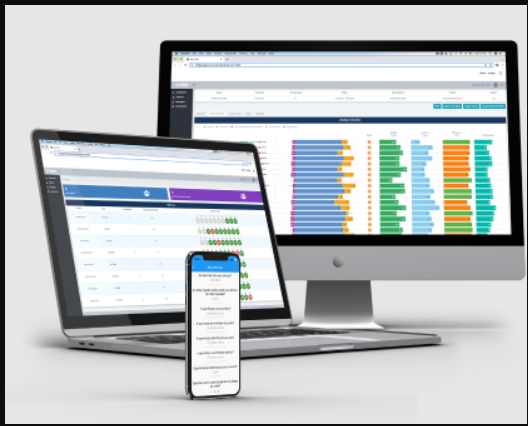
Sleep diary for research protocols complements this longitudinal data by capturing subjective sleep timing, perceived quality, and behavioral anchors. When synchronized with objective sensor recordings, diary entries allow researchers to contextualize anomalies in actigraphy data and validate algorithmic sleep-wake classifications.

Translational Applications in Sleep and Chronobiology Research
The ability to identify digital circadian biomarkers from wearable sensor data has meaningful implications across several research and clinical domains.
Circadian Medicine
Researchers are investigating how individual circadian phenotypes—often called chronotypes—influence treatment response, drug metabolism timing, and surgical outcomes. Objective circadian biomarker monitoring provides a reproducible, scalable method for phenotyping large cohorts without laboratory-based protocols.
· Shift Work and Occupational Health
Shift workers experience a persistent mismatch between their internal biological clock and external schedules. Integrated wearable data allows occupational health researchers to objectively quantify this mismatch and evaluate the effectiveness of interventions.
Pediatric and Geriatric Research
Both developing and aging populations present unique challenges for standard sleep assessment. Actigraphy devices offer non-invasive, low-burden monitoring suited to these groups. Circadian biomarker analysis extends its utility by enabling rhythm characterization beyond simple sleep duration metrics.
· Neurological and Psychiatric Conditions
Circadian disruption is implicated in depression, bipolar disorder, Alzheimer’s disease, and Parkinson’s disease. Wearable-derived biomarkers provide longitudinal, ecologically valid data that support both disease monitoring and intervention research.
Frequently Asked Questions
What are digital circadian biomarkers?
Digital circadian biomarkers are quantifiable features extracted from continuous wearable sensor data that reflect the timing, amplitude, or stability of biological rhythms. They include metrics such as interdaily stability, temperature phase angle, and melanopic light dose—each capturing a distinct dimension of circadian physiology.
2. Why is melanopic light measurement important in circadian research?
Photopic lux measures visual brightness but does not capture the wavelengths most relevant to circadian regulation. Melanopic EDI measurements quantify light in terms of its biological potency for driving the circadian clock, enabling researchers to assess environmental light exposure with greater physiological accuracy.
Can an Actigraph monitor REM sleep
No. An Actigraph estimates sleep and wake states from movement data but cannot identify REM sleep. Polysomnography remains the appropriate method when sleep stage differentiation is required.
4. How does a Sleep Diary Complement wearable sensor data in circadian research?
A sleep diary captures self-reported sleep timing, perceived quality, and behavioral context that objective sensors alone cannot provide. When synchronized with actigraphy and light exposure recordings, diary data improve model calibration and help researchers interpret variability in circadian biomarker signals.
Build a More Complete Picture of Circadian Health with Condor Instruments
At Condor Instruments’, we develop wearable monitoring solutions purpose-built for physicians, sleep specialists, and sleep researchers who need reliable, multidimensional data for rigorous circadian investigation. Our devices integrate activity, temperature, and light sensing—including melanopic EDI measurement—into a single platform designed for real-world, longitudinal research.
Whether your study calls for circadian biomarker monitoring across large cohorts, multi-week field recordings, or Integrated digital sleep diary workflows, our technology supports the entire research process. Explore our Frequently Asked Questions for technical guidance Contact our team to discuss how our solutions can support your next study.