

Procurement decisions made in a hurry tend to resurface halfway through data collection. Choosing an actigraph device for sleep research means matching hardware to a protocol that already exists on paper, rather than picking the device with the longest feature list.
We work with sleep laboratories and academic groups that need an Actigraph watch to behave identically across every participant and every month of a study. Before a purchase order goes out, it helps to run through a short list of checks. It also helps to understand how actigraphy developed into a research method.
Confirm What the Device Actually Measures
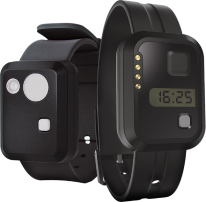
Specification sheets describe sensors. Protocols describe variables. The gap between the two is where studies lose data, so start by confirming the accelerometer configuration: axes, resolution and sampling rate determine what movement the device can resolve, and activity modes such as PIM, TAT and ZCM produce different count series from the same raw signal.
Next, check which additional channels the device records. Wrist and ambient temperature, ambient light, and a dedicated off-wrist sensor each add variables that a movement-only device cannot supply. If a protocol reports circadian phase markers or light exposure, those channels are not optional extras.
Water resistance and physical durability belong on the same list. A device rated for continuous wear survives showering and handwashing without a removal event, which removes one of the most common sources of missing data in free living protocols.
Finally, be clear about what actigraphy does not measure. It estimates sleep and wake from movement, and it does not stage sleep. The AASM clinical practice guideline on actigraphy sets out where the method is appropriate in clinical evaluation and where other instruments are required.
Match Recording Duration to Protocol Length
Recording duration is not a single number. It is the interaction of battery life, memory capacity and sampling interval, and shortening one extends or shortens another.
At a sixty second epoch, our ActTrust 2 records for up to two months and ActLumus for up to one month. Move to a thirty second epoch and both figures fall. A fourteen day protocol has room to spare, while a thirty day protocol sits close to the limit on one of those devices and comfortably inside it on the other.
Vendors listing actigraphy devices for sale rarely publish the combination that matters to a study, which is duration at the epoch length the protocol specifies. Ask for that figure directly, and ask what happens to the recording when memory fills before the participant returns.
Check the Scoring Algorithm and Its Validation Basis
Two devices can record identical movement and report different total sleep time, because the scoring algorithm sits between the raw counts and the reported variable. Ask which algorithm the software applies by default, whether it can be changed, and whether the choice is recorded in the exported file.
Then ask what the algorithm was validated against, in which population, and at what sample size. An algorithm validated in healthy young adults may perform differently in older participants, in clinical populations or in shift workers. A large community validation of conventional actigraphy algorithms shows how widely agreement with polysomnography varies across measures such as sleep efficiency and wake after sleep onset.
If a vendor cannot name the validation study, treat that as a finding rather than an oversight.
Test the Export Path Before You Commit
Data that cannot leave the vendor software is data with a shelf life. Before purchase, request a sample export and open it in whatever the analysis team actually uses.
Three questions settle most of this. Does the export contain epoch level data or only summary statistics? Is the file format documented and readable without the original application? Can the database be queried or accessed programmatically for large cohorts?
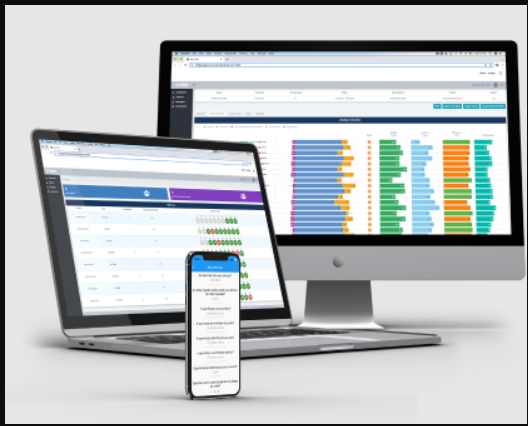
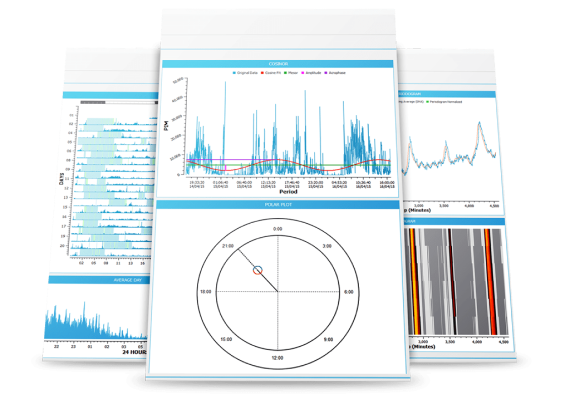
Ask about the analysis software at the same time. Whether reports can be templated, whether non-parametric rhythm measures are available, and whether the software runs on the operating systems the team already uses. These are minor considerations until a study is halfway through and the only licensed workstation is unavailable.
Long studies raise a fourth question about custody. A published workflow for processing a year of continuous actigraphy shows how much of the analytical burden falls on file handling, non-wear scoring and version control rather than on the device itself. Our ActStudio software is included with every device and exports epoch level data alongside the generated reports.
Buying for the Protocol, Not the Spec Sheet
The checks above take an afternoon. Skipping them costs a re-run. Every question here traces back to the same principle, which is that the device serves the protocol rather than the other way around.
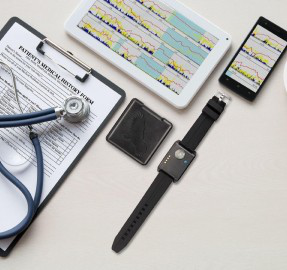
For groups running multi week protocols, the ActTrust 2 actigraphy device records for up to two months at a sixty second epoch, carries temperature and light sensors alongside three axis accelerometry, and ships with ActStudio analysis software included.
Condor Instruments has designed and manufactured research grade actigraphs in Sao Paulo since 2013, and our Condor actigraph watches are used by sleep laboratories, clinicians and academic groups internationally. Reach out to our team with your protocol and we will tell you which configuration fits it.