

Sleep research has evolved far beyond measuring total sleep time. Researchers now recognize that light exposure shapes circadian timing, hormone regulation, alertness, cognitive performance, and long-term health. Accurate sleep assessment no longer depends solely on movement or self-reported behavior. Instead, researchers increasingly combine actigraphy, sleep diary records, and advanced light measurements to understand how environmental lighting influences biological rhythms.
Melanopic light exposure monitoring now gives physicians, sleep specialists, and researchers a practical way to quantify the light that directly influences the human circadian system. Traditional photopic measurements estimate how humans perceive brightness, but they cannot fully explain biological responses to light. Spectrally sensitive wearable technologies now provide richer datasets that support stronger clinical studies and more reliable circadian phase predictions.
As research expands into real-world environments, laboratories need accurate tools that measure daily light exposure without disrupting participants’ normal routines. Modern wearable devices now bridge the gap between controlled laboratory experiments and everyday living, enabling researchers to capture continuous environmental light data alongside established Actigraph measurements.
Why Sleep Duration Alone Cannot Explain Circadian Health
Sleep duration offers only one piece of the circadian puzzle. Two individuals may each sleep eight hours while experiencing dramatically different circadian alignment because their daytime and evening light exposure differs substantially.
Morning daylight strengthens circadian synchronization, while excessive evening light delays biological timing. Researchers therefore need objective light measurements instead of assumptions about participants’ lighting environments.
Clinical investigations increasingly combine:
- Actigraphy for rest-activity cycles
- Sleep Diary for Subjective Sleep Timing
- Spectral light measurements for circadian exposure
- Physiological biomarkers for circadian phase validation
Together, these measurements create a much more comprehensive understanding of sleep and circadian function.
Understanding Melanopic Light and Circadian Biology
Human vision relies on several photoreceptor systems. While rods and cones are responsible for image formation, intrinsically photosensitive retinal ganglion cells detect environmental light that regulates biological timing.
These specialized cells respond strongly to blue-enriched wavelengths. Their activity influences:
- Melatonin suppression
- Circadian phase shifting
- Alertness
- Timing of sleep
- Hormonal regulation
- Cognitive performance
Because of this unique sensitivity, researchers now prioritize melanopic measurements rather than relying exclusively on photopic lux values.
Why Photopic Lux Alone Falls Short
For decades, investigators relied primarily on photopic lux measurements because standard light meters measured visual brightness rather than biological effectiveness.
However, two environments can produce identical photopic lux values while generating very different circadian responses due to differences in spectral composition.
Consider these examples:
- Morning sunlight
- Warm indoor office lighting
- LED displays
- Hotel patient rooms
- Evening residential lighting
Each environment delivers unique spectral characteristics that influence circadian physiology differently.
A photopic lux logger wearable still provides valuable environmental lighting information, but researchers gain far greater insight when they combine photopic and melanopic measurements within the same study.
The Rise of Spectral Light Sensing
Modern circadian science increasingly depends on spectral light sensing.
Rather than recording only brightness, spectral sensors measure the wavelength composition of environmental lighting throughout the day.
Researchers now examine:
- Morning light timing
- Evening light intensity
- Duration of Exposure
- Spectral composition
- Daily cumulative dose
- Circadian-effective illuminance
These variables improve statistical models that predict circadian phase and biological timing. A Melanopic EDI Logger allows continuous collection of these measurements during participants’ normal daily routines without requiring laboratory confinement.
Real-world data creates better circadian research
Laboratory studies remain valuable, but they cannot fully replicate everyday living. Participants encounter countless lighting conditions while commuting, working, exercising, socializing, and relaxing at home. These constantly changing environments influence circadian physiology throughout the day.
Wearable monitoring enables researchers to quantify:
- Workplace lighting
- Outdoor daylight exposure
- Evening home lighting
- Shift work environments
- Hospital lighting
- Travel-related circadian disruption
Continuous monitoring improves ecological validity while reducing recall bias associated with participant questionnaires.
Integrating Actigraphy with Advanced Light Monitoring
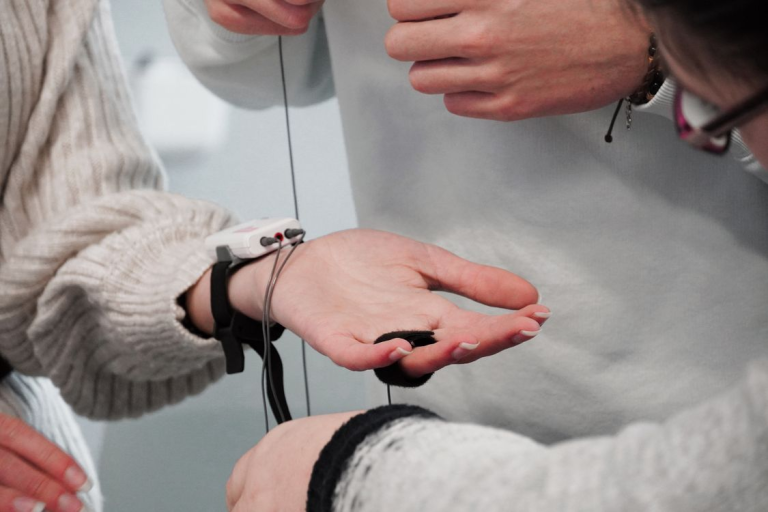
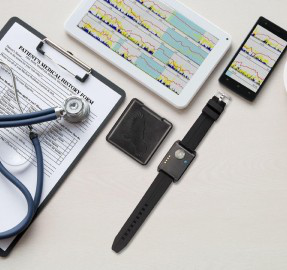
Researchers rarely evaluate sleep in isolation. Most sleep laboratories combine actigraphy, sleep diary documentation, and physiological measurements to understand daily behavioral patterns.
When investigators add a wearable light sensor, they gain continuous environmental exposure data that complements movement-based recordings.
This integrated approach helps researchers distinguish whether circadian disruption results from:
- Poor sleep scheduling
- Not enough daylight
- Excessive evening light
- Irregular daily routines
- Shift work
- Environmental lighting conditions
The resulting datasets provide stronger evidence for clinical decision-making and research publications.

Improving Circadian Phase Prediction
Circadian phase prediction is one of the most valuable applications of melanopic monitoring.
Researchers often estimate biological timing using melatonin sampling, temperature rhythms, or other physiological markers. Although these approaches remain highly informative, they often require laboratory resources or repeated biological sampling.
Continuous melanopic light exposure monitoring improves predictive models by supplying objective environmental exposure data throughout each participant’s daily routine.
When researchers combine:
- Actigraphy recordings
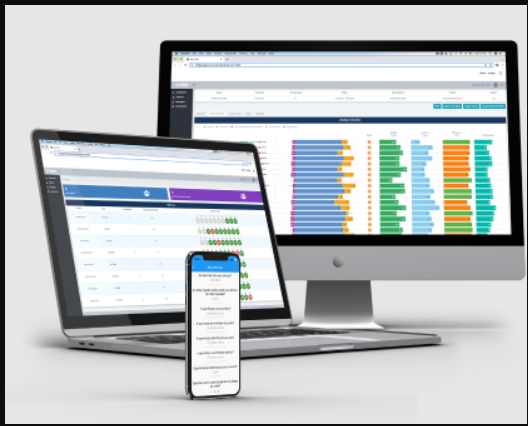
- Sleep Diary Entries
- Melanopic exposure
- Photopic exposure
they generate far more accurate circadian phase estimates than any single measurement alone.
Applications in Clinical Research
Accurate light exposure assessment supports many clinical specialties.
- Sleep Medicine
Sleep specialists investigate delayed sleep-wake phase disorder, advanced sleep-wake phase disorder, insomnia, and circadian rhythm disorders using integrated behavioral and environmental data.
- Neurology
Neurological research increasingly examines light exposure in neurodegenerative diseases where circadian dysfunction contributes to symptom progression.
- Psychiatry
Researchers studying depression, bipolar disorder, and seasonal mood disorders evaluate how light exposure influences symptom severity and treatment response.
- Occupational Health
Shift-work research depends heavily on accurate environmental light measurements because workplace lighting directly influences circadian adaptation.
- Hospital Research
Hospitalized patients often receive inadequate daytime light and excessive nighttime illumination. Objective monitoring helps investigators evaluate interventions that improve circadian alignment during inpatient care.
Wearable Technology Changes Longitudinal Research
Long-term monitoring presents unique challenges.
Researchers need equipment that remains comfortable, reliable, and accurate throughout extended observation periods.
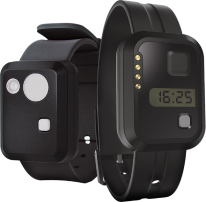
A melanopic EDI lux wearable supports prolonged field studies by collecting biologically meaningful light exposure data during normal daily activities. Similarly, a dedicated wearable light sensor minimizes participant burden while maintaining continuous measurement quality across weeks or months.
Longitudinal datasets allow investigators to study:
- Seasonal variation
- Shift rotation
- Travel across time zones
- School schedules
- Aging
- Chronic disease progression
These investigations become significantly stronger when environmental light measurements accompany behavioral sleep assessments.
Why Objective Light Measurement Matters
Participants often misremember their lighting environments.
Questionnaires cannot accurately estimate:
- Light intensity
- Spectral composition
- Exposure duration
- Exposure timing
Objective monitoring removes much of this uncertainty.
Researchers can directly quantify environmental conditions instead of relying on subjective recollection, reducing measurement error while strengthening statistical confidence.
The Future of Circadian Research
Circadian science continues to evolve rapidly.
Future research will likely integrate:
- Continuous Actigraphy
- Advanced spectral sensing
- Physiological biomarkers
- Digital sleep records
- Machine learning
- Personalized circadian modeling
These combined approaches will improve intervention design, strengthen multicenter studies, and support more individualized treatment strategies for patients with sleep and circadian disorders.
As the field advances, melanopic light exposure monitoring will become an increasingly important component of rigorous circadian research. Researchers who measure only sleep duration risk overlooking one of the strongest environmental influences on human biological timing.
Frequently Asked Questions
1. What is melanopic light exposure monitoring?
Melanopic light exposure monitoring measures the biologically effective light that influences the human circadian system. Unlike standard lux measurements, it evaluates the wavelengths that most strongly affect circadian regulation and melatonin production.
2. Why should researchers combine actigraphy with light monitoring?
Actigraphy measures movement and estimates sleep-wake patterns, while light monitoring quantifies environmental exposure that influences circadian timing. Together, these measurements provide a more complete understanding of sleep and circadian physiology.
3. Can an Actigraph measure REM sleep?
No. An Actigraph estimates sleep and wake patterns from movement, but it cannot monitor REM sleep. Researchers typically use polysomnography when they need sleep stage measurements.
4. Why does spectral light measurement improve circadian studies?
Spectral light measurement captures both light intensity and wavelength composition. This approach allows researchers to quantify biologically relevant light exposure more accurately than photopic lux measurements alone, leading to stronger circadian phase prediction models.
Advancing Circadian Research with Condor Instruments
At Condor Instruments’, We understand that physicians, sleep specialists, and sleep researchers require clinically relevant tools that deliver reliable environmental light data alongside established sleep assessment methods.
As Philips Actigraph devices are no longer available worldwide, we offer one of the strongest alternatives for research teams seeking dependable solutions for modern actigraphy studies. Our technologies integrate seamlessly into circadian research workflows while supporting comprehensive light exposure assessment.
Whether your protocol requires a Melanopic EDI Sensor, or Photopic Lux Logger wearable, we help research teams collect high-quality data that strengthens clinical studies and improves circadian investigation. We also recognize an important limitation within sleep research: an Actigraph cannot monitor REM sleep, making complementary assessment methods essential for comprehensive sleep evaluation.
If your research program aims to improve circadian phase prediction, quantify real-world light exposure, or modernize Actigraphy protocols, we are ready to support your next study with advanced wearable monitoring solutions. Contact us now to learn more.