

O circadian rhythm (or circadian rhythm) is the approximately 24-hour period on which a biological cycle is based. Thus, a series of events in our organism are directly linked to them, and external influences can have different consequences, also in our organism, depending on the period of the circadian cycle in which they occur.
The circadian rhythm governs the biological cycle of most living beings and can help us understand a number of events in our bodies.
In this article, we will delve into the topic, from its definition to its practical applications in the fields of sleep medicine, work, and other areas, and understand how and why actigraphy it is the best method for circadian rhythm tracking.
Definition of circadian rhythm
A succinct and simple definition of the word “rhythm” is “any event that repeats regularly.” Etymologically, the word rhythm comes from the Latin rhythmus, which means regular movement. Several natural events have a stable rhythmicity over time, such as the rhythms of the tides, the rhythm of sunrise and sunset, as well as the phases of the moon.
Due to these natural rhythms existing for thousands of years, it’s possible to imagine that, over the evolutionary process, various animals have adapted to these environmental changes. In marine life, it’s possible to observe diverse living beings that have behavioral adaptations based on the ultradian cycles (less than 20 hours) of the tides, which last about 12 hours, and on infradian cycles (greater than 28 hours) resulting from the complete lunar cycle, lasting about 28 days.
However, when we talk about biological rhythmicity, The most easily observed phenomenon of stable rhythmicity is Day and night. The rotation of planet Earth, lasting approximately 24 hours, generates a temporal pattern in which dark phases and light phases succeed each other. This regular succession of light and dark stages favored the evolution of endogenous oscillatory mechanisms, classified as timing systems (Panda et al., 2002).
The rhythms generated in these systems with a duration of approximately 24 hours are known as circadian rhythms, a word originating from Latin (circa “about” + diem “day”) (Marques and Menna-Barreto, 2003).
Circadian Rhythm and Interaction with Living Beings
The interaction of living beings with the environmental light/dark cycle has always been a subject of study for specialists. There are records of observations of periodic changes in plant morphology dating back to ancient Greece.
However, the first documentation on how this behavior is not solely based on exposure to environmental changes was made in the 18th century by Jean-Jacques d’Ortous de Mairan. He observed that the mimosa plant still exhibited its characteristic leaf movement behavior even in a situation without any environmental cues of day and night.
The term “circadian rhythms” was proposed by Halberg (1959) to denote variations in bodily processes lasting approximately 24 hours that persist in the absence of temporal cues but can be modified by external stimuli such as the light/dark cycle, feeding, or daily activity.
The observation of circadian rhythms was initially made in experimental studies that evaluated the locomotor activity of animals kept in an environment with 12 hours of light phase and 12 hours of dark phase, generating a 24-hour light/dark cycle (Aschoff, 1965).
Furthermore, circadian rhythms possess important characteristics such as:
Phase
Characterized by a specific moment in a cycle (whether a specific point or a time frame within this cycle, such as, for example, the activity phase, the clear phase, or the feeding phase);
Amplitude
It consists of the difference between the maximum and minimum values of a biological rhythm.;
Period
It is the duration of a biological cycle like sleep and wakefulness.
How to measure your circadian rhythm
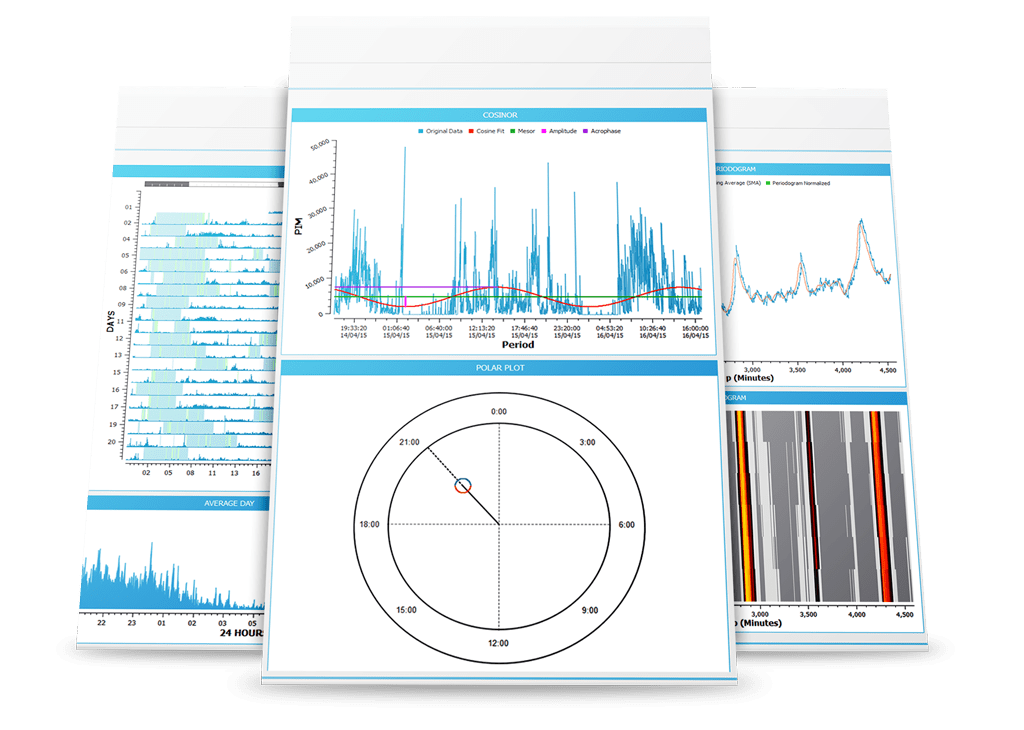
Various tools can be used to verify the presence of rhythm in these characteristics and estimate their parameters (Marques and Menna-Barreto, 2003). A widely used analysis is the Cosinor method, which consists of fitting a cosine curve to a time series of a rhythm, allowing verification of its acrophase (the time of the highest values of the estimated curve), its bathyphase (the time of the lowest values of the estimated curve), and the duration of a complete cycle and its amplitude.
Mechanisms that generate circadian rhythmicity are present in every cell of the body and are capable of setting an approximate 24-hour rhythm, which can fluctuate slightly longer or shorter. Although each cell performs this function, each individual has a structure located in the anterior hypothalamus, known as the Suprachiasmatic Nuclei (SCN) (PANDA et al., 2002). These nuclei are capable of generating an endogenous rhythm based on environmental rhythmic information and signal to various internal oscillators, which in turn promote oscillatory responses with an approximate 24-hour period in several physiological factors.
These oscillations, mediated by environmental changes (light-dark cycle), result in two information outputs for the organism:
a) Humoral output, from connections of the NSQ with the pineal gland, where physiological phenomena result in the production of melatonin, which signals to the organism the dark phase of a day;
b) neural output, where the connections of the NSQ culminate for sympathetic autonomic output (SIMONNEAUX and RIBELAYGA, 2003; MORRIS et al., 2011). Both responses are responsible for the generation and maintenance of circadian rhythm synchronization in the organism.
Circadian rhythm changes
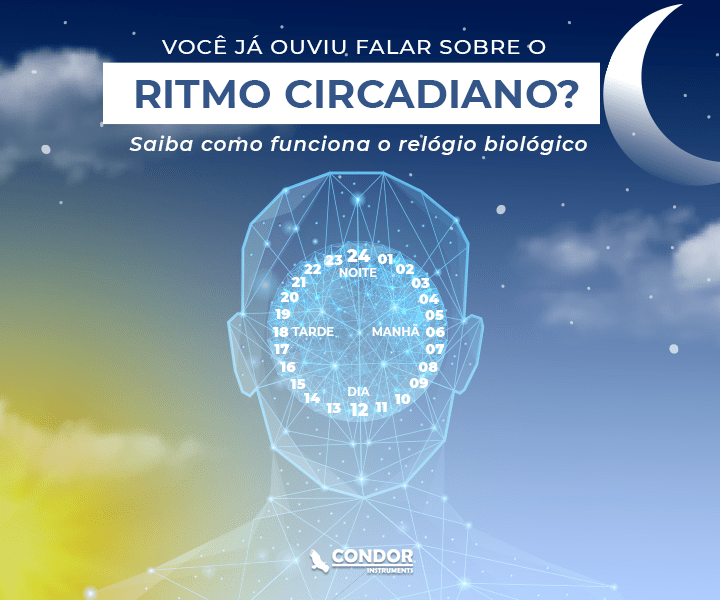
Many physiological variables exhibit circadian oscillation, such as body temperature, melatonin secretion, cortisol and insulin, blood glucose, blood pressure, heart rate, among others. In this way, it is possible to identify a sequential order of the phases of circadian rhythms of several physiological variables throughout the day, characterizing an internal temporal organization in individuals.
One example is the following order: maximum body temperature which occurs around 6 PM; followed by the onset of sleep around 11 PM; at 2 AM there is a peak in growth hormone secretion and, shortly thereafter, at 4 AM, there is a peak in melatonin secretion; at 5 AM the minimum body temperature occurs and a few hours later, awakening takes place.
Daily maintenance of this order and the intervals between the moments when variables are expressed indicate that the individual is “synchronized,” reflecting a healthy state of the organism and a good quality of life (Marques and Menna-Barreto, 2003).
Circadian biological rhythms are the result of the interaction between endogenous biological oscillatory systems and the external environmental factors to which organisms are subjected. This process of adjusting an organism’s rhythms to environmental rhythms is called “entrainment,” and the environmental cues capable of promoting this action are called “zeitgebers” (Marques and Menna-Barreto, 2003).
Events that can generate a modification in the expression of circadian rhythmicity are called “synchronizing agents” (or entrainers) and appear in various forms for humans:
✓ Ambient temperature;
✓ Social interactions;
✓ Nutrition;
✓ Light information provided by day and night.
The temporal relationships between physiological events and environmental events that are recognized for their ability to synchronize biological rhythms, such as the light/dark cycle, characterize external temporal organization (Menna-Barreto and Wey, 2007). Both processes – external temporal organization and internal temporal organization – are mediated by circadian synchronization, which consists of the process responsible for maintaining a stable phase relationship between different rhythms, through entrainment or masking.
Marques and Menna-Barreto (2003) define entrainment as a temporal adjustment of a given biological rhythm by another rhythm—of a physiological nature, such as the secretion of a hormone, or of an environmental nature, such as the light/dark cycle.
Masking is a process of modifying a biological rhythm through an event that increases or decreases its expression. This can occur due to an external event, such as the suppression of locomotor activity in rats when the ambient light is turned on, or due to an event within the organism itself, such as the facilitation of growth hormone production during sleep.
To determine the expression of circadian rhythmicity of physiological variables, laboratory protocols are used that aim to remove the masking conditions of the circadian rhythm, such as daily physical activity, diet, ambient temperature and light, among other conditions that may influence the endogenous biological rhythm (Marques and Menna-Barreto, 2003).
To achieve this, there are “constant routine” protocols, which use sleep deprivation, constant lighting, and the offer of isocaloric meals at standardized times, and “forced desynchrony” protocols, which use, in addition to the procedures described for the constant routine protocol, a change in the light/dark cycle duration to 20 or 28 hours, with the objective of preventing the synchronization of the timing system, obtaining a “pure” endogenous circadian rhythm, the free-running rhythm (Hofstra and De Weerd, 2008).
Using these protocols that allow individuals to express their rhythm freely, Daan and Pittendrigh (1976) observed that animals exhibit different behaviors in response to the same light stimulus when it is presented at different times. This allows for the construction of Phase-Response Curves (PRCs). Thus, when light pulses are applied at the beginning of the subjective night (sleep phase, regardless of the actual time), there is a phase delay of the rhythm, but when they are applied at the end of the subjective night, there is a phase advance of the animal’s rhythm. However, stimuli applied at intermediate times between these extremes cause little or no displacement of the rhythm (Marques and Menna-Barreto, 2003).
– When light stimuli are combined with a chronobiotic drug, in this case, melatonin – which has the property of signaling the dark phase of a day – it is possible to observe that, depending on the time when individuals are subjected to light or melatonin administration, a different adaptation of the circadian rhythm expression occurs.
The incidence of light, strong or weak, close to the start of sleep, can delay the rhythm, meaning it can retard the onset of the sleep phase. Conversely, when light is administered in the final hours of the sleep phase, an advance in rhythm can be observed, meaning an earlier awakening is noted. It is interesting to note that the response to ambient light generates an adaptation of advances and delays of greater magnitude than that observed by the administration of melatonin.
– At times when individuals are typically active (midday), light exposure does not cause any adjustments to the circadian timing system. In other words, trying to drastically and rapidly change sleep and wake times with a strategy considering light exposure times will not generate a response in the circadian timing system. Another aspect that should be added is that this graph is a generalized model, not considering the variability in individuals’ habit preferences.
Read about Melanin.
The human circadian rhythm
Humans are a diurnal species, meaning individuals are active during most of the day and sleep for a large part of the night. However, as stated earlier, there are individual differences in preferences for timing of daily activities and in sleeping and waking times.
Taking into account preferences for specific times for carrying out activities and for sleeping and waking, it is possible to classify individuals into distinct groups, termed “chronotypes” in Chronobiology: people who prefer to sleep and wake earlier are classified as morning types; those who prefer to sleep and wake later are evening types; and those whose preferences fall between these two extremes are called intermediate types (Roenneberg et al., 2003).
These daily preference characteristics change throughout life. However, some studies claim that there is a genetic component involved in individual preferences for carrying out activities.
Chronotypes are identified mainly through questionnaires. The most used questionnaire is the Horne and Östberg (HO) (1976) questionnaire, which has the main objective of assessing whether an individual’s preferences for carrying out daily tasks occur in the morning, afternoon, or an intermediate time.
This study showed that peak alertness is associated with peak core body temperature: morning types presented their temperature peak earlier than evening types, and intermediate types registered temperature peaks between the values obtained for morning and evening types (Horne and Ostberg, 1976).
More recently, another questionnaire for chronotype identification has been proposed: the Munich Chronotype Questionnaire (MCTQ) (Roenneberg et al., 2003), which has been widely used. This questionnaire includes questions about sleep and wake times separately during the work week and during days off (weekends, for example), allowing for the identification of an individual’s sleep midpoint (midpoint of sleep duration) through a weighted average of the sleep midpoints on workdays and days off. With the exception of individuals with extreme morning chronotypes, there is a large difference in individual sleep times between workdays and days off, with most subjects accumulating a sleep debt during workdays.
The difference in daily habits that characterize morning and evening individuals, including their sleeping and waking habits, also results in different forms of response in temporal adjustments in these groups. Morning individuals, for example, find it easier to wake up earlier than usual than an evening person, but they have greater difficulty extending their activity duration, meaning sleeping later, which leads to different adjustments in circadian timing mediated by light/dark cycle information.
Therefore, when establishing strategies for the use of therapies involving the manipulation of environmental information, or drugs capable of making changes to the circadian timing system, it is initially necessary to have knowledge of people’s daily habits, whether through the use of activity diaries or the use of devices from which it is possible to obtain information about the expression of individuals’ circadian rhythmicity.
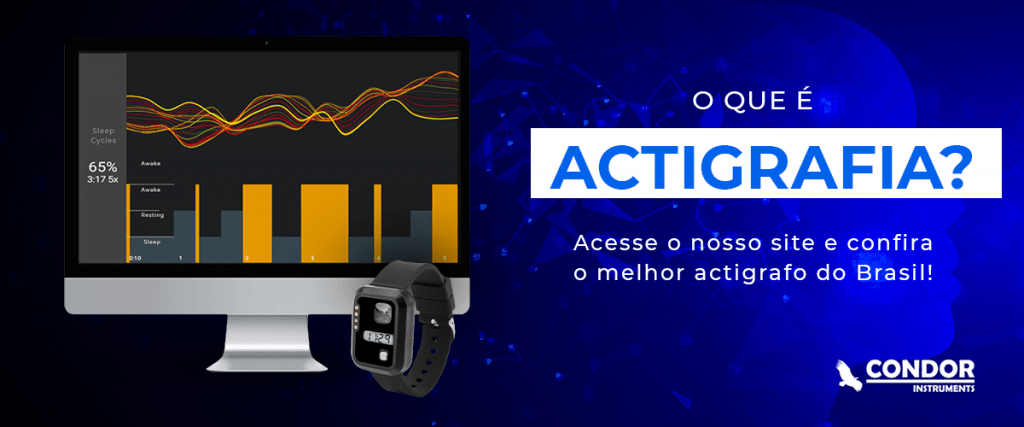
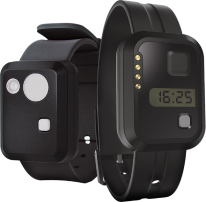
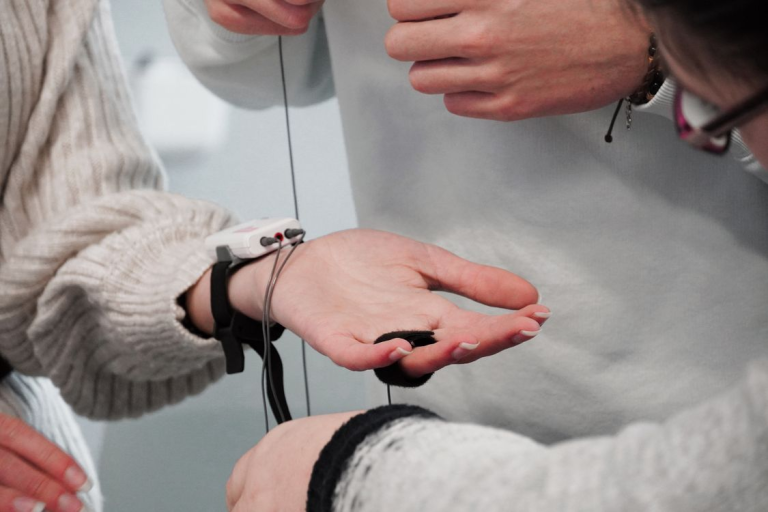
Thus, by better understanding people’s habits, it is possible to plan an intervention to ensure a more effective adaptation of the individual to the strategies proposed by the treatment. In this scenario, the use of an actigraph, a device capable of non-invasively monitoring activity and rest cycles in humans, is a way to collect data and information that can offer a more detailed view of events in the circadian cycle in patients, volunteers, and workers in various fields.
Take the opportunity to learn about our solutions in Actigraphy via this link.
See you next time.