


The word yoga means universal communionIYENGAR, 2007), which demonstrates that the goal of yoga is also to find inner peace, and not just physical health. Yoga sessions consist of slow movements and rhythmic breathing, body postures (asanas), controlled breathing (pranayama), contemplative meditations, relaxation, and prayers (GOVINDARAJ; KARMANI; VARAMBALLY; GANGADHAR, 2016).
The observed effects of regular yoga practice are diverse, and include a reduction in cortisol levelsBRAINARD; PRATAP; REED; LEVITT et al., 1997), increased brain-derived neurotrophic factor (BNDF) concentration, oxytocin (Jayaram; Varambally; Behere; Venkatasubramanian et al., 2013; Naveen; Thirthalli; Rao; Varambally et al., 2013and serotonin (WALTON; PUGH; GELDERLOOS; MACRAE, 1995), reduced perception of pain (LEE, MOON, KIM, 2014), greater activation of the parasympathetic systemGOPAL; LAKSHMANAN, 1972), stress reductionPANJWANI; GUPTA; SINGH; SELVAMURTHY et al., 1995)}, improvement of selective attentionVELIKONJA; ČURIĆ; OŽURA; JAZBEC, 2010), as well as improved mood and quality of life (OKEN; ZAJDEL; KISHIYAMA; FLEGAL et al., 2006Considering all these factors, the objective of this text is to elucidate the effects that the practice of yoga and meditation have on sleep quality.
Effects of yoga practice on sleep
Observed Changes in Sleep Architecture Following Yoga and Meditation Practice
The effects of meditation on sleep were first reported by Mason and colleagues in 1997 (MASON; ALEXANDER; TRAVIS; MARSH et al., 1997Researchers observed that experienced practitioners spent more time in slow-wave and REM sleep and had reduced electromyographic activity. With this work, they opened new avenues for discovering the relationship between meditation and sleep, and most subsequent studies corroborated their findings.
Sulehka and Ravindra compared the sleep of experienced and non-practitioners of Vipassana meditation, and observed a higher proportion of slow-wave sleep and REM sleep in experienced practitioners. Furthermore, they also showed a greater number of sleep cycles.PATTANASHETTY; SATHIAMMA; TALAKKAD; NITYANANDA et al., 2010; Sulekha; Thennarasu; Vedamurthachar; Raju et al., 2006).
Evidence on the efficacy of yoga and meditation for insomnia
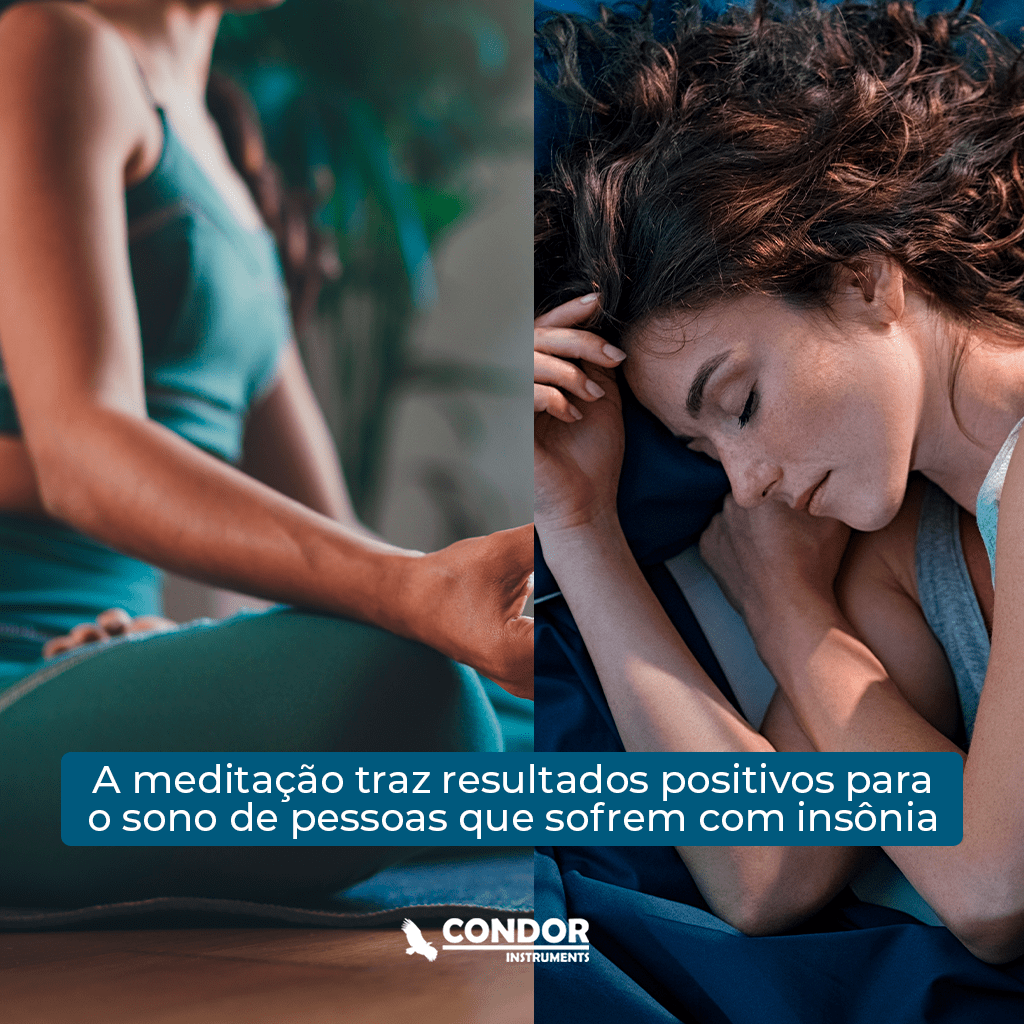
A systematic review with meta-analysis investigated the effect of mindfulness practice on the sleep quality of patients with insomnia.GONG; NI; LIU; ZHANG et al., 2016The authors evaluated 6 randomized clinical trials (which included 330 participants) and concluded that mindfulness practice had positive effects in improving sleep quality in patients with insomnia, representing an option for adjunctive therapy in the treatment of this disorder.
Seven weeks on a mindfulness program resulted in positive effects, improving subjective insomnia, sleep quality, daytime sleepiness, and sleep impairment in patients with fibromyalgia.AMUTIO; FRANCO; SÁNCHEZ-SÁNCHEZ; PÉREZ-FUENTES et al., 2018. There is also evidence demonstrating improvements in insomnia in cancer patients (MUSTIAN, 2013; RAO; VADIRAJA; NAGARATNA; GOPINATH et al., 2017; DRAWER; DRAWER; GOGINENI; SHATIL et al., 2017).
In another protocol, yoga practice was offered to seniors with complaints of insomnia, and after the intervention, subjective sleep quality improved significantly.HALPERN; COHEN; KENNEDY; REECE et al., 2014).
Evidence Demonstrating the Short-Term, Medium-Term, and Long-Term Beneficial Effects of Practicing Yoga and Meditation
A study aimed to compare sleep quality after a day with yoga practice and without yoga practice in experienced individuals. Participants’ sleep was assessed using polysomnography, and the yoga session lasted 22 minutes and 30 seconds. The control condition was performed in the [position/posture] Corpse Pose held the cadaver pose for the same 22 minutes and 30 seconds. During nighttime sleep, a greater proportion of slow-wave sleep was observed, as well as a greater perception of recovery upon waking compared to when the practice was not performed.PATRA; TELLES, 2009In addition, the number of awakenings per hour during sleep was lower after practicing yoga.
A study by Guerra and colleagues demonstrated that 8 weeks of meditation practice (30 minutes per week) was effective in reducing time awake after sleep onset, sleep latency, and subjective sleep perception obtained through the Pittsburgh Sleep Quality Index (Pittsburgh Sleep Quality Index – PSQI among healthcare professionals. In addition, heart rate during sleep was 3% lower in the post-intervention assessment. Sleep was assessed using polysomnography, and the results show that the positive effects of meditation can be observed even in small “doses” (WAR; SANTAELLA; D’ALMEIDA; SANTOS-SILVA et al., 2020).
Finally, in a protocol that offered daily yoga practice to volunteers with at least 2 years of experience, PSQI scores and sleep onset latency were lower in the yoga group (compared to the control group) (BANKAR; CHAUDHARI; CHAUDHARI, 2013).
Conclusion
The practice of yoga and meditation promotes benefits throughout the body, improving the overall health and well-being of practitioners. Regarding sleep quality, evidence shows that the practice leads to reduced sleep onset latency, as well as less time awake after sleep onset. It also causes positive changes in sleep architecture, resulting in a greater proportion of slow-wave sleep and REM sleep.
Thus, as it is a cost-free practice with no side effects, and considering that its beneficial effects are observed across all age groups, it can be a great strategy to improve the sleep quality of the entire population.
Sleep pattern assessment
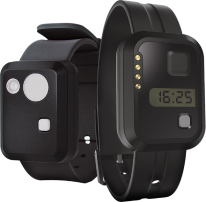
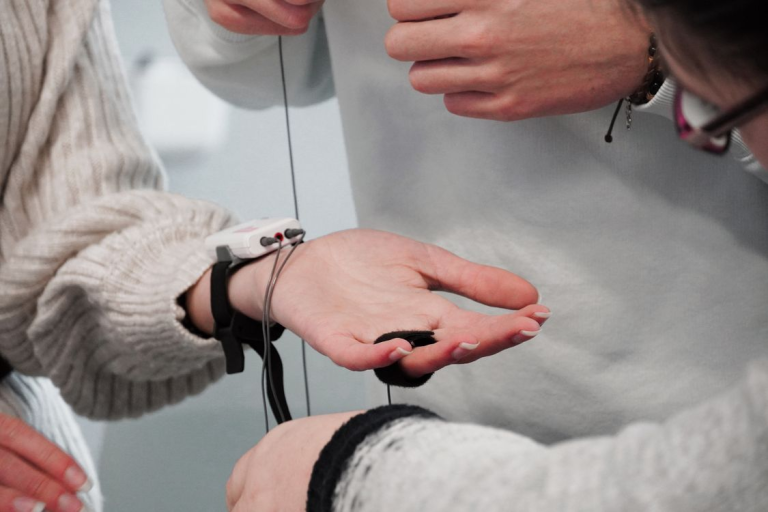
Actigraphy is a non-invasive technique that can be used to assess sleep patterns and the sleep-wake rhythm. The actigraph is a device similar to a wristwatch that contains light, movement and temperature sensors. Using this information, it is possible to extract data on variables such as total sleep time, sleep onset latency, time awake after sleep onset, sleep efficiency, time awake and rhythm-related variables such as cosinor, spectrogram, periodogram and non-parametric variables such as L5, M10, IS and IV.