


Who are the professionals in Sleep Medicine?
Sleep science is made up of professionals from different fields, united by the aim of improving the quality of life of patients suffering from sleep disorders. To do this, they draw on the specific skills of their fields of study. In this article we look at the specialties, both within and outside medicine, that contribute to this science that is so relevant to human health – Sleep Medicine. Find out more below.
A brief history of Sleep Medicine
Sleep has been described in literature since Hippocrates (460 BC). However, sleep medicine is a relatively recent science. The scientific approach to sleep began in 1830, with the first descriptions of cases of narcolepsy.
The first center focused on the study of sleep was created in 1970 in Stanford, USA, to treat narcoleptic patients. Since then, thousands of sleep study centers have sprung up all over the world.
In 1990, the specialty went global with the development of the International Classification of Sleep Disorders (ICSD). International Classification of Sleep Disorders), which sees doctors from all over the world contribute to the discussion of studies and findings related to more than 80 sleep disorders described in medical literature.
Thus, in just over two decades, an interdisciplinary specialty has emerged whose aim is to increase quality of life by promoting quality sleep.
A basic and essential biological need, sleep is one of the pillars of physical development and human mental functions. Sleep deprivation causes changes in the biological rhythm and leads to countless problems, such as memory loss, irritability, fatigue, mood swings and psychopathological manifestations, among others. For this reason, when there are changes in sleep, the causes should be investigated immediately. This is the purpose of Sleep Medicine.
Sleep disorders require analysis by professionals from various fields, giving an interdisciplinary approach to the choice of treatment that best suits each patient. Because of this, Sleep Medicine was born multidisciplinary, since its object can only be understood from multiple perspectives.
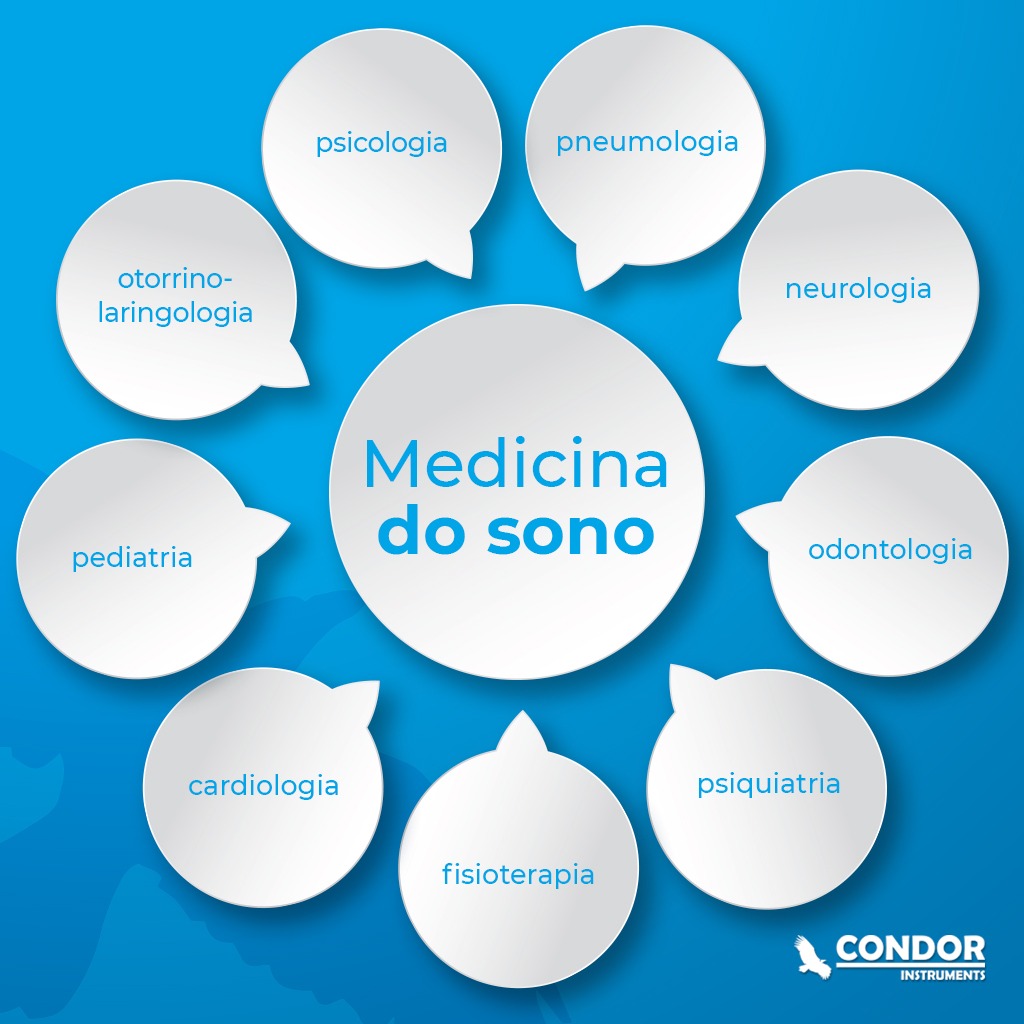
The area involves pulmonologists, neurologists, otorhinolaryngologists, surgeons, physiotherapists, dentists, among other specialties that we’ll see below.
Sleep disorders
Sleep disorders consist of changes in the rhythm and quality of sleep, whether due to brain, respiratory, anatomical or movement disorders.
Currently, the 3rd edition of the International Classification of Sleep Disorders (ICSD-3) is used to group sleep disorders into the following categories:
- insomnia disorders;
- sleep-related breathing disorders (obstructive sleep apnea, snoring);
- central hypersomnia disorders (narcolepsy, hypersomnia);
- sleep-wake circadian rhythm disorder (delayed and advanced sleep phases, irregular sleep-wake);
- parasomnias (sleepwalking, NREM sleep parasomnias, night terrors, nightmares);
- sleep-related movement disorders (restless legs syndrome, bruxism); and
- other sleep-related medical and neurological disorders and conditions.
Who are the professionals in Sleep Medicine?
Each of the pathologies related to sleep is due to a combination of factors related to breathing, facial shape, psychological state, among others. For this reason, it is an interdisciplinary area and involves various professionals who work in the management of these patients.
In Brazil, Sleep Medicine is very well structured. In the medical field, after primary training and residency, the professional who chooses the area undergoes a specialization in Sleep Medicine, which can be accessed through Pulmonology, Neurology, Psychiatry, Cardiology, Pediatrics and Otorhinolaryngology.
Professionals from other backgrounds, such as psychologists, physiotherapists, dentists and speech therapists, also contribute to Sleep Medicine and work with doctors to treat sleep disorders. Next, we’ll see how each of these specialties and backgrounds contribute to Sleep Medicine.
Pulmonology
Most sleep disorders are classified as sleep-disordered breathing. Obstructive sleep apnea syndrome (OSAS) is one of the most common complaints among these disorders and is characterized by recurrent events of upper airway obstruction, which can be partial (hypopnea) or complete (apnea).
The interruption of air in the lungs results in a drop in oxygen and an increase in carbon dioxide in the blood. Because they are directly related to lung and respiratory function, pulmonologists are essential in the management of patients with these symptoms.
These professionals assess lung capacity and the airways, order complementary tests (such as polysomnography) and refer the patient for the appropriate treatment, taking into account the patient’s respiratory situation.
Neurology
All sleep disorders can cause a long-term decline in concentration and memory. The degenerative consequences of poor sleep quality are the subject of study in Neurology, which assesses how a lack or excess of sleep can interfere with the proper functioning of brain capacities.
Furthermore, in recent years a curious correspondence between sleep disorders and degenerative diseases has been studied. Evidence from preliminary studies suggests that circadian rhythm disorders, as well as being a symptom of neurodegeneration, may also be a potential risk factor for the development of Parkinson’s disease, Alzheimer’s disease and related dementias.
Because of this association, Neurology is of central importance in the management of patients with these comorbidities, since the doctor specializing in Neurology will be able to assess, based on specific tests, the relationship between the functioning of the patient’s brain and the quality of sleep.
Thus, specialized treatment can cover not only sleep-related symptoms, but also the patient’s neurological causes and consequences.
Psychiatry
The identification of altered sleep patterns is notable in most psychiatric disorders. Among psychiatric patients, 40% report insomnia, and 46% of patients with hypersomnia meet the criteria for the diagnosis of psychiatric disorders.
Around 80% of patients with depression complain of changes in their sleep patterns. Initial insomnia is frequent in cases of associated anxious and manic symptoms. In addition, many psychiatric drugs are also responsible for changes in circadian rhythm.
For this reason, the psychiatrist is one of the professionals responsible for treating insomnia, hypersomnia and night terrors, examining the patient’s medical history and previous conditions that are risk factors for these disorders, as well as assessing the use of psychiatric drugs that can interfere with the patient’s sleep patterns.
Cardiology
Patients with cardiovascular diseases have a high prevalence of sleep disorders. On the other hand, insomnia and obstructive sleep apnea, in addition to causing symptoms such as tiredness and excessive daytime sleepiness, are also risk factors, especially if associated with systemic arterial hypertension or diabetes mellitus, for problems such as high blood pressure, high cholesterol and arrhythmias.
Thus, in Sleep Medicine, Cardiology is the specialty that assesses the cardiovascular consequences of poor sleep quality. If the patient has risk factors related to cardiac health, they should undergo an assessment with a cardiologist in order to analyze treatment options taking into account the specifics of the patient.
Pediatrics
Sleep disorders are very prevalent in the pediatric age group. There is a high incidence of disorders such as sleepwalking, night terrors and nightmares in pediatric patients. It is estimated that 30% of children have some sleep disorder, and this prevalence is even higher among children with neuropsychiatric comorbidities.
In addition, sleep disorders also increase the risk of a series of metabolic and behavioral alterations in this age group, which can lead to attention deficits, mood disorders, weight gain and even neurodevelopmental alterations.
Therefore, the pediatrician has a fundamental role to play in providing guidance on sleep habits, as well as in recognizing, suspecting and managing possible disorders, since they need to be able to analyze the routine and details of the family environment related to the child’s sleep, in addition to carrying out a clinical examination that takes into account the specificities of the child’s circadian rhythm and aspects of child development in terms of sleep.
Otorhinolaryngology
This specialty plays a fundamental role in the treatment of sleep disorders linked to breathing. Sleep-related breathing disorders, such as snoring and obstructive sleep apnea, are caused by obstruction of the airways, which is precisely what otorhinolaryngology studies.
For this reason, otorhinolaryngologists are the professionals responsible for diagnosing and monitoring many patients with complaints of obstructive airway disorders, knowing how to assess whether the problems in question require surgery or whether they respond better to conservative treatments, such as the use of continuous positive airway pressure (CPAP). continuous positive airway pressure) or intraoral appliances.
Nasal and pharyngeal surgery, as well as mandibular and tongue base advancement, can solve this type of problem. If surgery is necessary, the otorhinolaryngologist is the one who performs this type of intervention.
In addition to medical research, sleep disorders require a variety of treatments that involve everything from jaw structure to factors such as tongue position and related comorbidities, such as mood disorders. We’ll see below what other areas of knowledge work in the management of patients with sleep disorders.
Psychology

Psychologists are great allies in the treatment of insomnia, night terrors and nightmares. Allied to medical interventions, psychology plays a fundamental role in the management of patients suffering from circadian rhythm symptoms, because through cognitive-behavioral therapy (CBT), relaxation techniques and sleep hygiene, it can often reverse the psychological manifestations related to anxiety and psychiatric disorders.
For insomnia, for example, cognitive-behavioral therapy is currently the most indicated treatment in combination with pharmacological therapy. CBT consists of helping the patient to restructure their thoughts and modify inadequate sleep habits. The technique can often reduce or eliminate the need for drug interventions.
Physiotherapy
Physiotherapists work in various ways in the field of sleep, both in clinical practice and in research. They identify and treat both non-respiratory (insomnia and restless legs) and respiratory disorders. The most well-known approach to physiotherapy in sleep medicine concerns the treatment of obstructive sleep apnea.
Based on their knowledge of the pathophysiology of the respiratory system, physiotherapists are the best professionals to monitor treatment with CPAP ventilation equipment, guiding and adapting the patient throughout this therapy.
In addition, physiotherapists specializing in Sleep Medicine are able to perform and read tests such as polysomnography and polygraphy.
Dentistry
Among the most common pathophysiologies in sleep disorders are respiratory disorders such as snoring and apnea.
The cranio-maxillofacial assessment of the patient is fundamental for referral to the most appropriate treatment for these disorders, as it allows for the identification of dentofacial alterations, which are very prevalent in patients with obstructive sleep apnea.
Dentists can opt for orthodontic treatments, facial orthopedics, skeletal surgeries or make intraoral devices that aim to improve the patient’s breathing conditions during sleep.
In addition, the dentist is the right professional to treat bruxism, assessing the need for temporary occlusal plates, the application of specific medications for the treatment of bruxism and other treatments.
Speech therapy
The relationship between changes in the structures and functions of the stomatognathic system in individuals with sleep-disordered breathing is well known to speech therapists.
These professionals are responsible for identifying alterations in facial motricity, which are common in mouth-breathing children and adults with obstructive sleep apnea, and working to adjust the muscles and functions of breathing in order to increase the space in the pharynx and reduce airflow obstruction.
Speech therapy exercises are able to reduce the frequency of snoring by 36% and its intensity by up to 59%, reduce the rate of awakenings and promote increased tongue strength.
Sleep Medicine: an integrative science
As we have seen, the integration of different specialties is fundamental for Sleep Medicine, since the disorders linked to it are often the cause or consequence of other pathologies studied by these specific areas.
Together, professionals from different areas work on the prevention, diagnosis and treatment of patients and make a difference in promoting improved quality of life for people all over the world who suffer from poor sleep quality.
Every day, science advances in the development of new treatments for these disorders, and this is thanks to the combination of perspectives in sleep studies. The technological equipment we have today exists because of the combination of these areas. As a result, it is now possible to gain a deeper understanding of this mystery of nature – sleep.