


Sleep is a biological necessity, and its importance in promoting quality of life and well-being is well documented. Thus, sleep deprivation leads to fatigue, excessive daytime sleepiness, and cognitive impairments (such as verbal fluency, memory, decision-making, and reaction time).BLOOM; AHMED; ALESSI; ANCOLI-ISRAEL et al., 2009Among the factors that cause sleep deprivation and restriction, persistent pain is one of the most common reasons.BRENNAN; LIEBERMAN, 2009). Thus, many patients believe that the sleep problems they experience are caused by the pain they feel (Hawker; Stewart; French; Cibere et al., 2008Still, many patients believe that the pain will disappear when the sleep problem is resolvedMorin, Gibson, and Wade, 1998Therefore, the objective of this article is to demonstrate the existing relationships between pain and sleep problems.
Sleep and Pain Relationships
Sleep deprivation leads to changes in pain processing, such that chronic sleep restriction increases pain sensitivity.KUNDERMANN; KRIEG; SCHREIBER; LAUTENBACHER, 2004For example, healthy individuals reported pain amplification after 2 nights of sleep restriction (whose nighttime sleep was restricted by 4 hours), and the intensity of perceived pain increased with the number of nights of sleep restriction (Haack; Mullington, 2005In seven healthy individuals, sleep restriction and REM sleep restriction caused hyperalgesia the following day.ROEHRS; HYDE; BLAISDELL; GREENWALD et al., 2006These authors conclude that it is important to be cautious when administering medications that reduce both total sleep time and/or the proportion of REM sleep during the night, as this may increase individuals’ sensitivity to pain.
Thus, this evidence indicates that focusing on improving sleep quality can be an effective strategy for alleviating pain in these patients. Furthermore, good quality sleep is considered important in resolving persistent pain (DAVIES; MACFARLANE; NICHOLL; DICKENS et al., 2008) and, furthermore, patients with persistent pain who are good sleepers report less pain at night (ASHWORTH; DAVIDSON; ESPIE, 2010Thus, sleep and gold are directly related when one or the other increases or decreases.
Effects of pain on sleep
Insomnia is defined as sleep onset latency greater than 30 minutes and/or a nighttime awakening greater than 30 minutes occurring on 3 or more nights per week for 3 or more months.SATEIA, 2014). Insomnia is highly prevalent among patients with chronic pain, with 53 to 90% experiencing some degree of clinical insomnia (TANG; WRIGHT; SALKOVSKIS, 2007For example, patients with chronic back pain are 18 times more likely to have insomnia than people without back pain.
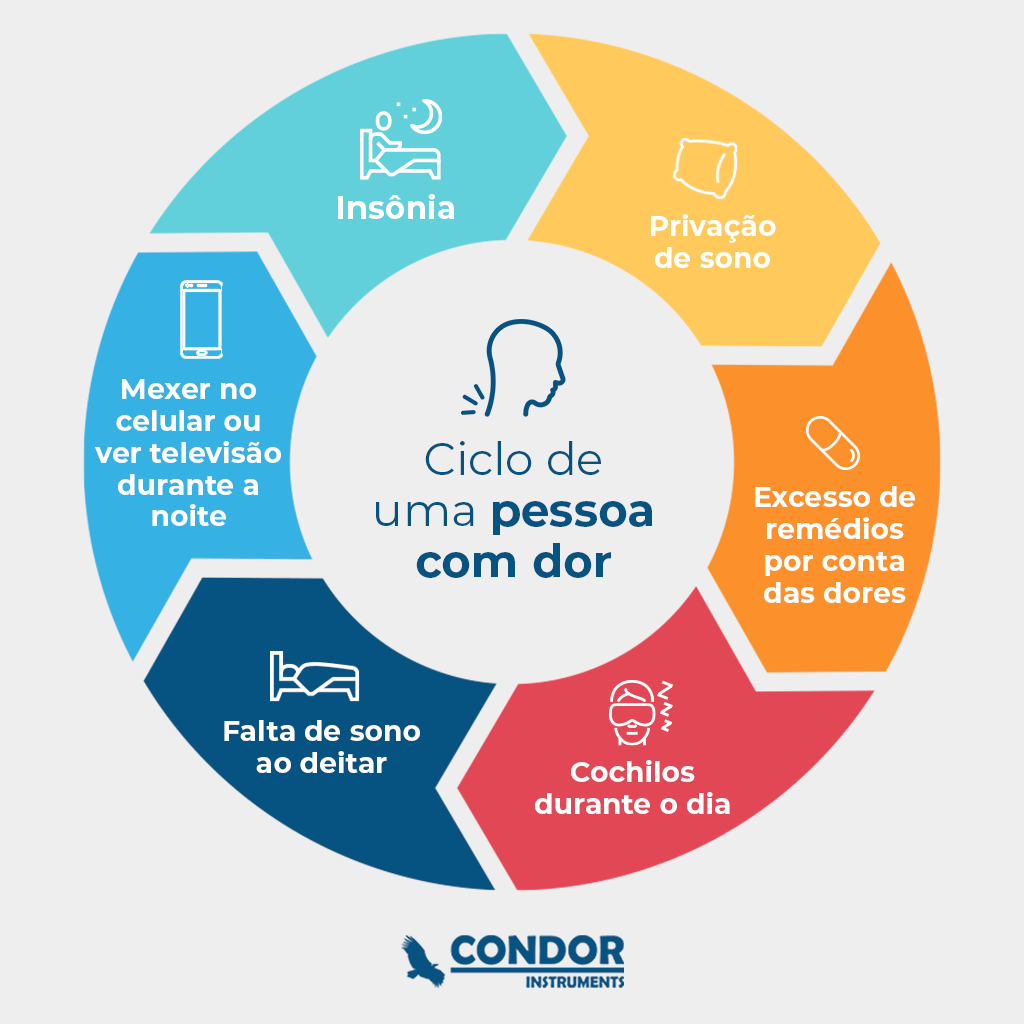
Furthermore, constant pain causes disturbances and changes in the person’s lifestyle, which ultimately result in a worsening of sleep quality. For example, patients with chronic pain often experience reduced levels of daily physical activity, increased time in bed, and daytime naps. This pattern of activity can promote and perpetuate insomnia through conditioningSPIELMAN; SASKIN; THORPY, 1987). In a cross-sectional study conducted among patients with hip osteoarthritis awaiting hip replacement, more than 501 of these patients suffered from insomnia. On the other hand, pain relief improved sleep quality in half of these patients (BLAGESTAD; PALLESEN; GROENLI; TANG et al., 2016). The same fact was observed in patients with rheumatoid arthritis, supporting the impact of sleep restriction on pain severity (IRWIN; OLMSTEAD; CARRILLO; SADEGHI et al., 2012In addition, chronic pain is associated with other health conditions, such as an increased risk of developing depression, frequent medication use, a lower quality of life, and greater utilization of the healthcare system.BLAY; ANDREOLI; GASTAL, 2007).
Chronic pain management and sleep disorders
Despite the growing increase in scientific literature involving the subject of sleep in patients with chronic pain, many pain treatment programs use analgesic and/or hypnotic medications for the treatment of comorbidities such as insomnia.TANG; WRIGHT; SALKOVSKIS, 2007These medications include anticonvulsants, benzodiazepines and non-benzodiazepines, and tricyclic antidepressants. However, it is important to exercise caution when administering these medications, as they have side effects. For example, the use of hypnotic medications is associated with side effects such as sedation, excessive daytime sleepiness, dizziness, headache, and cognitive and psychomotor impairments.HOLBROOK; CROWTHER; LOTTER; CHENG et al., 2000In addition, there is evidence demonstrating that medication for headaches or musculoskeletal pain can worsen sleep and, in doing so, increase the sensation of pain.DOUFAS; PANAGIOTOU; IOANNIDIS, 2012Therefore, it is important that the patient’s condition be analyzed and the root of the pain be treated effectively, and, in parallel, if necessary, medication be administered that causes the least possible harm.
Conclusion
The vast majority of patients with chronic pain experience some degree of sleep impairment. On the other hand, sleep restriction leads to an aggravation in pain perception. Therefore, these patients deserve differentiated treatment that addresses both the root cause of the pain and the existing sleep disorders. Finally, caution is necessary when using hypnotic medications, as potential side effects can directly impact the daily lives of these patients.
How to evaluate sleep?
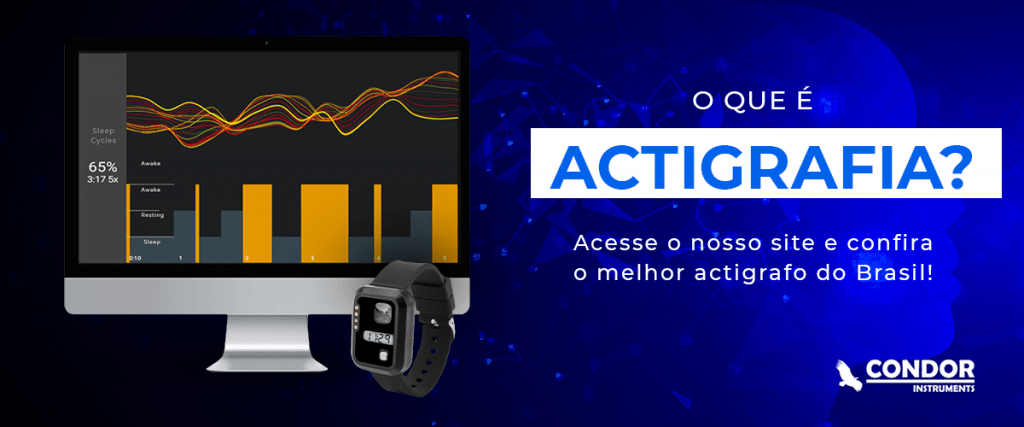
Actigraphy is a technique that can be used to assess sleep patterns and the wake-sleep rhythm. The actigraph is a wrist-watch-like device that contains light, motion, and temperature sensors. Thus, through this information, it is possible to extract data regarding variables such as total sleep time, sleep onset latency, wake after sleep onset, sleep efficiency, wake time, and rhythm-related variables like cosinor, spectrogram, periodogram, and non-parametric variables such as L5, M10, IS, and IV.