

Sleep researchers and clinicians rely on actigraphy to study sleep behavior outside laboratory settings. Yet real-world environments rarely stay consistent. Temperature shifts, urban noise, lighting exposure, and household activity all influence sleep patterns and wearable outputs. Researchers who ignore these variables risk drawing incomplete conclusions from otherwise strong datasets.
The growing focus on actigraphy, environmental factors, and sleep highlights an important reality: context matters as much as movement data. Physicians, sleep specialists, and clinical researchers need monitoring strategies that account for environmental variability without compromising workflow efficiency or patient compliance.
Why Environmental Context Matters in Actigraphy
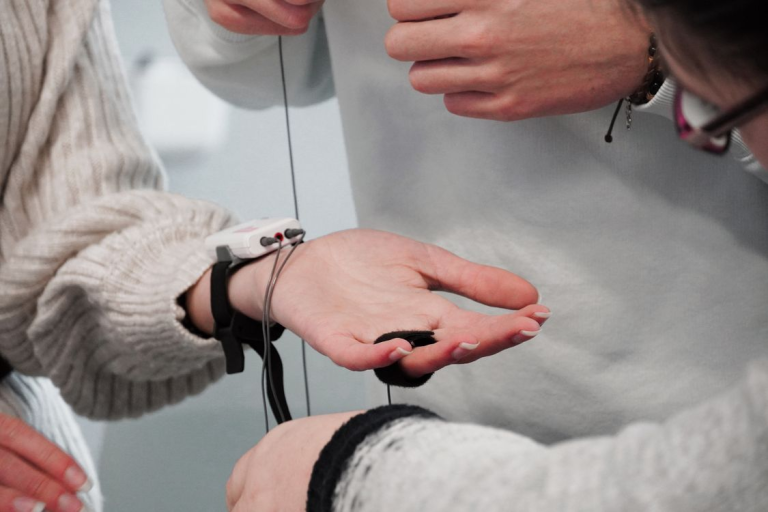
An actigraphy device records movement patterns to estimate sleep and wake cycles. Actigraphy offers clear advantages for longitudinal studies, circadian rhythm analysis, and at-home sleep monitoring. However, actigraphy does not monitor REM sleep, which makes contextual interpretation even more important during data analysis.
Environmental factors often alter patient behavior in ways that directly affect actigraphy results. A noisy bedroom may increase nighttime movement. Elevated room temperature may trigger awakenings. Irregular light exposure may shift circadian timing and distort sleep onset measurements.
Researchers who study sleep outside controlled laboratory settings must consider these variables throughout protocol design and interpretation.

Temperature and Sleep Fragmentation
Temperature strongly influences sleep continuity and sleep onset latency. Excessive heat often increases body movement during sleep, while cold environments may trigger frequent awakenings.
Researchers using actigraphy monitoring devices frequently observe elevated nighttime activity during seasonal temperature fluctuations. Without environmental tracking, analysts may interpret this activity as insomnia, restless sleep, or circadian disruption rather than thermal discomfort.
Clinical studies benefit from pairing actigraphy with ambient temperature logging. This combination allows researchers to separate behavioral sleep disturbances from environmental disruptions.
Temperature data also improves longitudinal analysis. Seasonal studies often reveal different baseline movement patterns across summer and winter cohorts. Environmental normalization helps researchers maintain consistency across datasets.
Noise Exposure and Motion Artifacts
Noise remains one of the most overlooked contributors to sleep fragmentation. Traffic, hospital alarms, shared living spaces, and household activity can all increase nighttime movement.
Actigraphy captures movement but cannot determine whether internal physiology or external stimuli caused the disruption. Researchers, therefore, need a supporting environmental context to improve interpretation accuracy.
Continuous noise monitoring provides critical insight during clinical studies involving:
- Shift workers
- Hospitalized patients
- Urban populations
- Pediatric sleep assessments
- Neurodegenerative disease cohorts
Environmental audio tracking also helps researchers identify recurring disturbances that affect multiple participants within the same geographic region or facility.
When clinicians combine sleep diary reporting with environmental measurements, they gain stronger insight into behavioral versus environmental sleep disruption patterns.
The Growing Role of Light Exposure Analysis
Light exposure directly affects circadian timing, melatonin secretion, and sleep onset regulation. Researchers increasingly integrate light analysis into actigraphy protocols because ambient lighting often explains irregular sleep timing more effectively than movement data alone.
A wearable light sensor allows clinicians to measure real-world light exposure continuously throughout the day and evening. This capability supports research involving circadian rhythm disorders, shift work adaptation, and delayed sleep phase conditions.
Modern systems now provide advanced light characterization through metrics such as:
- wearable photopic lux measurements
- melanopic EDI lux measurements from wearable devices
Photopic lux measurements quantify visible light intensity, while melanopic metrics estimate biologically effective light exposure that influences circadian regulation.
These measurements help researchers evaluate how artificial lighting environments alter sleep timing and circadian entrainment.
Why Light Context Improves Sleep Interpretation
Patients often experience substantial variation in light exposure despite similar movement patterns. Office workers under dim indoor lighting may show delayed circadian timing compared with individuals exposed to stronger natural daylight.
Researchers who use a light sensor alongside actigraphy gain several advantages:
- Better circadian phase interpretation
- Stronger assessment of shift work adaptation
- Improved evaluation of treatment interventions
- Enhanced understanding of sleep timing variability
This integration becomes especially important in studies involving aging populations, psychiatric disorders, and neurodegenerative diseases, where circadian dysregulation frequently appears.
Wearable systems equipped with a wearable light sensor also reduce reliance on subjective environmental reporting.
Modeling Environmental Variability in Research
Environmental variability creates analytical challenges, especially during multicenter or long-duration studies. Researchers must therefore build environmental considerations into study design from the beginning.
Several strategies improve data reliability:
Standardized Environmental Logging
Researchers can collect consistent environmental measurements across all participants using synchronized sensors for temperature, sound, and light exposure.
Combined Sleep Diary Integration
A sleep diary provides contextual behavioral information that complements wearable outputs. Participants can document disruptions such as room changes, caregiving duties, travel, or nighttime awakenings.
Why Researchers Choose Condor Instruments
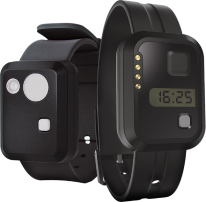
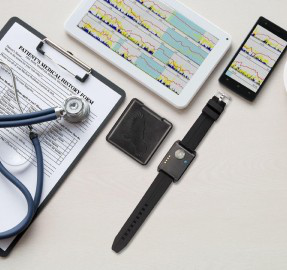
At Condor Instruments, we understand the growing need for clinically focused actigraphy solutions that address real-world environmental variability. Our actigraphy monitoring devices support advanced sleep and circadian research through integrated wearable light sensor technology and high-quality environmental data collection.
We help physicians, sleep specialists, and researchers capture meaningful photopic lux logger wearable and melanopic EDI lux wearable measurements alongside reliable actigraphy data.
We continue to support clinical teams and research institutions with robust actigraph technology designed for modern sleep science applications. Connect with our team now.