

By the time the first participant walks out with a device on their wrist, most of the quality of the resulting dataset has already been decided. Actigraphy is unforgiving in this respect, because a configuration error repeats silently across every night of every recording.
We see the same pattern often. A study team selects a capable actigraph, then loses a share of its usable nights to decisions that were never written down. Setting those decisions before enrollment costs less than salvaging data afterwards, and it strengthens the path from raw collection to clinical insight.
Lock the Protocol Configuration Before Enrollment
Epoch length, sampling interval and activity mode are protocol parameters, not preferences. Fix them in writing, apply them to every device in the fleet, and record them in the study documentation alongside the inclusion criteria.
Clock synchronization deserves the same treatment. Devices configured on different workstations can drift apart, and a study that pools data across sites will find the discrepancy at analysis rather than at setup. Set every device from a single configured machine, or verify the clock at each handover.
The same applies to firmware. A fleet running two firmware versions is effectively two instruments, and the difference will not appear in the exported file unless somebody recorded it at the point of configuration.
Decide who holds configuration authority as well. On multi site studies, a single named person configuring every device removes an entire class of error that is otherwise invisible until the datasets are pooled.
Write Participant Instructions That Survive Week Three
Compliance decays. Instructions written for day one need to work on day twenty one, when the novelty has gone and the participant is showering, swimming or charging a device at an unfamiliar time.
Keep the instruction set short and behavioral. Which wrist, worn continuously, what to do about water, when to press the event marker, and how to report a removal. Ask participants to note removals in the same place every time, because a removal that is not reported becomes indistinguishable from a long period of stillness.
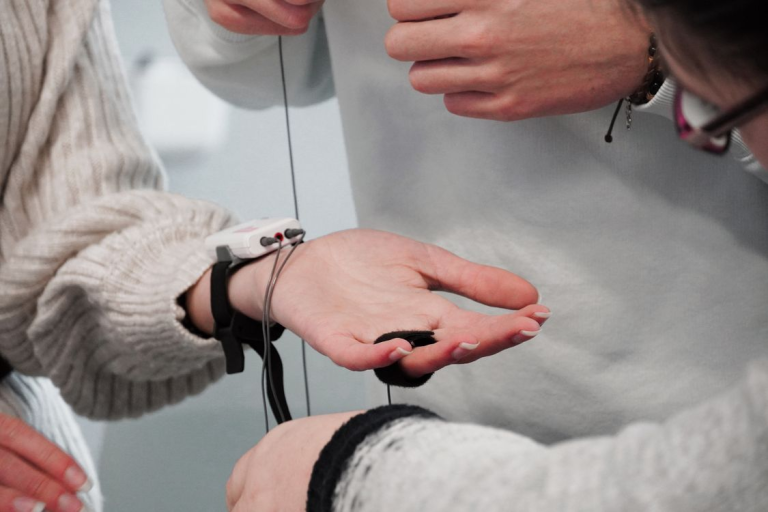
Written instructions also need a spoken counterpart. A two minute demonstration at handover, showing the participant how the strap fastens and where the event marker sits, produces measurably better compliance than a printed sheet alone. Ask them to repeat the removal reporting step back to you.
Operational research on actigraphy watches in demanding field conditions has produced documented practice parameters for irregular schedules that translate well to civilian protocols involving shift work or travel.
Decide Now How Missing Data Will Be Handled
Every study loses nights. What separates a defensible dataset from a contested one is whether the exclusion rules existed before anyone saw the data.
Decide in advance what counts as a valid day, how many valid days a participant needs in order to be retained, and how non-wear will be detected. A capacitive off-wrist sensor answers this directly on devices that carry one. Where the device relies on movement alone, an algorithmic wear and non-wear classification has to fill the gap, and its thresholds become part of the method.
Decide separately what happens to partially valid days. A recording interrupted for two hours in the afternoon may be perfectly usable for a sleep analysis and unusable for an activity analysis, and treating both cases under one rule discards data unnecessarily.
Write the rule down, apply it blind, and report how many participants it excluded.
Standardize Scoring Before Anyone Scores Anything
Scoring introduces variance that has nothing to do with the participant. Where rest intervals are set manually, two trained scorers working from the same recording can produce different sleep periods.
Three commitments resolve most of this. One documented scoring rule, applied consistently. A defined procedure for cases where the diary and the actigraph disagree. And an inter-rater check on a subset of recordings early enough to correct drift.
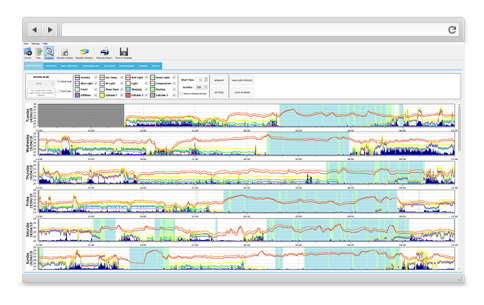
Version control matters here as much as it does in analysis code. Record which software version scored each recording, because algorithm implementations change between releases and a study spanning two versions contains two scoring conditions.
A comparison of scoring rules used in pediatric research found that results remained broadly comparable across rules, provided the rule in use was stated. The reporting matters as much as the choice.
Front-Loading the Decisions That Cost Most Later
None of this requires more equipment. It requires an afternoon, a written protocol document and the discipline to apply identical settings to every device in the study.
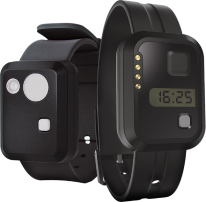
The ActTrust 2 wrist wearable supports this approach with an event marker button, IP67 water resistance and configurable epoch settings, and our support pages cover the questions study coordinators raise most often.
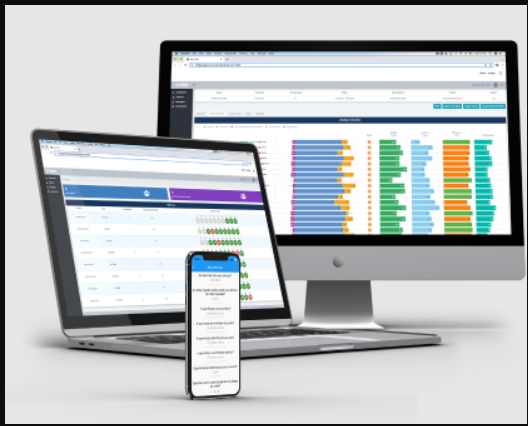
Condor Instruments builds research grade instruments in Sao Paulo and supplies sleep laboratories and academic groups worldwide with an actigraph device for sleep and activity tracking together with the ActStudio analysis platform. Book a setup conversation with our team before your protocol locks.