


Sleep fragmentation refers to the disruption of continuous sleep by frequent awakenings or transitions into lighter sleep states. Unlike total sleep duration, which captures quantity, fragmentation captures quality and stability of sleep architecture. For researchers and clinicians, it is a critical dimension of sleep health because even individuals with adequate sleep duration may experience impaired restoration due to repeated micro-arousals.
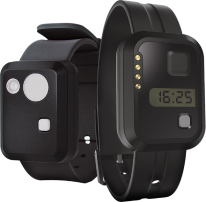
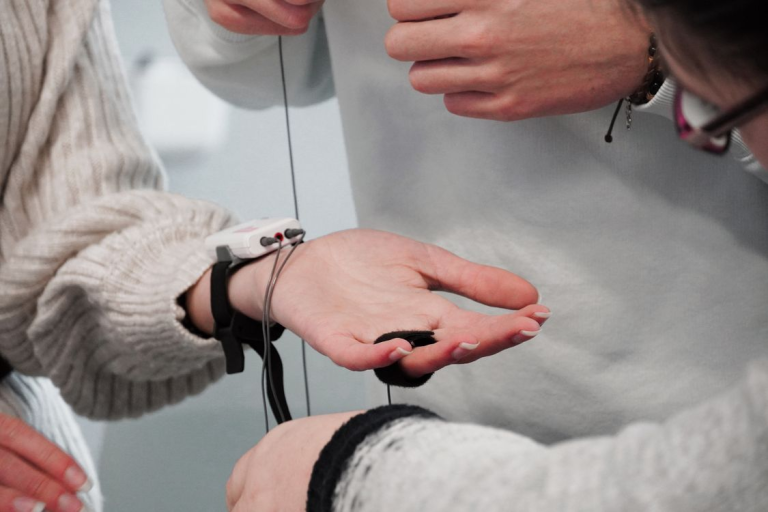
In modern sleep research, actigraphy has become a key tool for quantifying fragmentation in real-world settings. An actigraph provides continuous movement data that can be used to infer rest-activity instability over time. When combined with contextual inputs such as a Sleep diary and environmental measurements from a light sensor, researchers can construct multi-layered models of sleep continuity and disruption.
Understanding sleep fragmentation requires moving beyond binary sleep-wake classification toward high-resolution temporal modeling of sleep dynamics.
Conceptualizing Sleep Fragmentation in Sleep Science

Sleep fragmentation is not a single phenomenon but a composite of multiple disruptions occurring at different temporal scales. These include:
- Brief awakenings lasting seconds to minutes
- Frequent transitions between sleep stages
- Reduced sleep bout duration
- Increased nocturnal motor activity
From a physiological perspective, fragmentation reflects instability in the neural systems regulating sleep maintenance. It is often associated with conditions such as obstructive sleep apnea, insomnia, restless legs syndrome, and neurodegenerative disorders.
In actigraphy-based research, fragmentation is typically inferred from movement patterns rather than direct electrophysiological signals. While this introduces some limitations, it allows for scalable, longitudinal monitoring in natural environments.
Actigraphy-Based Measurement of Sleep Fragmentation
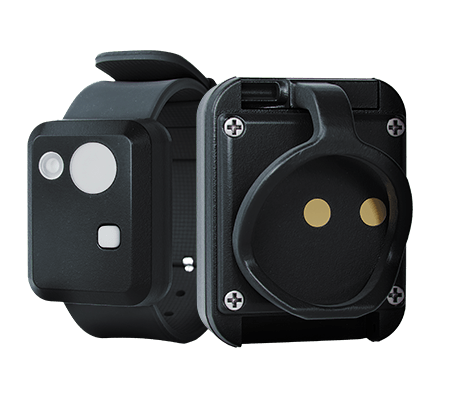
Actigraphy provides a non-invasive method for estimating sleep fragmentation through continuous accelerometry. Movement detected by an actigraph is used as a proxy for wakefulness or light sleep.
Core Actigraphy-Derived Indicators
Several standard metrics are used to quantify fragmentation:
- Activity counts during sleep periods
- Number of awakenings per night
- Duration of wake after sleep onset
- Sleep efficiency derived from sleep-wake classification
These metrics are typically computed over defined sleep intervals, often guided by Sleep diary Entries that indicate bedtimes and wake times.
While traditional actigraphy summarizes fragmentation at the night level, modern approaches increasingly focus on signal-level analysis to capture micro-arousals and transient disruptions.
Signal-Level Metrics for High-Resolution Fragmentation Analysis

High-resolution actigraphy allows for more detailed measurement of sleep fragmentation, going beyond overall scores.
Transition Density
Transition density measures how frequently the system switches between inferred sleep and wake states within a given time window. Higher transition density indicates more fragmented sleep.
Bout Length Distribution
Sleep and wake bouts can be modeled as distributions rather than averages. Fragmented sleep is characterized by shorter and more variable sleep bouts.
Movement Burst Analysis
Instead of counting discrete awakenings, signal-level methods analyze bursts of movement intensity. These bursts often correspond to micro-arousals that are not captured in traditional scoring systems.
Spectral Variability
Frequency-domain analysis of actigraphy data can reveal irregular oscillations in movement patterns, which are associated with unstable sleep architecture.
Mathematical Modeling of Sleep Fragmentation

Quantifying fragmentation often involves statistical modeling of temporal structure in actigraphy data.
Markov Models of Sleep-Wake Transitions
Sleep can be modeled as a stochastic process with probabilistic transitions between states. Markov models Estimate the likelihood of transitioning from sleep to wakefulness and vice versa, providing insight into sleep stability.
Hidden State Models
Hidden Markov Models (HMMs) are particularly useful in actigraphy-based sleep research. They infer latent sleep states from observable movement data, allowing for more accurate detection of fragmentation patterns.
Role of Multimodal Data in Fragmentation Analysis
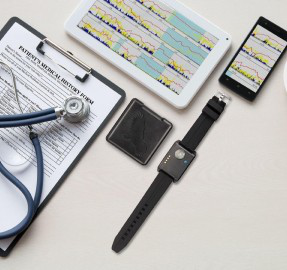
Sleep fragmentation is influenced by both internal and external factors. Integrating multiple data streams improves interpretability and model accuracy.
Sleep Diary Integration
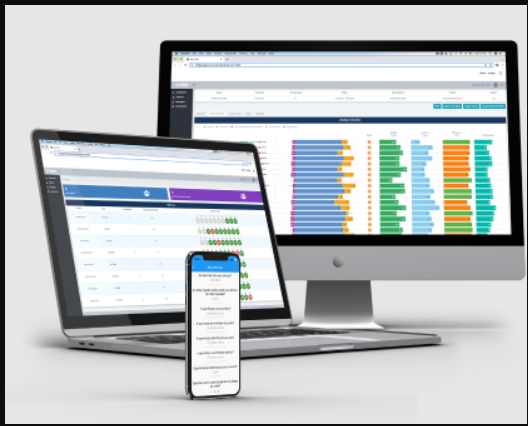
A Sleep diary provides subjective annotations of awakenings, perceived sleep quality, and nocturnal disturbances. While subjective, these reports help validate actigraphy-derived fragmentation metrics and identify discrepancies between perceived and actual sleep continuity.
Light Sensor Contributions
A light sensor adds environmental context to fragmentation analysis. Nocturnal light exposure can trigger awakenings or delay return to sleep, while morning light exposure can stabilize circadian alignment and reduce fragmentation.
Combined Modeling Frameworks
By integrating actigraphy, sleep diary data, and light exposure metrics, researchers can build comprehensive models that distinguish between:
- Environmentally induced fragmentation
- Physiological sleep instability
- Behavioral or schedule-related disruptions
Clinical Relevance of Sleep Fragmentation
Sleep fragmentation is a clinically significant marker associated with a wide range of health outcomes.
Neurocognitive effects
Fragmented sleep is strongly associated with impaired attention, memory consolidation, and executive function. Even when total sleep duration is preserved, high fragmentation can lead to measurable cognitive deficits.
Cardiometabolic Risk
Chronic sleep fragmentation has been linked to an increased risk of hypertension, insulin resistance, and cardiovascular disease. Disrupted sleep continuity affects autonomic regulation and metabolic homeostasis.
Psychiatric Disorders
Conditions like depression, anxiety, and bipolar disorder often involve altered sleep architecture, characterized by increased fragmentation. Actigraphy provides a scalable tool for monitoring these disruptions in real-world settings.
Aging and Neurodegeneration
Sleep fragmentation increases with age and is particularly pronounced in neurodegenerative disorders such as Alzheimer’s disease. Longitudinal actigraphy studies are valuable for tracking progression over time.
Limitations of Actigraphy in Measuring Sleep Fragmentation
Despite its utility, actigraphy has inherent limitations in quantifying sleep fragmentation.
Lack of Direct Physiological Measurement
Actigraphy infers sleep from movement, which cannot directly capture cortical arousals or sleep stage transitions.
Quiet Wakefulness Misclassification
Periods of wakefulness without movement may be misclassified as sleep, leading to underestimation of fragmentation.
Device Sensitivity Variability
Different actigraph devices vary in sensitivity and filtering algorithms, which can affect fragmentation estimates.
Context Dependence
Fragmentation metrics are influenced by behavioral context, making interpretation dependent on additional data such as sleep diaries and environmental monitoring.
Advanced Analytical Approaches
Machine Learning Classification
Machine learning models can improve fragmentation detection by learning complex patterns in actigraphy signals. Supervised models trained on polysomnography-labeled datasets can identify subtle patterns of instability.
Deep Learning for Temporal Structures
Recurrent neural networks and temporal convolutional models can capture long-range dependencies in sleep-wake sequences, improving the detection of fragmented sleep patterns.
Multiscale Entropy Analysis
Entropy-based methods quantify the complexity of actigraphy signals across multiple time scales. Higher entropy is often associated with more fragmented sleep.
Applications in Research and Clinical Settings
Sleep Disorder Diagnostics
Actigraphy-based fragmentation metrics are widely used in the assessment of insomnia and sleep apnea, particularly in home-based monitoring.
Treatment Monitoring
Changes in fragmentation patterns can be used to evaluate the effectiveness of interventions such as cognitive behavioral therapy for insomnia or continuous positive airway pressure therapy.
Population Sleep Studies
Large-scale epidemiological studies utilize actigraphy to measure sleep fragmentation in diverse populations, allowing for the examination of environmental and socioeconomic factors.
Occupational Health
Shift workers and individuals with irregular schedules often experience increased fragmentation, making actigraphy a valuable tool for occupational health research.
Toward Standardized Fragmentation Metrics
A major challenge in sleep research is the lack of standardized definitions and metrics for sleep fragmentation. Differences in preprocessing, thresholding, and modeling approaches limit comparability across studies.
standardization efforts include:
- Unified definitions of wake and sleep epochs
- Consensus-based fragmentation indices
- Open-source analytical pipelines
- Integration of multimodal validation datasets
Standardization is essential for translation Actigraphy-based fragmentation measures into clinical practice.
Future Directions in Fragmentation Research
The field is moving toward more integrated and personalized approaches to sleep fragmentation analysis. Emerging trends include:
- Real-time fragmentation monitoring using wearable devices
- Personalized baseline modeling of sleep stability
- Integration with physiological sensors beyond actigraphy
- Predictive modeling of fragmentation-related health outcomes
As wearable technology advances, fragmentation analysis will likely become a core component of digital sleep phenotyping.
Advancing Sleep Fragmentation Research with High-Precision Wearable Actigraphy from Condor Instruments
Enhance sleep research with advanced actigraphy systems designed for high-resolution monitoring of sleep fragmentation. Combine continuous actigraph data, integrated light sensing, and structured Sleep diary inputs to improve data quality, strengthen compliance, and support clinically relevant sleep analysis. Contact us now To learn more.
Frequently Asked Questions
Sleep fragmentation is measured using actigraphy by analyzing patterns of movement and stillness over an extended period, typically several nights. Actigraphy devices, usually worn on the wrist, record activity levels. During sleep, a person is expected to be mostly still. Sleep fragmentation refers to frequent awakenings or prolonged periods of wakefulness that interrupt consolidated sleep.Here’s how actigraphy helps measure this:* **Activity Counts:** The device records “activity counts” that represent the intensity of movement. Periods of stillness are generally associated with sleep, while movement indicates wakefulness.
* **Epoch-by-Epoch Analysis:** Actigraphy data is divided into small time intervals called “epochs” (e.g., 30-second or 1-minute intervals). The device assigns a score to each epoch based on the activity detected within it (e.g., “awake” or “asleep”).
* **Calculating Fragmentation Indices:** Specialized algorithms then process these epoch-by-epoch classifications to calculate various metrics that quantify sleep fragmentation. Some common indices include:
* **Wake After Sleep Onset (WASO):** This is the total amount of time spent awake after the initial sleep period has begun. It’s a primary indicator of fragmentation.
* **Number of Awakenings/Arousals:** This counts how many times the individual transitions from sleep to wakefulness. A higher number suggests more disturbed sleep.
* **Arousal Index:** This is the number of awakenings per hour of sleep.
* **Movement Density:** This can indicate the frequency and intensity of movements during assumed sleep periods, suggesting restlessness or brief awakenings.
* **Sleep Efficiency:** While not a direct measure of fragmentation, low sleep efficiency (the ratio of total sleep time to time in bed) can be a consequence of significant fragmentation.By analyzing the patterns of movement and stillness across these epochs, actigraphy provides an objective, non-invasive way to quantify how frequently and for how long an individual’s sleep is interrupted, thus measuring sleep fragmentation.
It is measured using movement-based metrics such as awakenings, activity bursts, and wake after sleep onset derived from actigraph data.
Sleep fragmentation is clinically important because it can lead to a range of negative health consequences.
It is associated with cognitive impairment, cardiometabolic risk, and psychiatric disorders, even when total sleep duration is normal.
Yes, actigraphy can accurately detect awakenings.
It can estimate awakenings, but it may miss quiet wakefulness and cannot directly measure brain activity like polysomnography.