


What is the Sleep Diary, how is it applied and what facilities does it bring to sleep medicine?
It’s very difficult, practically impossible, to find someone who hasn’t had at least one episode of insomnia or some other sleep disorder throughout their life. It’s absolutely natural, especially in times like these, to lose sleep or sleep badly, perhaps because of anxiety or some other reason. But if you often have trouble sleeping, you know all too well how bad it is for your health. It is for these people that Sleep Diary.
But what exactly is a Sleep Diary? Who should use it, how and why? What are its benefits? What are the types of Sleep Diary available on the market? Our experts have prepared this content especially to answer all these questions and eliminate your doubts. Read this article to the end and learn all about Sleep DiaryThis very important tool helps in the diagnosis and treatment of sleep disorders.
What are sleep disorders?
No less than a third of the world’s population is affected by obstructive sleep apnea, or simply sleep apnea, according to data from the Sleep Institute published in the Journal of Sleep Apnea. Sleep Medicine. A very relevant and emblematic fact about this statistic is that between 85% and 90% of those on this list don’t even know it, also according to the medical organization.
In Brazil, specifically, this percentage is alarmingly higher. A survey carried out by the São Paulo Sleep Institute, with comparative analyses carried out between 2007 and 2017, indicates that the number of Brazilians affected by apnea has jumped from 38% to 69% of the population. For its part, the Brazilian Association of Sleep Medicine guarantees that one in three Brazilians suffers from insomnia.
Insomnia and obstructive sleep apnea are two of the most common sleep disordersSleep disorders are also known as sleepwalking, night terrors, narcolepsy, bruxism and restless legs syndrome. Sleep disorders are illnesses that affect our sleep on a regular basis, which can cause symptoms such as tiredness, irritation, difficulty concentrating and sleepiness throughout the day, and can even lead to depression, a stroke or cardiovascular disease.

It’s a serious matter, and when the quality of sleep begins to deteriorate and harm the patient’s health, it’s necessary to seek out a specialist, such as a sleep doctor. Sleep medicine is a relatively new specialty in medicine, which emerged in the 1970s and arrived in Brazil almost 20 years later, being recognized in August 2011. To become certified as sleep doctorThe professional needs to be a neurologist, an ENT specialist, a pulmonologist or a psychiatrist.
It is for people suffering from a sleep disorder that the Sleep Diary.
What is a sleep diary?
Each sleep disorder has its own characteristics and symptoms and obviously affects people individually. Insomnia, for example, can make it very difficult for a person to fall asleep, can interrupt their sleep in the middle of the night or can cause them to wake up well before the desired time. The specialist consulted will listen to the patient’s story and often this will be enough to determine the diagnosis.
O Sleep Diary is a subjective investigation into the quality and pattern of the patient’s sleep, and is considered the “gold standard” in the treatment of a wide variety of sleep disorders. The patient will report and record all their sleeping habits and times, as well as how they slept. It’s something very similar to a personal diary, which is very common in adolescence, when we report on our day-to-day life.
Thus Sleep Diary is a kind of form for recording all our sleep-related activity, which will be filled in day by day, continuously, so that the attending doctor has more data to help treat the diagnosed sleep disorder. Most of the time, the Sleep Diary is used by people suffering from insomnia, but it is also very effective in treating a wide variety of sleep disorders.
The main objective of a Sleep Diary is, in fact, to help diagnose and treat a sleep disorder. However, it is through this that it will be possible to identify the severity and often even help to understand the cause of the problem, such as routine habits that affect the quality of sleep during rest, a syndrome caused by insufficient sleep or a sleep disorder. circadian cycle. It is important to point out that Sleep Diary shows the physiological response of sleep in relation to proposed therapeutic interventions, making it an excellent and accessible tool in non-pharmacological intervention approaches to sleep disorders.
How and where do I keep my sleep diary?
As it is a personal and non-transferable diary, the Sleep Diary should be done exclusively by the person affected by the sleep disorder. They are the ones who know exactly what their night’s sleep was like and will be able to give a detailed account of everything that happened. There are no exact answers, so there is no right or wrong answer. The important thing is that the patient fills in all the questions proposed by the Sleep Diaryin the most detailed and honest way possible. In other words, the quality of Sleep Diary is the sole responsibility of the patient.
If they wish, the patient can record all their daily sleep-related movements on a piece of paper, filled in by hand. In other words, the Sleep Diary can be produced by the patient themselves in a notebook, for example. There is no problem with this, as long as the doctor has access to the Sleep Diary and can understand what is written there. In this case, organization is key.
There are, however, various ways for patients to fill out their Sleep Diary. One of them is in linear format, i.e. the diarist will write about everything that happened in relation to the previous night’s sleep, in a more or less free way. It’s like writing a chronicle, the theme of which is: “how was my night last night”. Obviously, the blocks of time in which sleep occurred during that day will be recorded.
O Sleep Diary can also be filled in as a table. There are seven columns, one for each day of the week, and a number of rows according to the items you want to investigate. The attending doctor will help you formulate the items in these lines, for example:
– What time did you go to bed?
– What time did you decide to start sleeping?
– How long did it take you to get to sleep?
– How many times did you wake up during the night?
– How long did you stay awake at these times during the night?
– What time did you wake up?
– What time did you get out of bed?
– How was the quality of your sleep?
– How were the three hours before you went to bed?
– When was the last time you ate and what did you eat?
– General comments.
Your doctor will give you advice based on the conversation he or she has with you about your habits, symptoms and sleep problems. If necessary, he or she may advise you to write down habits such as napping episodes throughout the day, alcohol or drug consumption, caffeine intake, medication and stress levels, among others.
Items related to daytime activities in the Sleep Diary
Your doctor may also ask you to write down items related to your day’s activities in your Sleep Diary. The main ones are:
– Relate the degree of tiredness
– Episodes of drowsiness
– Difficulty concentrating
– Irritability
– Physical activity (how much and what)
– Sexual activities
– In-room activities
– Stress episodes
– Episodes of malaise
– Presence of pain (where, when and intensity)
Sleep diary in app
O Sleep Diary doesn’t just have to be done on a pad of paper or in a spreadsheet on your laptop. There are applications on the market that offer Sleep Diary to be filled in conveniently on your own smartphone. There are several advantages, such as having the data computed automatically, recording the time of completion and making it easy to write in and access your diary.
A Condor Instruments’, for example, offers this productthe free download of a Sleep Diary application, both for Apple smartphones and those using the Android operating system. The Sleep Diary of Condor Instruments’ is used as an accessory to the Condor Instruments’ aimed at professionals who want to apply CBT-I and other therapies that require them to monitor their clients’ sleep. Its main features include: an application with a simple interface, access control by the professional and data sent automatically to the company’s server. Condor.
How long will it take to complete your Sleep Diary?
This is a decision that your healthcare professional will make. In general, two weeks is enough for them to have sufficient data to support the diagnosis and guide the treatment to be proposed. But, as we’ve already said, the quality of the information you write down is crucial. Filling in a Sleep Diary is a serious commitment and deserves your full attention, because it really is a tool that will help you solve your problem.
The diarist must not forget, for example, to write down all the data for one of the nights. Filling out the form is continuous, as long as this is established by the attending physician. But it must be made clear that the patient must be committed, but that doesn’t mean they have to put a clock by their bedside, as well as a pad and pen, and write everything down instantly, in real time. That would disturb an already impaired sleep even more. You fill it in the next day, and you don’t have to put in such a precise time.
It cannot be stressed enough that all issues related to the Sleep Diary will be defined by your doctor. There is no definitive model, and depending on your problem he or she may ask for more or fewer days and a more or less complete version. Of course Sleep Diary A more complete sleep diary will provide more information, but it will also require more dedication. There are versions of sleep diaries that can be used in clinical practice that have been validated in different populations through scientific research.
The importance of filling in the Sleep Diary
In fact, the Sleep Diary will provide your treating doctor with very valuable information for the diagnosis and treatment of the sleep disorder affecting you. This is its purpose and, in itself, justifies its use. But there are countless reports of patients who have improved a great deal by simply filling in the diary, because in this way they have become aware of what is happening and have come to perceive the problem more objectively.

By filling in the Sleep DiaryIn this way, the patient can become aware and re-educate themselves, for example by avoiding caffeine at night. Or eating heavy foods before bed. Because of this, many doctors extend the diary for longer than the two weeks that would initially be enough to support diagnosis and treatment.
The most important thing is that the patient comes to understand how their sleep works. It’s no longer a question of looking back at that night when, for example, they got up three times at dawn, but of seeing their sleep habits. This is perhaps the greatest advantage of using a Sleep Diary.
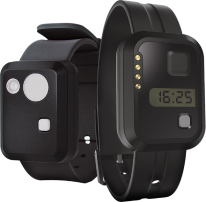
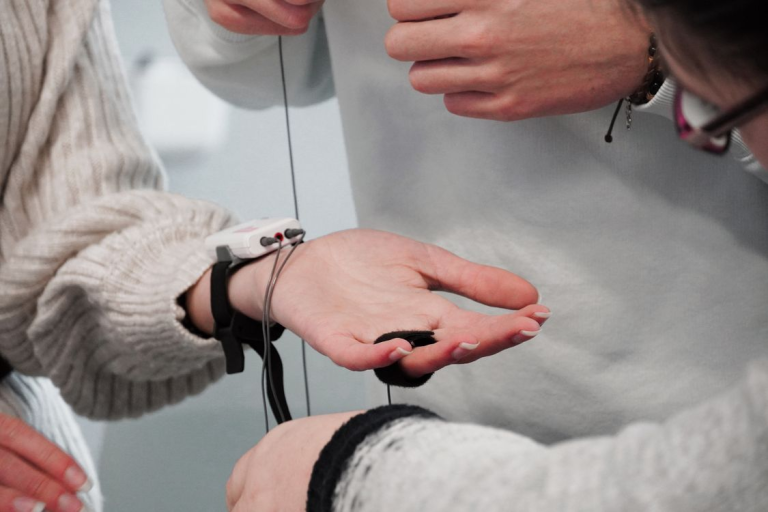
It is important to note that Sleep Diary may complement a test called actigraphy, which may be requested by the attending physician to analyze all sleep data.
Conclusion
Using and filling in the Sleep Diary is absolutely easy and simple, and available to anyone. If you want to, all you need is focus, good will, attention and a few sheets of paper and a pen, but there are free apps on the market that allow you to fill in the diary on your cell phone, with total convenience.
The treatment of sleep disorders is certainly not such a simple task, and filling out a Sleep Diary can be fundamental and decisive, helping the treating doctor to find the diagnosis and propose the treatment. Often, simply filling in the form helps the patient.
There is no Sleep Diary better than the other. There is such a thing as the ideal Sleep Diary: it’s the one that’s done in agreement with the attending physician and filled in with focus, responsibility and commitment.