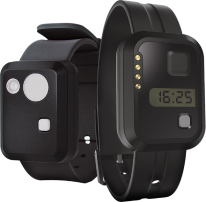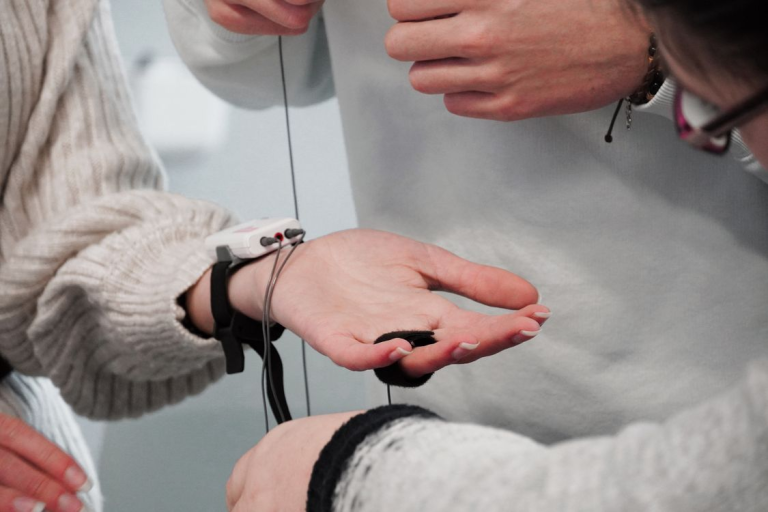



For sleep physicians, researchers, and clinical coordinators who depend on wrist-worn Actigrafia devices for longitudinal data collection, device longevity is not a peripheral concern — it is a core operational and methodological variable. A poorly maintained actigraph does not simply fail. It fails quietly, introducing data artifacts, sensor drift, and epoch gaps that may not be detectable until the analysis stage. By that point, the cost is not only financial. It is measured in compromised datasets, delayed publications, and reduced confidence in clinical findings.
At Condor Instruments, we design our Actígrafo devices for sustained, high-precision performance across extended research and clinical use. This article outlines the technical principles and operational routines that sleep research institutions and clinical programmes should implement to maximise actigraphy device lifecycle performance, preserve data integrity, and approach instrumentation sustainability as a strategic research asset.
Understanding the Actigraphy Device Lifecycle: What Determines Longevity?
The lifespan of a actígrafo clínico is shaped by three interdependent factors: hardware engineering, operational practice, and maintenance protocol. Mechanically robust devices, correctly operated and systematically maintained, routinely exceed five years of reliable clinical service. Devices that are not — regardless of initial build quality — degrade significantly faster.
From a hardware perspective, the components most susceptible to performance degradation over time are the rechargeable battery, the accelerometer calibration baseline, and the light sensor array. Each of these components responds differently to environmental conditions, wear frequency, and handling practices. Understanding their respective degradation patterns allows research teams to implement targeted maintenance routines rather than generic device care procedures.

Battery: The Most Time-Sensitive Component
Rechargeable lithium-based batteries — the standard in modern actigraph devices — have a finite number of full charge cycles before capacity begins to decline measurably. In clinical practice, the most common cause of premature battery degradation is not overuse but incorrect charging behaviour: storing devices at full charge for extended periods, allowing complete discharge before recharging, and exposing devices to elevated ambient temperatures during charging.
Our recommendation at Condor Instruments is to charge devices to approximately 80% capacity when placing them in storage between study periods, and to avoid leaving devices on charge indefinitely after the cycle completes. For devices in active use across multi-week protocols, establishing a consistent charging schedule — aligned with the study’s epoch structure — eliminates the risk of mid-protocol battery failure without accelerating long-term capacity loss.
Accelerometer Calibration: Protecting the Core Measurement
The accelerometer is the primary measurement instrument in any Actígrafo. Its performance is characterised by sensitivity, linearity, and zero-offset stability — all of which can drift over time, particularly following mechanical impact events or sustained operation in extreme temperature conditions. Even minor calibration drift, if undetected, can systematically bias activity counts and subsequently distort sleep-wake epoch classifications.
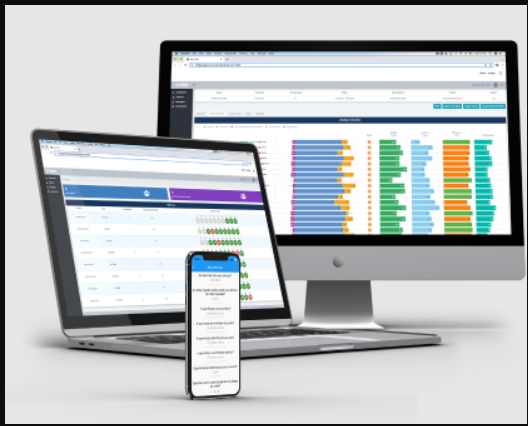
Software ActStudio da Condor Instruments includes calibration verification tools that allow research teams to assess accelerometer baseline performance before each study deployment. For high-throughput clinical programmes cycling the same devices through multiple patient cohorts, we recommend conducting a formal calibration check at the start of each new study period — not only at annual service intervals. This practice ensures that data collected from the first epoch of a new protocol is as reliable as data collected from the last.

Light Sensor Integrity: A Consideration Unique to Advanced Devices
For actigraph devices equipped with multi-channel light sensor arrays — including our ActLumus, which incorporates a melanopic EDI sensor alongside photopic lux measurement — sensor window clarity is a maintenance variable that directly affects data quality. Particulate contamination, surface oxidation, or micro-abrasion of the sensor window can attenuate light transmission, producing systematically low readings that are particularly problematic in circadian rhythm research, where light dose quantification is a primary outcome measure.
Regular inspection of the SENSOR DE LUZ window — and cleaning with appropriate non-abrasive materials — should be incorporated into every device return protocol. Our technical support team provides detailed guidance on approved cleaning procedures for the ActLumus sensor array. This routine takes under two minutes per device and meaningfully extends the period over which light sensor data remains within validated measurement tolerances.

Operational Practices That Extend Actigraph Lifespan Without Compromising Data
The gap between a device that lasts three years and one that lasts seven is rarely determined by manufacturing quality alone. It is determined by how the device is handled between protocol deployments. The following operational practices are drawn from our direct experience supporting clinical and research programmes that cycle large actigraphy device pools across multiple simultaneous studies.
Standardise Device Return and Inspection Protocols
Every device return should trigger a structured inspection sequence — not simply a data download and recharge. At Condor Instruments, we recommend a four-point return protocol:
- Visual inspection of device casing, strap attachment points, and sensor windows for damage or contamination.
- Battery level review and charging cycle log check via ActStudio.
- Light sensor window cleaning with approved materials.
- Data integrity verification — confirming epoch completeness and flagging any anomalous recording gaps before the dataset is archived.
This four-point sequence adds approximately ten minutes per device but prevents the compounding costs of undetected degradation across multiple study cycles.
Control Storage Conditions
Both battery performance and sensor calibration are sensitive to temperature and humidity extremes. Devices stored in environments above 30°C or subject to repeated thermal cycling — such as being left in vehicles or near heat sources — will exhibit accelerated battery capacity loss and, in some cases, accelerated sensor baseline drift. Condor Instruments’ actigraph devices are rated for an operating range of 0°C to 70°C, but long-term storage at the high end of this range is not equivalent to stable room-temperature storage. A dedicated, climate-controlled device storage area is a modest infrastructure investment with a measurable return in device longevity.

Integrate the Sleep Diary to Reduce Device-Dependent Data Gaps
A frequently overlooked dimension of actigraphy device lifecycle management is the role of the sleep diary as a data redundancy tool. When a device malfunction, off-wrist event, or battery failure occurs during a protocol, the concurrent sleep diary record provides the subjective data layer that partially compensates for the objective recording gap. Research programmes that deploy the sleep diary as a systematic companion to actigraphy — rather than an optional supplement — recover more usable data from imperfect recording periods and reduce the frequency with which entire participant datasets must be excluded from analysis.
Condor Instruments’ digital Diário do sono integrates directly with ActStudio, enabling clinicians and researchers to view subjective and objective data streams in a single interface and make informed decisions about how to handle recording gaps analytically.
Sustainability in Actigraphy: A Strategic and Scientific Imperative
Sustainability in clinical instrumentation is increasingly recognised as both an ethical and an economic responsibility. For research institutions managing grant-funded device pools, the cost of premature device replacement is not simply a line item — it is a diversion of research funding away from participant recruitment, data analysis, and scientific output. For clinical programmes, unplanned device replacement introduces procurement delays that disrupt patient assessment schedules.
At Condor Instruments, our approach to sustainable actigraphy device design encompasses three core principles:
- Hardware durability: IP67 water and dust resistance as standard across our device range, ensuring devices withstand the varied real-world conditions of clinical participant wear.
- Repairability and component servicing: Our technical support team offers component-level servicing for battery replacement and sensor maintenance, extending device service life beyond what would be possible with sealed, non-serviceable designs.
- Software-driven device health monitoring: ActStudio provides ongoing visibility into device performance metrics, allowing research teams to identify degradation trends before they reach the threshold of data quality impact.
These principles reflect our belief that a well-maintained actigraph is not only a more cost-effective asset — it is a more scientifically reliable one.
When to Replace: Defining the End of a Reliable Actigraphy Device Lifecycle
No maintenance programme eliminates the eventual need for device replacement. The clinical question is not whether to replace, but when — and on what basis the decision should be made. At Condor Instruments, we advise research teams to establish replacement thresholds based on objective performance metrics rather than device age alone:
- Battery capacity below 70% of rated capacity at full charge, measurable via ActStudio charging logs.
- Light sensor output deviating more than 15% from factory calibration benchmarks under controlled reference conditions.
- Accelerometer zero-offset drift outside validated tolerance ranges, confirmed by calibration verification.
- Physical integrity compromise — casing cracks, strap attachment failure, or sensor window damage that cannot be resolved through standard servicing.
Devices that meet one or more of these thresholds should be withdrawn from clinical or research use immediately, regardless of their recorded age. Conversely, devices that remain within performance specifications at five or six years of service can continue to be deployed with full confidence in data integrity — provided maintenance protocols have been consistently applied.
Frequently Asked Question
How often should actigraph devices be formally calibrated in an active research programme?
For programmes cycling devices across sequential cohorts, a formal calibration verification is recommended at the start of each new study period—typically every 3 to 4 months in high-throughput settings. Annual calibration alone is insufficient when devices are in continuous clinical use. Condor Instruments’ ActStudio software provides the calibration verification tools necessary to conduct this process in-house without requiring device return to the manufacturer.
Does the sleep diary have any role in managing actigraphy device failures mid-protocol?
Yes — and this is one of the most clinically underappreciated functions of the sleep diary. When a device malfunction or battery failure creates a recording gap, concurrent sleep diary data provide a subjective record that partially offsets the objective data loss. Research teams using Condor Instruments’ integrated Sleep Diary and ActStudio platform can visualise exactly which nights are affected and make analytically informed decisions about how to handle gaps — rather than defaulting to wholesale participant exclusion.
How does the light sensor on the ActLumus affect maintenance requirements compared to standard actigraphs?
The ActLumus incorporates a 10-channel spectral light sensor — including melanopic EDI measurement — that requires additional maintenance attention compared to standard RGB light sensor arrays. The sensor window must be kept free of particulate contamination and micro-abrasion, both of which can attenuate light transmission and introduce measurement bias. Condor Instruments provides detailed cleaning and inspection protocols for the ActLumus sensor array. For research programmes where light sensor data is a primary outcome, pre- and post-deployment sensor window inspections are the recommended minimum standard.
What is the expected service life of a Condor Instruments actigraph under recommended maintenance conditions?
Under recommended operational and maintenance conditions — including appropriate battery management, controlled storage, regular calibration verification, and sensor window care — Condor Instruments’ actigraph devices are designed for a minimum of five years of reliable clinical and research service. Many devices operated under institutional programmes with structured maintenance protocols exceed this threshold while remaining within validated performance specifications. Our technical support team is available to assist programmes in establishing the maintenance routines and replacement criteria best suited to their specific operational context.
Partner with Condor Instruments for Long-Term Actigraphy Excellence
Em Condor Instruments, we understand that the value of a clinical actigraph is not measured at the point of purchase. It is measured across years of reliable data collection, across dozens of study cohorts, and across the clinical decisions and published findings that depend on the quality of every epoch recorded. That is why we design our devices for durability, provide the software tools necessary for ongoing performance monitoring, and offer direct technical support to the research teams and clinical programmes that rely on our instrumentation.
Whether you are establishing a new actigraphy programme, expanding an existing device pool, or seeking guidance on maintenance and dispositivo de actigrafia lifecycle management for your current fleet, our specialist team is ready to support you. We invite sleep physicians, researchers, and clinical coordinators to contact us directly to discuss your programme’s specific requirements — from device selection and protocol design to long-term maintenance planning and technical training.
Explore our full range of actigraph devices, light sensor technology, sleep diary tools, and analysis software — or reach out to our team directly to schedule a consultation.