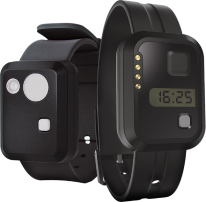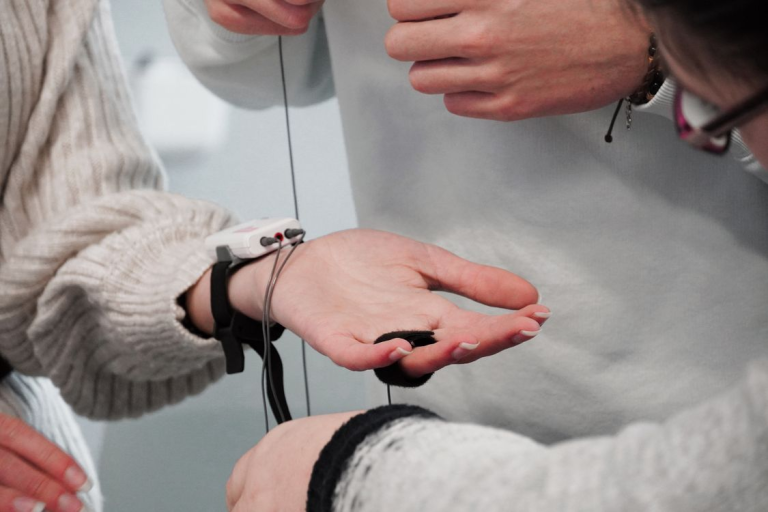


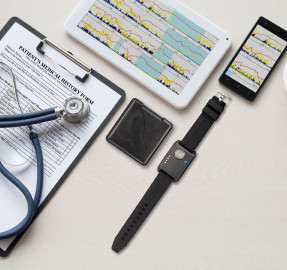
Wearable sleep monitoring has become a cornerstone of modern sleep research and clinical assessment. Devices based on Actigrafia provide continuous, non-invasive measurement of rest-activity cycles, offering valuable longitudinal insights. An actigraph, typically worn on the wrist, captures movement data that can be translated into sleep metrics such as total sleep time, sleep efficiency, and wake after sleep onset. However, the reliability of these outputs depends heavily on signal integrity. Environmental noise and artifacts can introduce distortions that compromise data quality and downstream analysis.
Understanding Artifacts in Sleep Data

Artifacts in wearable sleep data refer to signals that do not reflect true physiological or behavioral states. These can arise from external environmental factors or device-related limitations. Common sources include ambient vibrations, bed partner movements, transportation, and device displacement. For example, rhythmic motion from a moving vehicle or fan can be misinterpreted as wakefulness or rest, depending on amplitude and frequency.
In clinical and research-grade datasets, such distortions can skew sleep scoring algorithms, particularly those relying on threshold-based activity counts. Without appropriate filtering or correction, artifact-laden data may lead to inaccurate sleep staging or misclassification of sleep fragmentation.
Types of Environmental Noise

Environmental noise affecting wearable sleep data can be broadly categorized into mechanical and contextual sources. Mechanical noise includes repetitive movements not generated by the wearer, such as mattress oscillations or nearby machinery. Contextual noise includes irregular disruptions like sudden impacts, co-sleeper activity, or pets jumping onto the bed.
Light exposure sensors integrated into many devices can also be affected by environmental inconsistencies. Sudden changes in ambient light, such as turning on a bedside lamp, may interfere with circadian phase estimation if not properly contextualized.
Detection Techniques for Artifacts
Effective artifact detection requires a combination of signal processing techniques and contextual validation. Time-series analysis can identify anomalous spikes or patterns that deviate from typical human movement during sleep. Frequency domain analysis helps isolate periodic signals that are unlikely to originate from natural sleep behavior.
Advanced approaches incorporate machine learning models trained on labeled datasets to distinguish between physiological activity and environmental interference. These models often use multi-sensor inputs, including acelerometria, light, and temperature, to improve classification accuracy.
Sleep diaries and event markers remain critical for contextual validation. When synchronized with Actigrafia data, they provide ground truth references that help identify periods of potential artifact contamination.
Mitigation Strategies in Practice
Mitigating Types of Environmental Noise begins with proper device placement and user instruction. Ensuring consistent wear location and secure attachment reduces motion artifacts related to device displacement. In research settings, standardized protocols for sleep environments can minimize external disturbances.
On the analytical side, preprocessing pipelines often include filtering techniques such as moving averages, thresholding, and outlier rejection. Epoch-level cleaning can remove or flag segments with a high likelihood of artifact presence. Some systems implement adaptive algorithms that adjust sensitivity based on detected noise levels.
In addition, incorporating contextual data streams strengthens artifact mitigation. Synchronizing Actigrafia with sleep diary entries allows researchers to cross-reference unusual activity patterns with reported behaviors or environmental disruptions. Light sensor data can further help identify inconsistencies, such as unexpected nocturnal illumination events. Quality control dashboards and automated flagging systems enable rapid review of suspect data segments, improving workflow efficiency. Establishing predefined exclusion criteria also ensures that heavily contaminated data does not bias analysis, maintaining the integrity of sleep outcome measures.
Data fusion strategies that combine Actigrafia with complementary biosignals, such as heart rate or skin temperature, can further enhance robustness. These multimodal approaches provide redundancy, allowing more reliable inference even in the presence of noise.

Improving Data Quality for Clinical and Research Use
High-quality wearable sleep data is essential for accurate diagnosis, treatment evaluation, and longitudinal research. Artifact detection and mitigation are not optional steps but integral components of the data processing workflow. By combining robust sensor design, user compliance, and advanced analytical methods, clinicians and researchers can significantly reduce the impact of environmental noise.
Standardized validation frameworks and continuous quality monitoring further strengthen data reliability across diverse study populations.
As wearable technology continues to evolve, the integration of intelligent artifact handling will play a critical role in advancing the precision and reliability of sleep monitoring systems. These improvements will also support scalable deployment in multicenter clinical trials and real-world evidence studies, where consistency across devices and environments is essential for meaningful interpretation.
Collect Accurate Sleep Data with Reliable Wearable Technology from Condor Instruments
Enhance your research with advanced Actigrafia solutions featuring precision Actígrafo devices, integrated light sensor technology, and seamless sleep diary support for cleaner, more reliable sleep data collection. Contact Condor Instruments today to elevate your sleep monitoring capabilities.