

Most device comparisons are written for buyers. A useful actigraphy comparison is written for study designers, and it asks a narrower question: which specification differences will change the numbers this protocol reports?
We field this question regularly from teams weighing several actigraphy watches against each other. Four specifications do most of the work, and the rest are largely noise for research purposes. A useful starting point is what recent validation work on our own hardware has shown.
Sensor Coverage Is the First Dividing Line
The first question is not how well a device measures movement. It is how many things it measures at all.
An accelerometer only device produces a rest activity series and nothing else. Add wrist and ambient temperature and the same recording supports distal skin temperature analysis. Add ambient light and the dataset acquires a zeitgeber record. Add a capacitive off-wrist sensor and non-wear stops being an inference.
Each additional channel expands the questions a study can ask after collection has finished, which matters because protocols rarely get a second pass. Teams often discover a year later that the interesting analysis needed a variable nobody recorded.
Decide which channels the analysis plan will use, then decide which ones a secondary paper might plausibly use. The second list is usually longer than expected.
Weight and dimensions belong in the same discussion. A lighter device with fewer channels may deliver better compliance in a pediatric or elderly cohort, and compliance is a data quality variable rather than a comfort preference.
Recording Duration Separates Study Types
Duration divides devices more cleanly than any other specification, because it maps directly onto study type.
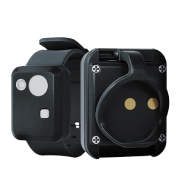
A clinical assessment of suspected circadian rhythm disruption may need seven to fourteen days. A longitudinal study tracking seasonal variation or treatment response needs weeks without interruption. At a sixty second epoch, our ActTrust 2 records for up to two months and ActLumus for up to one month, and that difference decides which protocols each device suits.
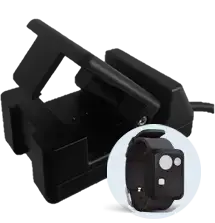
The figure to compare is never battery life alone. It is battery life and memory capacity together, at the epoch length the protocol specifies, with the retrieval method the study can realistically run. A device that needs docking every fortnight is a different proposition from one that transfers over Bluetooth.
Charging strategy follows from this. A study that returns devices to the laboratory between participants can work with shorter recording windows, while one that posts devices to participants in a distributed cohort cannot. Decide which model the study uses before comparing battery figures.
Data Accessibility and Vendor Lock-In
Ask what happens to the data in five years. Research groups increasingly evaluate devices on whether raw counts are retrievable, whether file formats are documented, and whether analysis can be reproduced outside the manufacturer software.
This became a live concern after Philips withdrew the Actiwatch line from clinical and research markets, leaving groups to reassess the available alternatives. Devices now under evaluation range from the Actigraph Insight watch to multi sensor instruments built in Europe and South America, and they differ substantially in how much of the pipeline they expose.
Reproducibility depends on that openness. Work validating actigraphy algorithms against a large community polysomnography dataset was only possible because epoch level data and algorithm definitions were both available.
Light Measurement Is Where Devices Diverge Most
Two devices can both list a light sensor and produce readings that differ by an order of magnitude in the same room.
Single channel lux logging records overall illuminance. Multi channel spectral estimation separates light into component bands, which is what allows melanopic and photopic quantities to be reported separately. For circadian work the distinction is not cosmetic, because the two values diverge under exactly the light sources participants spend most of their time under.
Accuracy at low illuminance matters more than the headline range. Evening exposure sits in the tens of lux, and sensor performance there is where devices separate. Independent work assessing light measurement accuracy in a widely used research device shows how much characterization is needed before field readings can be trusted.
Ask for the sensor response curves rather than the summary specification. Spectral, angular and linear response together describe what the device will do in a real room, and a manufacturer that publishes all three has made the instrument auditable.
Comparing on the Axes That Change Results
Sensor coverage, recording duration, data access and light measurement. Four axes, and a comparison built on them will predict which device produces the dataset a protocol needs. Everything else on a specification sheet is secondary for research purposes.
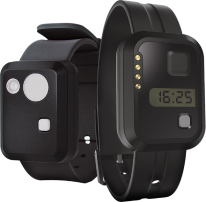
Nosso ActLumus professional actigraphy device sits at the light measurement end of that comparison, with spectral estimation across ten channels, capacitive off-wrist detection and Bluetooth transfer.
Condor Instruments has manufactured research instruments in Sao Paulo since 2013, and the ActTrust 2 multi-sensor device serves groups that prioritize recording duration and a physical event marker. Ask our team to run your protocol against both specifications.