

Circadian phase estimation is central to understanding human sleep-wake regulation, particularly in research domains focused on chronobiology, sleep medicine, and behavioral neuroscience. Traditionally, circadian phase has been assessed using gold-standard biomarkers such as dim light melatonin onset (DLMO) and core body temperature minima. While precise, these approaches are resource-intensive and impractical for large-scale or longitudinal studies.
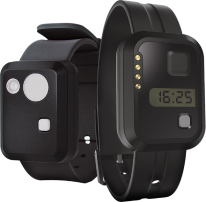
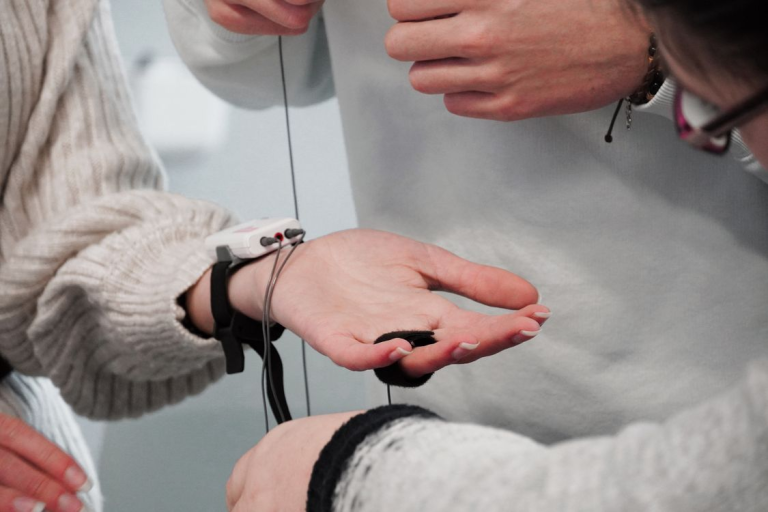
Wearable technologies, particularly those leveraging actigraphy, have emerged as scalable alternatives for estimating circadian phase in naturalistic environments. A modern actigraph captures continuous rest-activity cycles, offering indirect but informative proxies of circadian timing. When combined with contextual inputs such as a sleep diary and environmental data from a light sensor, these devices enable multi-dimensional modeling of circadian dynamics.
For researchers, the challenge lies not only in estimating circadian phase but in validating these estimates against established physiological markers while accounting for real-world variability.
Biological Basis of Circadian Phase

Circadian rhythms are governed by the núcleo supraquiasmático (NSQ), which orchestrates endogenous oscillations synchronized primarily through light exposure. The timing of physiological processes such as hormone secretion, sleep propensity, and alertness follows a near-24-hour cycle.
Circadian phase refers to a specific point within this cycle, often operationalized as the timing of DLMO or peak melatonin secretion. In wearable-based studies, circadian phase must be inferred indirectly through behavioral and environmental signals.
Actigraphy provides a continuous measure of activity-rest patterns, which are modulated by both circadian and homeostatic processes. Disentangling these components requires careful modeling, particularly when individuals exhibit irregular schedules or external constraints such as shift work.
Data Streams from Wearable Devices
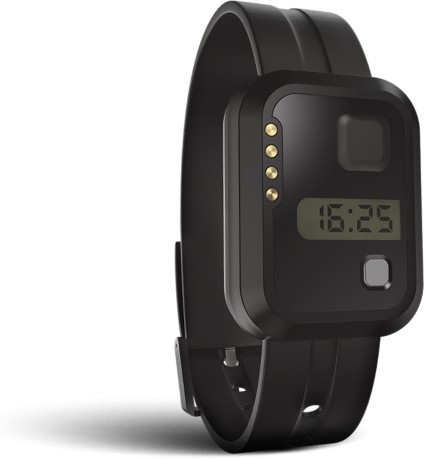
Modern wearable systems integrate multiple sensors that contribute to circadian phase estimation:
Actigraphy Signals
Actigraphy remains the backbone of wearable-based circadian research. An actigraph records tri-axial acceleration, which can be transformed into activity counts or vector magnitude measures. These signals reflect behavioral rhythms that are often aligned with circadian phase.
light sensor data
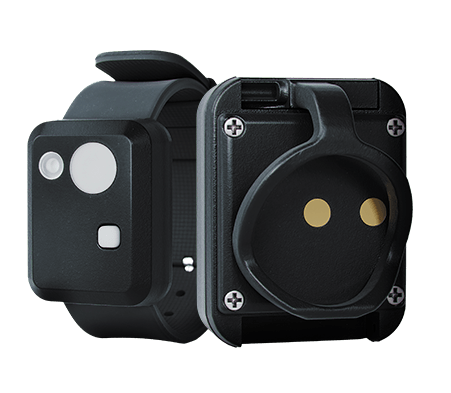
A light sensor captures ambient illumination levels, providing critical information about the primary zeitgeber influencing circadian entrainment. Temporal patterns of light exposure can be used to model phase shifts and predict circadian alignment or misalignment.
Sleep Diary Annotations
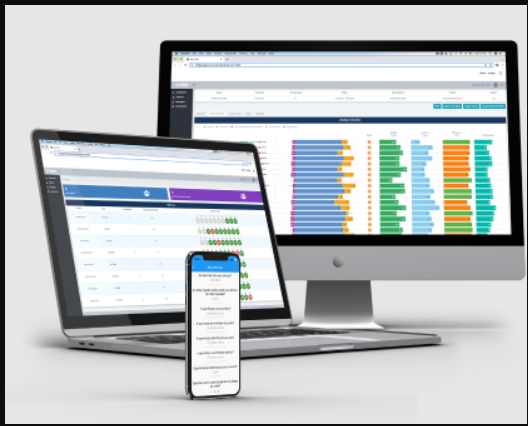
A sleep diary provides subjective reports of sleep timing, latency, and perceived quality. These annotations are essential for contextualizing actigraphy data, particularly in identifying intended sleep periods versus passive inactivity.
The integration of these streams enables a more robust estimation framework, where objective and subjective data complement each other.
Methods for Circadian Phase Estimation
Cosinor and Harmonic Regression Models
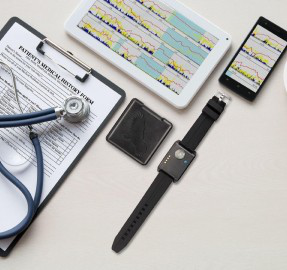
One of the most commonly used methods for analyzing circadian rhythms is cosinor modeling. In simple terms, this approach fits a smooth wave-like curve to activity data collected from an actigraph over time. The goal is to approximate daily patterns of activity and rest using a mathematical function that resembles a sine wave.
y(t) = M + A \cos(\omega t + \phi)
In this equation, the model describes how activity changes over time. The parameter M represents the average activity level, uma reflects how strong the daily rhythm is, and φ (phi) indicates the timing of the peak in activity, known as the acrophase. Researchers often use this peak timing as an estimate of an individual’s circadian phase.
While this method is efficient and widely used, it assumes that daily activity follows a fairly regular and smooth rhythm. In real-world settings, where people have irregular schedules, travel, or disrupted sleep, activity patterns can deviate significantly from this idealized shape.
Nonparametric Circadian Metrics
Nonparametric methods such as interdaily stability (IS) and intradaily variability (IV) quantify the regularity and fragmentation of activity rhythms without assuming a specific waveform. These metrics are derived directly from actigraphy data and are particularly useful in heterogeneous populations.
Relative amplitude (RA), defined as the normalized difference between the most active and least active periods, provides an additional measure of circadian robustness.
Machine Learning Approaches
Recent advances have introduced machine learning models that leverage high-resolution actigraph data alongside light sensor inputs. Supervised models can be trained to predict circadian phase using labeled datasets that include DLMO measurements.
Deep learning architectures, including recurrent neural networks, are particularly suited for time-series analysis. These models can capture nonlinear relationships and temporal dependencies that are difficult to model using traditional approaches.
Phase Response Curve Modeling
Light exposure data from a light sensor can be incorporated into phase response curve (PRC) models, which describe how light at different times of day shifts circadian phase. By aligning light exposure patterns with actigraphy-derived activity rhythms, researchers can estimate phase shifts dynamically.
Integration of Multimodal Data
The integration of actigraphy, light sensor data, and sleep diary inputs is essential for accurate circadian phase estimation. Each data stream addresses specific limitations of the others:
- Actigraphy captures behavioral rhythms but cannot directly measure light exposure
- Light sensor data provides environmental context but lacks behavioral specificity
- Sleep diary entries offer subjective intent but may be prone to recall bias
Combining these inputs enables hybrid models that improve both accuracy and interpretability. For example, sleep diary annotations can constrain model outputs by defining plausible sleep windows, while light sensor data informs phase-shifting mechanisms.
Validation against Gold Standards

Validação remains a critical component of wearable-based circadian research. The most common reference standard is DLMO, which provides a precise marker of circadian phase.
Validation studies typically involve:
- Simultaneous collection of actigraphy and melatonin samples
- Comparison of estimated phase markers with DLMO timing
- Calculation of error metrics such as mean absolute error and correlation coefficients
While actigraphy-based estimates generally show moderate to strong correlations with DLMO, discrepancies can arise due to behavioral masking, irregular schedules, or insufficient light exposure data.
Incorporating sleep diary data can improve validation by aligning model outputs with participant-reported sleep timing, although this introduces subjectivity into the validation framework.
Limitations of Wearable-Based Estimation
Despite significant advancements, several limitations persist:
Indirect Measurement
Actigraphy provides indirect proxies of circadian phase, relying on behavioral rhythms that may be influenced by external factors such as work schedules or social obligations.
Sensitivity to Light Exposure
Accurate phase estimation depends heavily on light sensor data. Incomplete or inaccurate light measurements can lead to erroneous phase predictions.
Interindividual Variability
Circadian rhythms vary significantly across individuals. Fixed model parameters may not generalize well, necessitating personalized approaches.
Data Quality Issues
Wearable data is susceptible to noise, non-wear periods, and device variability. These factors can compromise signal integrity and model performance.
Validation Constraints
Gold-standard validation methods such as DLMO are not always feasible, limiting the ability to benchmark wearable-based estimates in large-scale studies.
Applications in Research and Clinical Contexts
Chronotherapy and Personalized Medicine
Circadian phase estimation enables the timing of interventions such as light therapy or pharmacological treatments to align with individual rhythms.
Shift Work and Occupational Health
Wearables provide a practical means of monitoring circadian disruption in shift workers, allowing for the evaluation of mitigation strategies.
Psychiatric and Neurological Disorders
Desalinhamento circadiano is a hallmark of many psychiatric conditions. Actigraphy-based phase estimation offers a non-invasive tool for monitoring and intervention.
Longitudinal Population Studies
The scalability of wearable devices makes them ideal for large cohort studies investigating circadian patterns across diverse populations.
Emerging Directions in Wearable Circadian Analytics
The field is moving toward increasingly sophisticated analytical frameworks that integrate multiple physiological signals. In addition to actigraphy and light sensor data, emerging devices capture heart rate variability, skin temperature, and electrodermal activity.
Future research directions include:
- Development of personalized circadian models
- Real-time phase estimation for adaptive interventions
- Standardization of data processing pipelines
- Integration with digital health ecosystems
Machine learning models are also becoming more interpretable, addressing concerns about transparency and clinical applicability.
Toward Robust and Scalable Circadian Metrics
A key objective in circadian research is the development of robust, scalable metrics that can be applied across populations and study designs. This requires standardization in data collection, preprocessing, and modeling approaches.
Open datasets and collaborative platforms are facilitating progress in this area, enabling researchers to benchmark methods and share insights. The integration of actigraphy, sleep diary inputs, and light sensor data into unified frameworks will be critical for advancing the field.
As wearable technologies continue to evolve, their role in circadian phase estimation is likely to expand, providing increasingly accurate and accessible tools for both research and clinical applications.
Unlock High-Resolution Circadian Insights with Advanced Wearable Actigraphy from Condor Instruments
Advance your research with precision actigraphy solutions. Leverage high-resolution Actígrafo data, integrated light sensor capabilities, and validated sleep diary workflows to refine circadian phase estimation and improve study outcomes. Contact our team today to get started.
Frequently Asked Question
How accurate is actigraphy for estimating circadian phase?
Actigraphy provides indirect estimates that correlate moderately with gold standards like DLMO, especially when combined with light sensor data and sleep diary inputs.
Why is light sensor data critical in these models?
Light exposure is the primary driver of circadian entrainment, making light sensor data essential for modeling phase shifts and improving estimation accuracy.
Can wearable-based models replace laboratory methods?
Wearables enable scalable and longitudinal monitoring but do not fully replace laboratory-based measures. They are best used as complementary tools in research settings.