


The shift toward decentralized and home-based research models has transformed how sleep data is collected and analyzed. While laboratory-based studies such as polysomnography remain the gold standard for controlled assessments, real-world sleep behavior is often best captured in natural environments. This is where actigraphy plays a central role. However, collecting data outside controlled settings introduces variability that can compromise accuracy if not managed properly.
Optimizing data fidelity in home-based sleep studies requires a structured approach that integrates reliable actigraph devices, consistent participant engagement, multi-sensor inputs such as a SENSOR DE LUZ, and complementary tools like the sleep diary. This blog outlines the critical factors that influence data quality and how researchers and clinicians can mitigate risks to ensure robust, high-integrity datasets.
Understanding Data Fidelity in Sleep Research
Data fidelity refers to the accuracy, consistency, and reliability of collected data over time. In the context of home-based sleep studies, fidelity is influenced by:
- Device performance and calibration
- Participant compliance
- Environmental variability
- Data synchronization across sources
Unlike controlled laboratory environments, home settings introduce uncontrolled variables such as irregular routines, inconsistent lighting, and varying noise levels. While these factors provide valuable ecological validity, they also require careful methodological control to ensure that insights derived from actigraphy are both valid and reproducible.
The Role of Actigraph Devices in Home-Based Studies
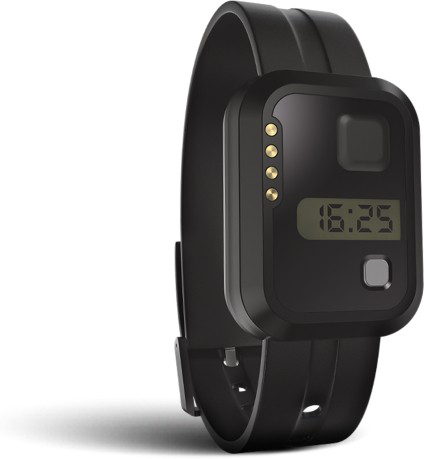
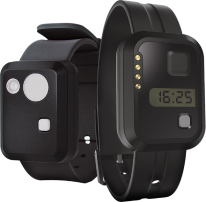
Os Actígrafo remains the backbone of home-based sleep monitoring. Modern devices are designed for continuous, non-invasive data collection, making them ideal for longitudinal studies.
Key features that support data fidelity include:
- High-resolution accelerometry for movement detection
- Integrado SENSOR DE LUZ for environmental tracking
- Event markers for participant input
- Long battery life for uninterrupted monitoring
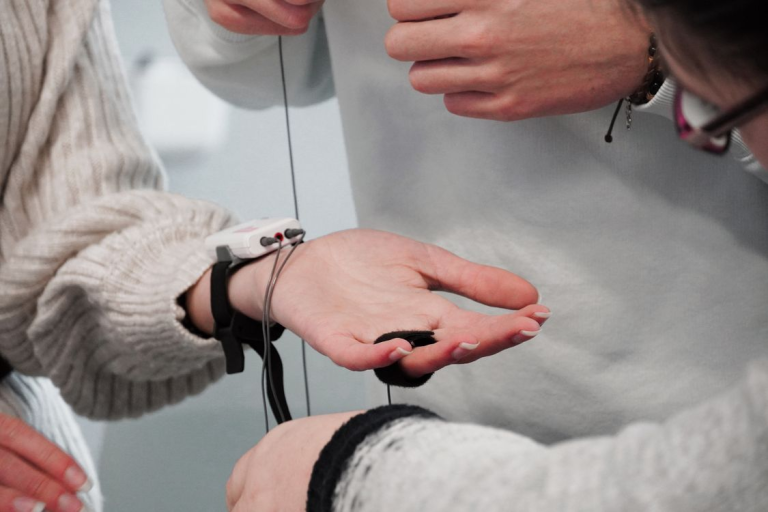
To optimize performance, researchers must ensure proper device initialization, synchronization of internal clocks, and standardized wear protocols. Even minor inconsistencies in device usage can lead to significant data gaps or misclassification.
Standardizing Participant Compliance

Participant behavior is one of the most significant determinants of data quality in home-based studies. Unlike laboratory settings, there is limited direct supervision, making adherence to protocols critical.
Best Practices for Compliance
- Provide clear, concise instructions for wearing the actigraph
- Define consistent wear schedules, typically 24-hour continuous wear
- Educate participants on the importance of maintaining regular routines
- Use reminders and digital prompts to reinforce adherence
Non-compliance can manifest as device removal, incorrect placement, or inconsistent usage, all of which degrade actigraphy data quality. Proactive engagement strategies significantly reduce these risks.
Integrating the Sleep Diary for Contextual Accuracy
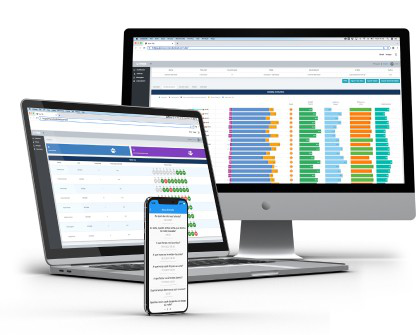
While actigraphy provides objective measurements, it cannot fully capture subjective sleep experiences. The Diário do sono remains an essential tool for contextualizing sensor data.
A well-structured Sleep Diary includes:
- Sleep onset and wake times
- Perceived sleep latency
- Night awakenings
- Daytime naps
- Lifestyle inputs such as caffeine consumption and stress
Enhancing Data Fidelity
The Sleep Diary improves data fidelity by:
- Validating actigraph-derived sleep intervals
- Identifying discrepancies between perceived and recorded sleep
- Supporting manual or automated scoring adjustments
- Providing behavioral context for anomalies
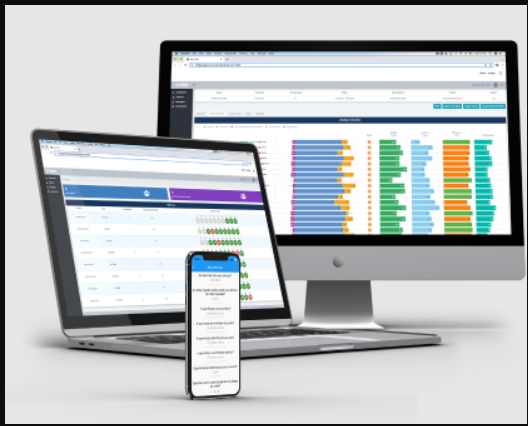
Digital sleep diary platforms further enhance reliability through time-stamped entries and automated reminders, reducing recall bias and improving completion rates.
Leveraging the Light Sensor for Environmental Context
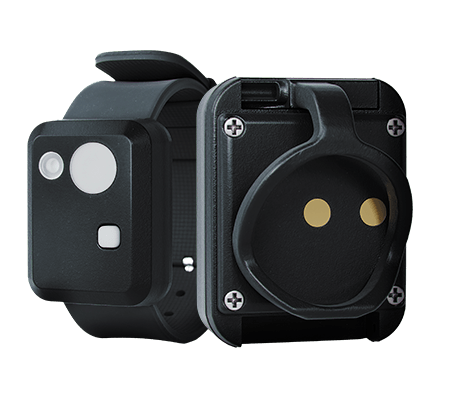
Environmental light exposure is a critical variable in sleep regulation. A built-in light sensor in an Actígrafo allows researchers to capture real-time exposure data that directly influences circadian rhythms.
Key Data Captured
- Light intensity throughout the day
- Timing of exposure relative to sleep periods
- Duration of exposure to natural and artificial light
Impact on Data Fidelity
Incorporating SENSOR DE LUZ data improves interpretation by:
- Identifying Circadian Misalignment
- Detecting excessive evening light exposure
- Supporting analysis of sleep phase shifts
- Enhancing differentiation between rest and inactivity
For example, a participant exposed to high levels of artificial light late at night may exhibit delayed sleep onset. Without light sensor data, this delay could be misinterpreted as behavioral insomnia rather than an environmental effect.
Multi-Sensor Integration for Robust Sleep Analysis
Relying on a single data stream increases the risk of misclassification. Multi-sensor actigraphy enhances data fidelity by providing multiple reference points for analysis.
Key Advantages
- Cross-validation of sleep-wake states
- Improved detection of quiet wakefulness
- Enhanced sensitivity to environmental influences
- Reduced reliance on algorithmic assumptions
By integrating movement, light exposure, and participant-reported data, researchers can construct a more accurate and comprehensive sleep profile.
Addressing Common Sources of Data Noise
Home-based studies are inherently susceptible to ruído and variability. Identifying and mitigating these factors is essential for maintaining data fidelity.
Common Challenges
- Device removal during sleep
- Irregular sleep schedules
- External disturbances such as noise or light
- Incomplete sleep diary entries
Mitigation Strategies
- Implement data validation protocols to flag anomalies
- Use minimum wear-time thresholds for inclusion
- Apply standardized scoring algorithms
- Conduct periodic data reviews during the study
These strategies help ensure that only high-quality data contributes to analysis and reporting.
Data Synchronization and Time Alignment
Accurate time alignment across data streams is critical in multi-sensor Actigraphy studies. Even small discrepancies can lead to misinterpretation of sleep events.
Key Considerations
- Synchronizing actigraph clocks before deployment
- Aligning Diário do sono entries with device timestamps
- Accounting for time zone differences in multi-site studies
Proper synchronization ensures that movement, light sensor data, and sleep diary inputs can be accurately correlated.
Enhancing Participant Engagement through Technology
Digital health platforms play a significant role in improving data fidelity by streamlining participant interaction.
Tools and Features
- Mobile apps for Diário do sono completion
- Automated reminders for device wear and diary entries
- Real-time feedback on compliance
- Remote monitoring by researchers
These tools reduce participant burden and improve adherence, resulting in more complete and reliable datasets.
Clinical and Research Implications
Optimizing data fidelity in home-based sleep studies has direct implications for both clinical practice and research outcomes.
Clinical Benefits
- More accurate diagnosis of distúrbios do sono
- Better monitoring of treatment efficacy
- Enhanced patient engagement in care
Research Advantages
- Improved reproducibility of findings
- Higher statistical power due to cleaner datasets
- Greater confidence in real-world applicability
High-fidelity data supports evidence-based decision-making and advances the field of sleep medicine.
Future Directions in Home-Based Sleep Monitoring
As technology continues to evolve, new opportunities for improving data fidelity are emerging.
Key Trends
- Integration of additional physiological sensors such as heart rate variability
- AI-driven data validation and anomaly detection
- Personalized sleep analytics based on multi-sensor inputs
- Expansion of remote clinical trials
These innovations will further enhance the reliability and scalability of home-based sleep research.
Conclusão
Home-based sleep studies offer unparalleled insight into real-world sleep behavior, but they require careful design and execution to maintain data fidelity. By leveraging advanced Actigraphy tools, integrating Sleep Diary inputs, utilizing Light Sensor data, and prioritizing participant compliance, researchers and clinicians can overcome the challenges of decentralized data collection.
The result is a more accurate, comprehensive understanding of sleep that supports both clinical care and scientific discovery. As multi-sensor Actigraph technology continues to advance, optimizing data fidelity will remain a critical priority in unlocking the full potential of home-based sleep research.
Utilize Multi Sensor Actigraphs from Condor Instruments for at-Home Sleep Studies
Enhance home-based sleep studies with advanced actigraphy solutions featuring integrated light sensor capabilities and Diário do sono compatibility. Achieve higher data fidelity, improve compliance, and generate reliable insights with precision-engineered Actígrafo systems. Reach out to us now to learn more about our cutting-edge actigraph solutions
Frequently Asked Question
1. Why is data fidelity important in home-based sleep studies?
Data fidelity ensures that collected sleep data is accurate, consistent, and reliable, which is essential for valid clinical and research conclusions.
2. How does actigraphy support home-based sleep monitoring?
Actigraphy enables continuous, non-invasive tracking of sleep-wake patterns in natural environments over extended periods.
3. What role does a sleep diary play in improving data quality?
uma Diário do sono provides subjective context that helps validate and refine objective Actigraph data.
4. How does a light sensor enhance actigraphy data?
A light sensor captures environmental light exposure, which is critical for understanding circadian rhythms and sleep timing.