

Sleep laboratories, research centers, and clinical teams depend on precise sleep-wake detection to assess patient outcomes, treatment responses, and circadian health. Modern Actigrafia sleep classification models aid in achieving these objectives through scalable, noninvasive monitoring that extends beyond the laboratory setting.
Researchers now use wrist actigraphy devices across longitudinal studies, home-based monitoring programs, and population sleep investigations because they provide continuous movement data with lower operational burden than polysomnography.
Early actigraphy systems depended on fixed heuristic rules that converted movement thresholds into sleep and wake labels. Those approaches offered simplicity and speed, yet they struggled with fragmented sleep, atypical movement patterns, and complex clinical populations. Machine learning models now expand the analytical capabilities of actigraphy by identifying multidimensional patterns across activity, timing, and environmental signals.
This shift from rule-based methods toward supervised and unsupervised learning approaches continues to reshape clinical sleep analytics. Sleep specialists, physicians, and researchers now evaluate model interpretability, generalizability, and feature selection with the same rigor they apply to biomarker validation.
As datasets grow and wearable sensors improve, actigraphy sleep classification models continue to evolve into more adaptive and clinically relevant systems.
The Foundation of Rule-Based Sleep Classification
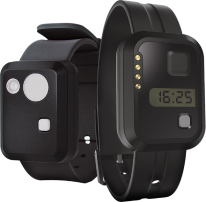
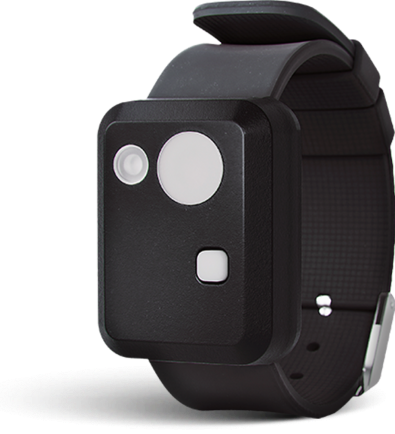
The first generation of actigraphy classification methods relied on predefined heuristics. Developers created these algorithms around movement thresholds and scoring windows. The models classified epochs as sleep or wake according to surrounding activity counts collected from an actigraph Watch or similar wearable device.
Several classic approaches dominated early sleep research. The Cole-Kripke and Sadeh algorithms became widely adopted because researchers could implement them easily across multiple datasets. These methods weighted activity values from adjacent epochs and generated binary sleep-wake decisions through mathematical rules.
Clinicians valued these heuristic systems because they delivered transparency. Sleep researchers could examine each threshold, review the calculation logic, and compare outputs against sleep diary records or polysomnography results. The simplicity also supported reproducibility across institutions.
Despite those advantages, heuristic models introduced important limitations. Fixed thresholds rarely captured variability across age groups, neurological conditions, psychiatric disorders, or circadian rhythm disruptions. Patients with insomnia often remained motionless while awake, which caused false sleep detection. Patients with movement disorders created the opposite challenge because elevated nighttime activity distorted wake classification.
Researchers also observed reduced accuracy during daytime sleep episodes, fragmented sleep periods, and irregular schedules. These limitations encouraged the development of more adaptive analytical frameworks.
Why Machine Learning Changed Actigraphy Analysis
Machine learning introduced flexibility into sleep classification workflows. Instead of relying on rigid movement thresholds, machine learning models learned patterns directly from labeled datasets. Researchers trained these systems on synchronized actigraphy and polysomnography recordings to improve sleep-wake prediction accuracy.
This transition transformed the analytical potential of actigraphy. Machine learning models evaluate temporal relationships, signal variability, circadian structure, and contextual information simultaneously. These systems also adapt more effectively to heterogeneous populations.
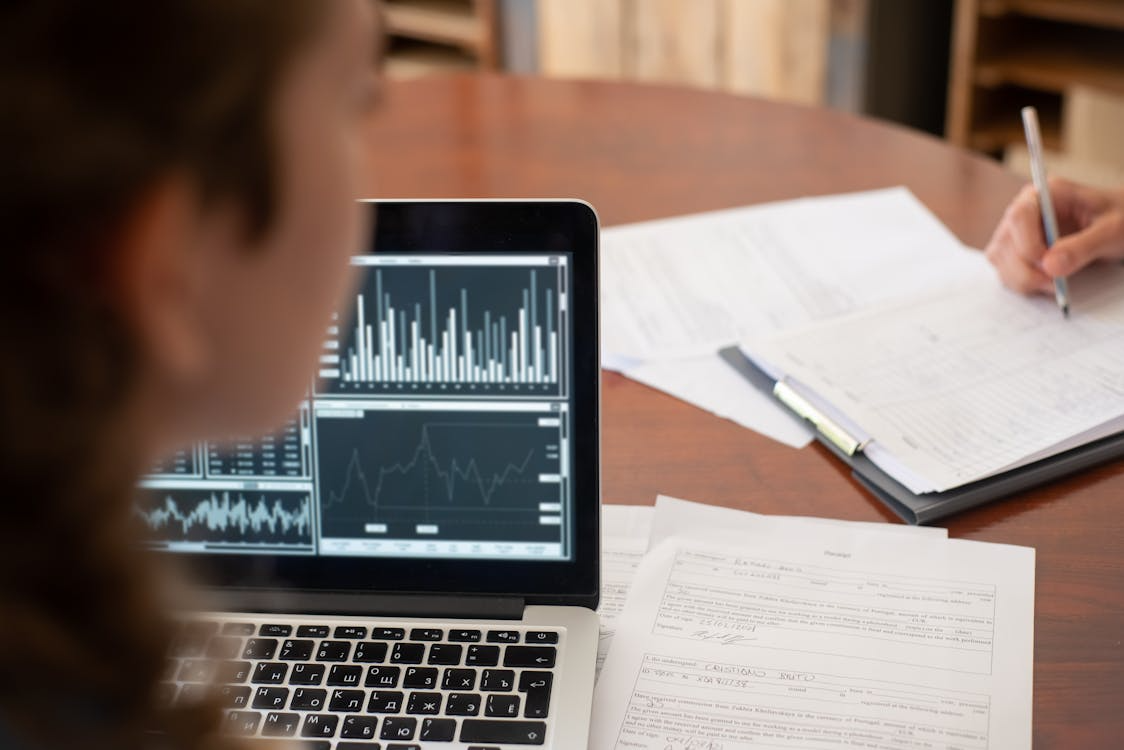
Supervised learning approaches became especially influential in sleep medicine research. Random forests, support vector machines, gradient boosting models, and neural networks now appear frequently in sleep classification literature. These models process larger feature sets than traditional heuristics and identify nonlinear relationships within movement data.
For example, a supervised classifier can analyze movement intensity, epoch transitions, signal entropy, time-of-day patterns, and Light Sensor exposure within a single framework. That broader perspective improves classification performance in populations with irregular sleep behavior.
Machine learning also strengthened large-scale sleep research initiatives. Investigators can now process extensive datasets from epidemiological studies without manually adjusting thresholds for each subgroup. This scalability supports multicenter collaboration and longitudinal sleep monitoring.
Feature Engineering and Signal Optimization
Feature engineering drives the performance of modern actigraphy sleep classification models. Researchers extract meaningful variables from raw sensor streams to help algorithms recognize behavioral patterns.
Traditional heuristic systems relied almost exclusively on movement counts. Machine learning approaches expand far beyond that narrow framework. Contemporary feature sets often include:
- Mean activity intensity
- Activity variance
- Signal entropy
- Sleep fragmentation indices
- Circadian timing features
- Interdaily stability metrics
- Intradaily variability measures
- Environmental light exposure
- Temporal transition probabilities
- Frequency-domain characteristics
These engineered features improve model sensitivity and specificity across diverse patient populations.

Researchers also combine contextual data sources with actigraphy signals. Sleep diary information often enhances classification quality because diaries provide behavioral annotations related to bedtime, wake time, naps, medication use, and sleep disruptions.
Environmental measurements create additional value. Light Sensor data helps models distinguish nocturnal rest from low-activity daytime behavior. This capability becomes especially important in shift workers, adolescents, and patients with circadian rhythm disorders.
Advanced preprocessing techniques further strengthen model performance. Researchers frequently normalize activity signals, remove motion artifacts, and segment temporal windows before training algorithms. These steps reduce noise and improve consistency across devices.
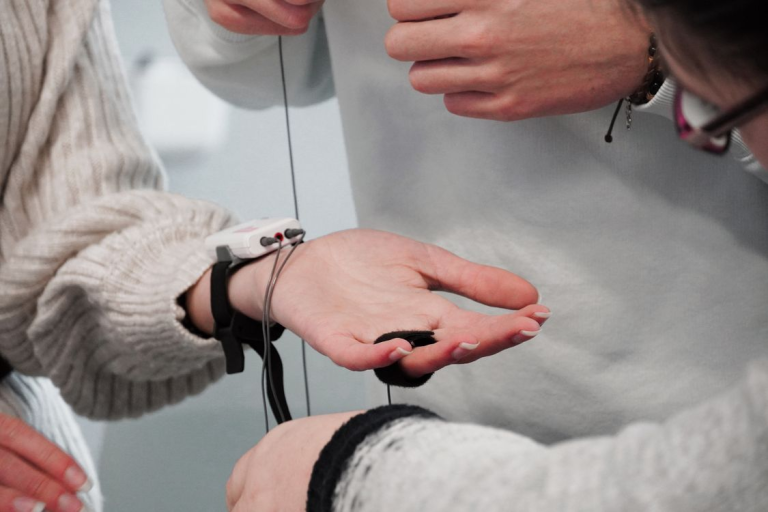
Data quality also affects model reliability. Researchers must evaluate sensor placement, adherence, calibration, and recording duration carefully. Even the strongest classification algorithm cannot compensate for inconsistent signal acquisition.
Supervised Learning Approaches in Clinical Sleep Research
Supervised learning dominates current research involving actigraphy sleep classification models. These systems train on labeled examples where polysomnography or expert annotations define the correct sleep-wake outcome.
Random forest classifiers remain popular because they handle nonlinear relationships effectively while maintaining relatively strong interpretability. Researchers can evaluate feature importance scores and identify which variables influence classification decisions.
Support vector machines also perform well in sleep classification tasks. These models separate sleep and wake states through optimized decision boundaries across multidimensional feature spaces.
Deep learning approaches continue to expand within sleep analytics. Convolutional neural networks and recurrent neural networks process sequential movement data with minimal manual feature engineering. These architectures identify temporal dependencies that traditional methods may overlook.
However, deep learning introduces important challenges for clinical implementation. Neural networks often operate as black-box systems. Sleep physicians may hesitate to trust outputs that lack transparent reasoning pathways. Clinical environments require interpretability, especially when treatment decisions depend on algorithmic recommendations.

Researchers therefore continue to balance performance gains against explainability requirements. Many teams now prioritize hybrid approaches that combine machine learning accuracy with clinically interpretable outputs.
Model validation also plays a central role in supervised learning workflows. Investigators must evaluate performance across independent cohorts, diverse age groups, and multiple disease categories. A model that performs well in healthy adults may fail in patients with Parkinson disease, depression, obstructive sleep apnea, or severe insomnia.
Cross-site validation remains especially important because different studies use different devices, scoring methods, and participant behaviors. Researchers who ignore these factors risk producing models with limited external validity.
Unsupervised Learning and Emerging Directions
Unsupervised learning offers another promising direction for actigraphy analysis. Unlike supervised models, unsupervised methods identify patterns without predefined labels.
Researchers use clustering algorithms, dimensionality reduction techniques, and anomaly detection systems to uncover hidden behavioral structures within actigraphy datasets. These approaches help identify sleep phenotypes, circadian subtypes, and irregular activity profiles.
Unsupervised learning also supports exploratory research in large populations. Investigators can detect naturally occurring sleep patterns without imposing rigid classification assumptions.
For example, clustering models may reveal distinct behavioral groups among patients with insomnia symptoms. One cluster may show prolonged sleep latency with minimal nighttime movement, while another cluster may display severe fragmentation and circadian instability. These findings can guide precision medicine strategies and personalized intervention planning.
Researchers also use unsupervised methods for anomaly detection. These systems identify unusual activity signatures that may indicate nonadherence, device malfunction, or clinically significant behavioral changes.
Despite these advantages, unsupervised learning presents interpretability challenges. Clusters and latent representations do not always map cleanly onto established clinical categories. Sleep researchers therefore need careful validation frameworks before translating these findings into routine practice.
Generalizability Across Clinical Populations
Generalizability remains one of the most important challenges in actigraphy research. Many classification models perform well under controlled conditions yet struggle during real-world deployment.
Population diversity creates substantial complexity. Age, neurological disease, psychiatric status, medication use, physical disability, and circadian disruption all influence movement behavior during sleep.
Children display different activity signatures than older adults. Patients with neurodegenerative disorders may exhibit abnormal nocturnal movement patterns. Individuals with insomnia often remain awake without substantial movement. These variations complicate model transferability.
Device variability introduces another challenge. Different wrist actigraphy systems use different accelerometers, sampling rates, epoch lengths, and proprietary preprocessing methods. Researchers therefore cannot assume direct compatibility across platforms.
Frequently Asked Question
What makes machine learning models more effective than traditional heuristic approaches in actigraphy sleep classification?
Machine learning models analyze complex behavioral patterns across multiple variables instead of relying on fixed movement thresholds alone. These models evaluate activity intensity, circadian timing, Light Sensor data, and sleep fragmentation simultaneously. As a result, they often improve classification accuracy in patients with insomnia, neurological disorders, and irregular sleep schedules compared with traditional heuristic methods used in actigraphy.
Can wrist actigraphy replace polysomnography in clinical sleep research?
Wrist actigraphy supports long-term sleep monitoring and large-scale research studies, but it does not replace polysomnography for comprehensive sleep staging. Actigraphy measures movement patterns and estimates sleep-wake behavior, while polysomnography records physiological signals such as brain activity, respiratory effort, and eye movement. Researchers and clinicians frequently use actigraphy alongside Sleep Diary data to evaluate circadian rhythms, treatment response, and longitudinal sleep behavior outside the sleep laboratory.
Why does model interpretability matter in actigraphy sleep classification models?
Interpretability helps physicians, sleep specialists, and researchers understand how an algorithm generates sleep-wake classifications. Transparent models improve clinical confidence, support treatment evaluation, and strengthen communication across research teams. Many clinical programs prefer interpretable actigraphy models because they allow users to review feature contributions, assess classification reliability, and validate outcomes across diverse patient populations.
Advancing Clinical Sleep Research With Reliable Actigraphy Solutions
Em Condor Instruments, we understand the growing demand for clinically reliable Actigrafia soluções that support physicians, sleep specialists, and research institutions. Our actigraphy platforms help teams conduct longitudinal monitoring, circadian rhythm assessment, and large-scale sleep research with dependable data quality and streamlined workflows.
We also recognize the market transition following the discontinuation of several Philips actigraph systems. Many laboratories now need a trusted replacement that supports continuity across established research protocols. Our solutions provide a strong alternative for organizations that previously relied on legacy actiwatch activity monitor platforms and related actigraph Watch technologies.
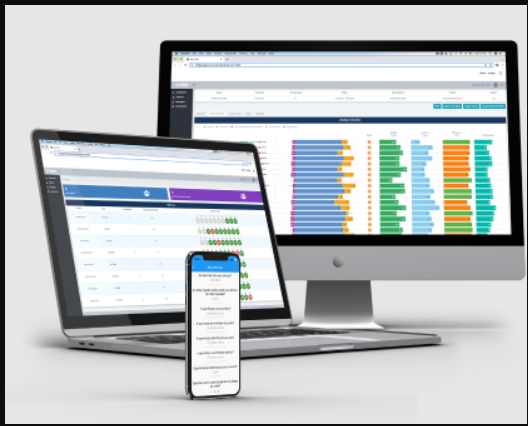
We design our actigraphy systems to support research-grade performance, scalable deployment, and clinically meaningful interpretation. Our integrated Sleep Diary capabilities and Light Sensor functionality help researchers capture richer contextual data while maintaining operational efficiency.
If your organization wants to strengthen sleep analytics, improve longitudinal monitoring, or modernize wrist actigraphy workflows, we invite you to explore how Condor Instruments can support your clinical and research objectives. Contato Agora.