

Definition of sleep
Sleep is a behavioral state with well-defined physiological characteristics. Similar to hibernation, tonic immobility, coma or general anesthesia, sleep is the only state that simultaneously presents reduced responsiveness, rapid reversibility and is homeostatically regulated (Anafi, Kayser, & Raizen, 2019). During sleep, the living being is physically vulnerable, considering the low capacity to respond to environmental stimuli, in addition, during sleep the living being does not eat, drink or reproduce.
Theories of sleep function
Even with the negative survival factors associated with sleep (greater vulnerability), physiological events take place during sleep that contribute to the proper functioning of the organism. Cognitive function hypotheses have been proposed (e.g. learning, memory and synaptic plasticity) (See: https://condor.fabbricaweb.com.br/cognicao-e-sono-as-influencias-que-um-sono-ruim-tem-na-cognicao/) and hypothesized restorative functions (e.g. maintenance of cerebral energy metabolism, macromolecular biosynthesis and removal of metabolic waste) (Frank & Heller, 2019). Despite being extensively studied with over 200,000 articles indexed in PubMed with the term “Sleep, n more than 200 years of research, sleep still remains a scientific enigma. Some questions remain unanswered: Why do sleep properties change throughout life? Why and how is sleep regulated homeostatically? Why must the brain be “switched off” in order to perform the proposed functions? And why are there two different stages of sleep? (Frank & Heller, 2019). Considered the last major physiological process with no consensus as to its function, some functions of sleep have already been discussed/speculated in the literature I) immunological function (see: https://condor.fabbricaweb.com.br/sono-e-imunidade-2/), II) restorative function of brain energy stores, III) glyphatic function, IV) restorative function of performance due to activity-induced degradation during wakefulness (see: https://condor.fabbricaweb.com.br/fadiga-e-sono/), V) connective function or neural plasticity VI) energy conservation function by reducing caloric expenditure (Krueger, Frank, Wisor, & Roy, 2016).
Sleep mechanisms
Sleep is regulated by the influence of two distinct mechanisms. The homeostatic process (S) and the circadian process (C). The S process is characterized by a propensity to sleep, caused by the accumulation of adenosine in the basal forebrain, resulting from the breakdown of ATP during the waking state, resulting in drowsiness and the need for sleep as the time awake passes (homeostatic pressure for sleep) (Borbély, Daan, Wirz-Justice, & Deboer, 2016). Process C refers to biological activities that take place over periods of approximately 24 hours (see: https://condor.fabbricaweb.com.br/as-consequencias-dos-disturbios-de-ritmo-circadiano-2/) and allows the human organism to anticipate and prepare for an activity or moment of the day. Our rhythms are synchronized through temporal cues known as “zeitgebers” (from the German Zeit = time Gebers = donor – biological synchronizer), which provide information about the time of day. It is important to note that circadian rhythms are not governed by the environment and are self-sustaining in nature. Even in the absence of temporal cues (free running), our bodies continue to show circadian rhythmicity (Mello, Bittencourt, Pires, Silva, & Tufik, 2008)
Night-time sleep deprivation
The demands (social or professional) associated with the possibility of activity at night (work or leisure) mean that our routine is dragged into periods when we could/should be sleeping. High levels of circadian misalignment occur in individuals who are forced to alter their rhythm of sleep and wakefulness and who remain awake during the night, such as shift workers or those practicing electronic-sport (e-sport – people competing in digital games) (Gomes, Narciso, de Mello, & Esteves, 2021). This behavior of reversing the biological rhythm with wakefulness in the dark phase and sleep in the light phase of the day can present health risks (Moreno et al., 2019), whose effects include negative impacts on the metabolic response (Zimberg, Fernandes Junior, Crispim, Tufik, & de Mello, 2012). In this way, we can emphasize that sleep, in its quantity, quality and ideal timing (night), plays an essential role in health, both in its physical and cognitive aspects
The effect of sleep on body composition
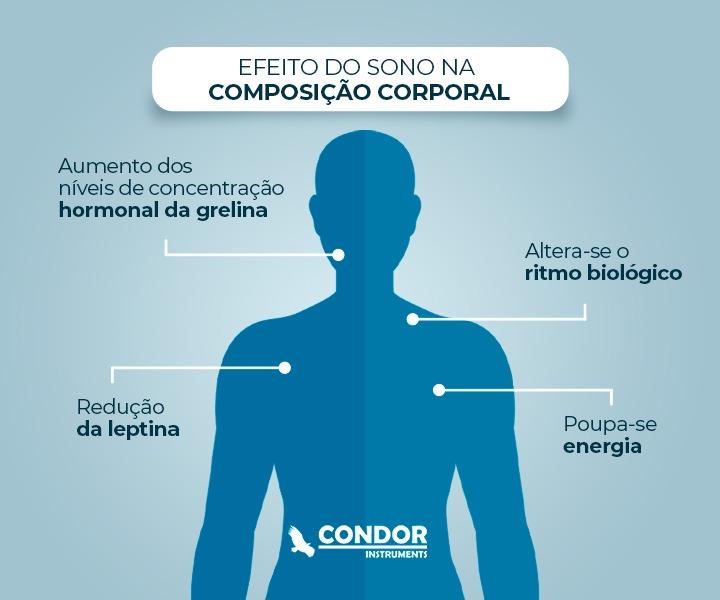
Staying awake at night and sleeping during the day alters the biological rhythm, causing significant changes in the body. Staying awake makes the body understand that it needs to save energy for a longer period of wakefulness. As an adaptation, there is a reduction in basal metabolism, which favors the accumulation of body fat. Other damage associated with sleep restriction can be seen in the increased levels of the hormone ghrelin, as well as a reduction in leptin, which are responsible for controlling appetite and satiety (Taheri, Lin, Austin, Young, & Mignot, 2004). In this way, the body stimulates an increase in food intake, which can result in an increase in body mass.
Muscle atrophy and reduced muscle recovery capacity are also associated with nighttime sleep restriction and deprivation. It has been hypothesized that muscle atrophy caused by sleep loss is associated with a reduction in anabolic hormones and an increase in catabolic hormones (Dattilo et al., 2011). In general, when you don’t get adequate sleep, tiredness, drowsiness and fatigue are obvious factors that reduce physical performance, reducing physical activity levels and performance in the activities of daily living, which can even lead to sedentary lifestyles (Mollicone, Van Dongen, Rogers, Banks, & Dinges, 2010). Considering the above, people who invert their sleep/wake rhythms, such as night shift and rotating shift workers and e-sports players, suffer the damage caused by nighttime sleep deprivation and desynchronization of the sleep/wake rhythm, with changes in hormone production that favor increased caloric intake, energy accumulation and reduced physical activity, which are detrimental to body composition.
The change in biological rhythm makes it more likely that BMI will increase, due to changes in eating habits, daily routine and energy metabolism. An epidemiological study found that people who stay up at night and sleep during the day are 1.5 times more likely to be overweight than those who sleep at night (Hulsegge, van Mechelen, Paagman, Proper, & Anema, 2020). Nighttime sleep deprivation showed significant associations with an increase in BMI proportional to the hours of sleep lost. An increase of 0.43 kg/m2 for every 10,000 hours awake during the night (Peplonska, Bukowska, & Sobala, 2015). The odds were also 3.9 times higher when there was night-time sleep restriction for eight or more days a month.
It seems that healthy behaviors such as physical activity, quality of sleep and eating habits are not enough to moderate the relationship between shift work and excess weight, while years of exposure to shift work may be a moderating factor (Hulsegge et al., 2020). Thus, healthy lifestyle behaviors alone may not be enough to “protect” against the negative effects of nighttime sleep deprivation on excess weight. On the other hand, obesity is multifaceted and can be influenced by social determinants, income, educational level, health knowledge and social support (McGlynn et al., 2015).
Conclusion
The consequences of nocturnal sleep deprivation associated with a change in circadian rhythm have an impact not only on body composition but also on health in general.
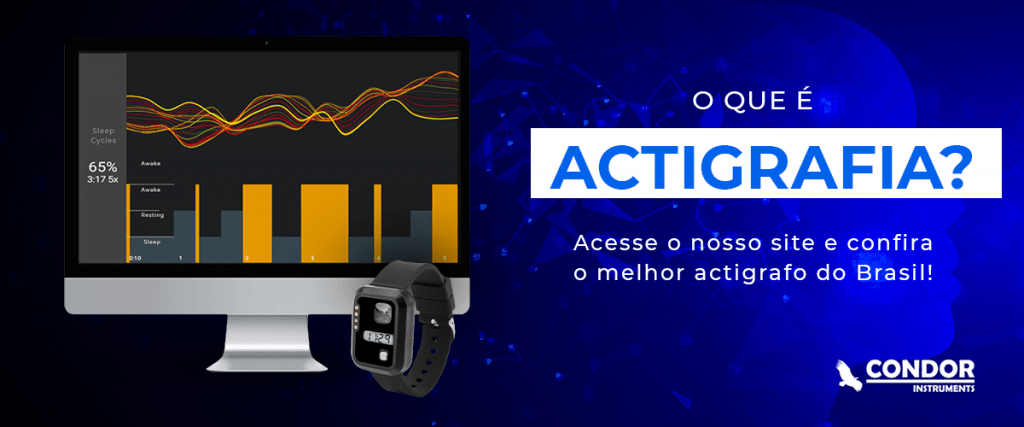
When night-time sleep deprivation is not caused by force majeure (night work), it is necessary to promote changes in lifestyle habits, especially with sleep hygiene (avoid stimulants such as caffeine at night), maintain regular sleep hours, avoid artificial lights during the night. In addition, regular exercise and a healthy diet can help the process. In some cases it may be necessary to resort to the use of drugs, always with proper medical supervision. Actigraphy (See: https://condor.fabbricaweb.com.br/o-que-e-actigrafia/) can be a method of monitoring the biological rhythm, indicating the regularity of sleep and wake times. In addition, it is possible to evaluate sleep over several days and indicate total sleep time as well as sleep efficiency, which can be important information for decision-making and better targeting the effect of the interventions that are carried out.