

What is sleep paralysis and what are its consequences?
According to data from the Albert Einstein Hospital in São Paulo, no less than two million people here in Brazil suffer from a sleep disorder known as sleep paralysis. This disorder, which has no cure, can be really frightening because of its effects, which are characterized by the temporary inability to move and the possibility of experiencing hallucinations when passing from sleep to wakefulness, or vice versa.
If in Brazil around 1% of our population is affected by it, in England this percentage is much higher, and can reach 6% of the population, according to official statistics there. But what is sleep paralysis and what are its consequences? How does it happen, what explains it and how and when should we seek specialized medical treatment? We asked our experts to produce this content so that you can learn all about what is sleep paralysis and what are its consequences. Happy reading!
What is sleep paralysis?
A sleep paralysis is a disorder of the sleep It is characterized by an episode, during the transition between sleep and wakefulness, when the affected person is temporarily unable to move or speak. The person is in a state of temporary disconnection, with discontinuity of motor, perceptual, emotional or cognitive functions.

When affected by sleep paralysisThe person is almost asleep or, on the contrary, awake, but suddenly they simply can’t make a voluntary movement or say anything. In general, they may feel a pain in their chest, like a momentary rush, and they may also experience hallucinations.
Many people who have had an episode of sleep paralysis report that it feels like having a nightmare, but awake. It’s important to note that this sleep disorder can be quite traumatic, and most of the time it’s really frightening.
In general, an episode of sleep paralysis can last around two minutes on average, but in some cases it can be as long as ten minutes.
Classification of sleep paralysis episodes
The paralysis and hallucinations typical of sleep paralysis They are really frightening, often creating a climate of terror for the person affected. These episodes are classified into three different types. They are
– Intruder: brings fear and the feeling that there is a stranger in the room. Sufferers report the sensation of an evil presence, with visual and auditory hallucinations as well. Because of this, there are a number of legends that try to explain the sleep paralysisBut that has nothing to do with reality.
– Unusual bodily experience: this is also a common type, when the person affected has the full sensation of floating, leaving their body and seeing themselves in bed, as if they were above it. There is often an illusion of movement.
– Incubus: this is the mildest type, with a feeling of pressure in the chest and shortness of breath. But it is also very frightening, and many people report that they believed they were experiencing a cardiac episode rather than an episode of sleep paralysis.
Effects of sleep paralysis
It is very common for people affected by sleep paralysis feel acute anxiety and even fear of sleep. The main effects of sleep paralysis are:
– Decreased quality of sleep
– Insomnia
– Tiredness
– Daytime sleepiness
– Lack of concentration and memory
– Worsening school or work performance
– Demotivation
– Isolation and even withdrawal from the social group
How can sleep paralysis be explained?
A sleep paralysis is a very common disorder, but it is still little studied and its causes have not been fully clarified by scientists. It is believed that the lack of synchrony between changes in brain activity and muscle atonia in the REM phase of sleep (Rapid Eye Movementis responsible for the temporary paralysis we experience during an episode of this sleep disorder.
Scientists are investigating associations between sleep paralysis with substance use, stress and trauma, genetic influences, abnormal beliefs, sleep problems and disorders and psychiatric disorders. British studies indicate that post-traumatic stress disorder seems to be the most common risk factor, followed by panic disorder.
Why does sleep paralysis happen?
Popular belief has its own version to explain why the sleep paralysis happens. The disturbance is nothing more than a consequence of the action of Velha Pisadeira, an old Brazilian myth about a grumpy old hag with a hideous appearance, who would live on the roofs of houses, ready to attack her victims in their sleep.
The Old Treadmill would attack the person who eats too much before going to sleep, stepping on their chest and leaving them momentarily breathless. What’s more, the victim is fully aware when they are attacked, but they can’t move a finger to defend themselves against the old woman. This is a very common urban legend, especially in the states of Minas Gerais and São Paulo. sleep paralysis. There are other myths, including those involving abductions and extraterrestrials.
Beliefs aside, science explains this sleep disorder. What actually happens is that our voluntary muscle movements are inhibited during the transition from sleep to wakefulness, or vice versa. During the sleep paralysisHowever, our eye movements and breathing are not altered and so our perception of the environment is clear and immediate.
Science is also trying to understand how the possible hallucinations caused by the disorder occur. Neurological studies associate hallucinations with an abrupt movement in and out of the REM phase of sleep. Dreams and hallucinations are made up of vivid and extremely emotional visual events. In this phase, the body remains paralyzed, with the exception, of course, of the vital organs and even the genitals.
Experts point out that the disorder can be closely linked to illnesses such as narcolepsy (excessive sleepiness), high blood pressure, depression and anxiety. Sleeping on the stomach is also pointed out as a possible cause. Periods of intense stress and sleep deprivation can also contribute to sleep disturbance. sleep paralysis.
Other possible causes of sleep paralysis episodes
– Irregular sleep;
– constant sleep deprivation;
– Sudden changes in someone’s environment or life;
– A lucid dream preceding the episode;
– A sleep induced by certain drugs;
– Extreme tiredness;
– Bipolar disorder;
– Night cramps;
– Excessive use of drugs; – Excessive consumption of alcoholic beverages
Who can get sleep paralysis?
In the literature on the subject, there is no relationship between sleep paralysis with age and gender, although some individual studies point to a higher prevalence in women. In fact, absolutely anyone can suffer an episode or more of sleep paralysisincluding small children.
Researchers at the University of Pennsylvania in the United States carried out a wide-ranging study of no less than 35 papers by renowned scientists on the subject, published in scientific journals over the last 50 years, with a total of 36,533 people taking part. Of this total, 20% said they had already had at least one episode of sleep paralysis.
According to the study by scientists from the University of Pennsylvania, entitled “Sleep Medicine Reviews, between psychiatric patients of the interviewees, 32% answered that they had already had at least one episode of the disorder, and among psychiatry students this percentage was 28%, both well above the 20% of the other interviewees. The researchers therefore concluded that the sleep paralysis may be more common among psychiatric patients and students.
The treatment of sleep paralysis
A sleep paralysis can indeed be a frightening sleep disorder, but experts assure us that there is nothing to worry about in the event of occasional episodes. Within a few minutes of waking up completely, everything returns to normal, without any sequelae.
Experts consider it a disease to be treated when it recurs. It has been established that it should be amenable to medical treatment when at least two episodes occur within a six-month period or when it is associated with a strong emotional burden. Thus, those who have more frequent episodes of sleep paralysis and you end up being afraid to go to sleep, you need to see a specialist.
Naturally, it is important to understand the real cause of the patient’s episodes of sleep paralysisfor better treatment. The treating doctor will investigate diseases associated with this sleep disorder and may, for example, prescribe specific medication to reduce the REM phase of sleep. Psychotherapy sessions may be recommended in cases of high anxiety or depression, including the possibility of medication prescribed by a psychiatrist.
The relationship between sleep paralysis and sleep apnea
Sleep apnea is a sleep disorder that affects no less than 69% of the Brazilian population, according to data from the Sleep Institute in São Paulo. Known as obstructive sleep apnea (OSA), it causes a brief interruption during sleep, and this can be repeated even hundreds of times in the same night.
Experts say that those with obstructive sleep apnea are more likely to develop an episode of sleep paralysis. This may be because their sleep habits and physiological functions are basically the same and can be deregulated, which can impair their ability to go to sleep.
Your doctor may request an actigraphy
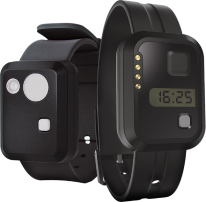
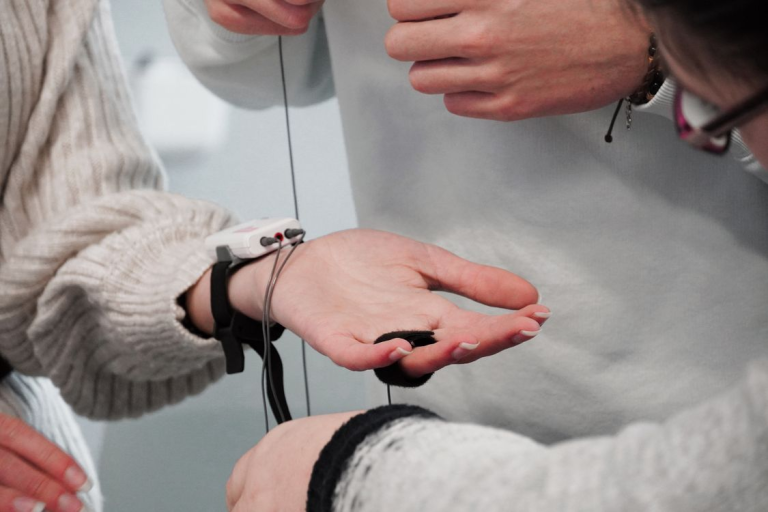
Longitudinal monitoring of patients suffering from sleep paralysis is necessary in order to obtain answers to the possible causes of the symptoms. One form of monitoring that is often requested by doctors who treat patients with sleep disorders, including sleep paralysis, is the actigraphyThis is done using an actigraph, a device that in most models looks very much like a wristwatch.
Actigraphy, also known as actimetry, aims to monitor activity and rest cycles, capturing, compiling and processing information relevant to the study of sleep and waking rhythms. The actigraph is state-of-the-art technology that supports the research of the attending physician, and the most modern models also have temperature and light sensors, among others, offering an even more in-depth analysis.

The patient should use the actigraph attached to the wrist of their non-dominant arm. In other words, right-handed patients should wear it on their left arm, and vice versa. While wearing it, the device collects and compiles all the patient’s movements using accelerometers. At the end of the examination, the attending doctor has extremely relevant information that will help establish the diagnosis and the best treatment for the patient.
The actigraph detects sleep and circadian rhythm disorders, assesses the quality of sleep, how long a person stays in bed and sleep episodes throughout the day. It is a non-invasive, absolutely painless test and is often requested by sleep doctorspsychiatrists, occupational physicians, behavioral psychologists and other professionals who study sleep and mental disorders. circadian rhythm.
Conclusion
An episode of sleep paralysis is not a disease, but a symptom. This disorder should only be treated as a disease if it occurs systematically, at least twice every six months. The treating doctor will try to find out the cause in order to treat it.
Sleep doctors, neurologists and psychiatrists are the best people to assist people with this disorder. A simple report from the person affected is enough to classify the disorder. An actigraphy may be requested for a more in-depth and analytical study of the patient’s sleep.
The doctors guarantee that sleep paralysis doesn’t cause any damage to physical health, but it can have negative consequences, such as a lot of anxiety and even depression. A doctor should therefore be sought if the episodes recur and cause, for example, fear of going to sleep.