


Actigraphy and polysomnography (PSG) answer related but different sleep research and clinical questions. Actigraphy estimates sleep–wake patterns from movement, usually with a wrist-worn accelerometer, and is well suited to longitudinal monitoring in relatively natural environments. Polysomnography is a laboratory or ambulatory recording used to evaluate sleep using electrophysiological signals and is the reference method for objective sleep assessment and sleep staging. The practical choice in actigraphy vs polysomnography is therefore not simply one method versus the other. It depends on the measurement purpose, duration, setting, patient population, and physiological detail required. These sleep monitoring methods can also be combined when a study needs both habitual behavior and physiological data.
- Actigraphy and polysomnography: the essential distinction
- Definitions for clinical and research teams
- What actigraphy measures well
- What polysomnography measures that actigraphy cannot
- Actigraphy versus PSG: comparison table
- When to use actigraphy, PSG, or both
- Why actigraphy can disagree with PSG
- Limitations of polysomnography
- A practical decision framework for sleep studies
- Frequently Asked Question
- Referências
Actigraphy and polysomnography: the essential distinction
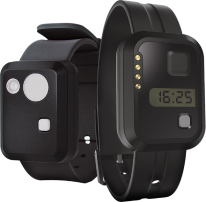
Actigraphy is an objective sleep-monitoring method based primarily on movement. A wrist actigraph records activity, and specialized algorithms use patterns of activity and rest to estimate sleep and wake. Measures can include estimated total sleep time, sleep efficiency, wake after sleep onset, awakenings, sleep timing, and rest–activity rhythms. Because the device can be worn outside the laboratory, actigraphy is useful for observing sleep in the participant’s natural environment across multiple days.
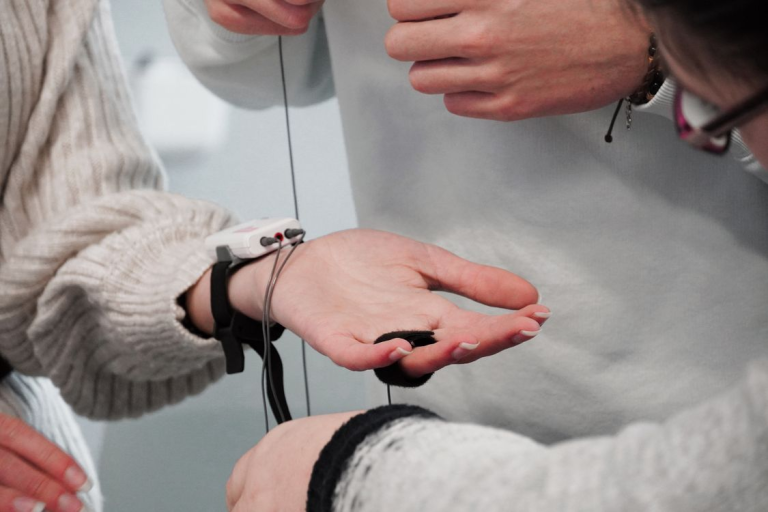
Polysomnography is a multi-signal sleep study. In the validation protocol described by Miller and colleagues, PSG included electroencephalography, electrooculography, and submental electromyography, with records manually scored in 30-second epochs according to standard criteria. PSG therefore provides a physiological reference for identifying sleep and wake and distinguishing stages such as light sleep, slow-wave sleep, and rapid eye movement sleep.
The central difference is that actigraphy estimates sleep indirectly from movement, whereas PSG evaluates sleep using physiological signals. Actigraphy is generally more ecological and scalable for repeated measurements; PSG provides richer physiological information during the recorded period. These strengths are complementary rather than interchangeable. [1], [2], [3]
Definitions for clinical and research teams
- Actigrafia
- a method that uses an activity monitor, commonly worn on the wrist, to record movement and estimate sleep–wake behavior through an algorithm. Its outputs depend on the device, placement, algorithm, and scoring settings used, which should be reported with the results.
- polissonografia
- a multi-channel sleep recording that includes physiological signals used to identify sleep and wake and to score sleep stages. PSG is commonly used as the reference standard — the gold standard of sleep studies — when validating actigraphy and other sleep-monitoring technologies.
- Sleep-wake estimation
- the algorithmic classification of time periods as likely sleep or wake from actigraphy or another indirect signal. It is an estimate, not a direct physiological observation.
- Sleep staging
- the classification of sleep into physiological stages, including non-rapid eye movement categories and rapid eye movement sleep. Conventional wrist actigraphy does not directly measure these stages because it is based primarily on movement.
What actigraphy measures well
Actigraphy is most valuable when the research question concerns sleep timing, habitual sleep duration, sleep continuity, day–night patterns, or circadian rest–activity organization over an extended period. Martin and Hakim described applications including documenting sleep patterns before a multiple sleep latency test, evaluating circadian rhythm sleep disorders, assessing treatment outcomes, and supporting home monitoring of sleep-disordered breathing.
Longitudinal measurement is a major advantage. A single PSG night provides detailed physiological information but represents a limited observation window. Actigraphy can capture weekday–weekend differences, irregular schedules, naps, and changes in rest–activity organization that may be missed during a single laboratory night. In a comparison of insufficient sleep syndrome and narcolepsy type 1, actigraphy highlighted weekday sleep restriction with weekend compensation in insufficient sleep syndrome and fragmented but prolonged nighttime sleep with more frequent daytime naps in narcolepsy type 1.
Actigraphy can also support sleep-fragmentation analyses. In a 7-day actigraphy and PSG analysis of 1,908 participants, an actigraphy-derived sleep fragmentation index was strongly correlated with actigraphy-derived sleep efficiency and wake after sleep onset. Its correlations with PSG-derived wake after sleep onset, apnea–hypopnea index, and arousal index were more modest. This supports actigraphy fragmentation metrics as markers of sleep continuity, not direct substitutes for PSG architecture or arousal measures. [1], [4], [5]
What polysomnography measures that actigraphy cannot
PSG provides physiological information that movement-based actigraphy does not. In the cited validation study, PSG was manually scored in 30-second epochs using electroencephalography, electrooculography, and electromyography. These signals support identification of sleep stages and measurement of sleep architecture, including light sleep, slow-wave sleep, and REM sleep.
This distinction matters when the question depends on sleep-stage transitions, sleep-onset REM periods, arousals, or physiological events that may occur without substantial movement. Studies of hypersomnolence used PSG together with the multiple sleep latency test to evaluate diagnostic features, while actigraphy contributed information about sleep continuity and longer-term sleep–wake organization. A movement-derived estimate can complement such testing, but it does not replace PSG physiology.
PSG is also an appropriate reference method when a new actigraphy device, algorithm, or sleep tracker is being validated. The cited standardized analytical framework recommends discrepancy analysis, Bland–Altman plots, and epoch-by-epoch analysis when comparing sleep-tracking technologies with PSG or another reference method. This is a methodological framework, not a formal clinical guideline; agreement should be evaluated for the specific outcomes and population of interest. The comparisons presented in this article are drawn from validation and comparative studies, not from society-level practice parameters, so clinical indication criteria for individual patients should be checked against formal guidance such as the American Academy of Sleep Medicine clinical practice guideline. [2], [3], [4], [6], [7], [8]
Actigraphy versus PSG: comparison table
The following comparison summarizes practical differences between actigraphy and polysomnography. Actual performance depends on the device, algorithm, placement, scoring settings, population, and study protocol. [1], [3]
| Criterion | Actigrafia | polissonografia |
|---|---|---|
| Primary signal [1], [2] | Movement or activity recorded by an activity monitor, commonly worn on the wrist. | Multiple physiological signals, including electroencephalography, electrooculography, and electromyography in the cited validation protocol. |
| Main output [2], [3] | Estimated sleep, wake, sleep timing, sleep continuity, and rest–activity patterns. | Sleep–wake classification, sleep stages, sleep architecture, and protocol-dependent physiological indices. |
| Typical recording context [1], [2] | Home, field, outpatient, or other naturalistic settings over multiple days. | Laboratory or ambulatory recording over a defined study period. |
| Ônus para o participante [1], [2] | Generally lower burden, although adherence and device wear remain important. | Higher burden because of multiple sensors, recording procedures, and scoring requirements. |
| Sleep staging [2] | Not directly measured by conventional movement-based wrist actigraphy. | Direct physiological basis for scoring sleep stages. |
| Wake detection [2], [9] | Often less specific than sleep detection: specificity for wake ranged from 48% to 60% across four algorithms in hospitalized patients with traumatic injuries. In a small cohort of young healthy adults, research-grade actigraphy showed 60% specificity for wake. Quiet wake may be classified as sleep. | Physiological reference for epoch-level sleep–wake scoring. |
| Best use case [1], [3] | Habitual sleep timing, circadian patterns, longitudinal treatment outcomes, and sleep–wake monitoring before laboratory tests. | Sleep staging, physiological characterization, diagnostic reference measurement, and device or algorithm validation. |
When to use actigraphy, PSG, or both
Use actigraphy when the primary objective is to characterize sleep–wake behavior over several days or weeks in an ecological setting. Typical questions include whether sleep differs between weekdays and weekends, whether naps occur, whether treatment changes estimated sleep duration or rest–activity rhythms, and whether habitual schedules are documented before a laboratory sleep test.
Actigraphy is practical when repeated PSG is not feasible because of cost, participant burden, laboratory capacity, or the need to measure sleep at home. Its lower burden supports longitudinal intervention studies, circadian research, clinical cohorts, and population-based protocols. In hypersomnolence research, it may help quantify habitual night sleep, daytime naps, and circadian patterns, but algorithm-dependent discrepancies have been reported against 24-hour or 32-hour PSG, particularly for daytime sleep and total sleep time.
Choose PSG when the study requires direct physiological sleep staging, detailed sleep architecture, sleep-onset REM periods, arousal-related measures, or physiological confirmation. PSG is also important when respiratory or movement-related indices are study endpoints, including PSG-derived apnea–hypopnea index or periodic limb movement measures. The method requires multiple sensors, technical expertise, and scoring resources, and is less suitable as the sole tool for long-term home monitoring.
A combined protocol is useful when researchers need both habitual behavior and physiological detail. Actigraphy before or after PSG can document habitual sleep timing, sleep opportunity, circadian patterns, and longitudinal changes, while PSG provides stage and physiological data during a defined recording period. Simultaneous recordings are particularly valuable for validation studies using epoch-by-epoch measures, sensitivity, specificity, accuracy, discrepancy analysis, and Bland–Altman agreement.
A scoping review of sleep outcomes in ADHD randomized controlled trials found that actigraphy and sleep diaries were commonly used, while PSG was used less often; it also noted heterogeneity in sleep variables and technical algorithms across studies. This reinforces the need to select the method according to the endpoint and to document the measurement protocol clearly. [1], [3], [5], [6], [10], [11]
Why actigraphy can disagree with PSG
The main limitation of actigraphy is the indirect nature of sleep–wake estimation. Quiet wakefulness can be classified as sleep, while movement during sleep can be classified as wake. This commonly produces high sensitivity for detecting sleep but lower specificity for detecting wake.
In hospitalized patients with traumatic injuries, actigraphy algorithms achieved sensitivity of at least 92% for sleep detection and accuracy above 85%, while specificity varied from 48% to 60%. In another validation study involving six healthy adults across 54 sleep records, research-grade actigraphy had 98% sensitivity for sleep, 60% specificity for wake, and 89% overall agreement with PSG. The same study found that actigraphy overestimated total sleep time by 37.6 minutes and underestimated wake by 37.6 minutes.
Performance may be less reliable in people with insomnia, prolonged quiet wakefulness, unusual schedules, daytime naps, hypersomnolence, neurological conditions, or impaired movement; insomnia populations have been the subject of dedicated actigraphy-versus-polysomnography comparisons for this reason, and in one wearable comparison specificity for wake was poor in both insomnia patients and good sleepers. In suspected idiopathic hypersomnia, conventional algorithms mainly overestimated sleep, while a recurrent neural-network approach performed better than the commercial algorithm tested. In a 24-hour comparison involving narcolepsy and idiopathic hypersomnia, actigraphy underestimated nighttime total sleep time in narcolepsy and overestimated daytime total sleep time in both groups.
Algorithm settings are part of the measurement method. Device model, epoch length, wake threshold, scoring algorithm, bed and wake-time handling, missing data, and participant adherence should be documented. Results from one actigraph or algorithm should not automatically be generalized to another. [2], [3], [6], [9], [10], [12], [13]
Limitations of polysomnography
PSG is resource-intensive and requires technical acquisition and scoring expertise. It can be expensive and time consuming, and its setup requirements make it impractical in some field settings.
PSG also has limited suitability for extended monitoring when the objective is to observe home routines, weekday–weekend variation, or long-term treatment response. A defined recording period provides high-resolution physiological data but may not capture the full range of day-to-day variability.
These limitations do not reduce the importance of PSG as a reference method. They clarify its role: PSG is strongest for physiological detail and reference measurement, while actigraphy is strongest for ecological and longitudinal sleep–wake observation. [1], [2], [3]
A practical decision framework for sleep studies
Start with the question rather than the device. If the question concerns habitual timing, rest–activity rhythms, or multi-day variability, actigraphy is often the better first-line monitoring method. If it requires sleep staging, stage-specific events, or physiological confirmation, PSG is appropriate.
Next, define the population. Validation results from healthy adults may not apply to patients with insomnia, hypersomnolence, trauma, neurological disease, or atypical movement patterns. Agreement can vary by population and time of day. Daytime sleep and prolonged bedrest may require specific algorithms and should not automatically be interpreted using nighttime settings.
Finally, define the analysis plan. Record device placement, sampling and epoch settings, algorithm version, scoring thresholds, synchronization procedures, non-wear rules, missing-data handling, and any diary procedures. For method-comparison studies, report both agreement and bias. High sleep sensitivity does not mean that wake is detected with equal accuracy, and correlation for total sleep time does not establish agreement for sleep onset latency, wake after sleep onset, or sleep stages.
For additional background, see Condor Instruments’ actigraphy guide, our overview of algorithm validation in actigraphy, and our discussion of sleep fragmentation metrics. Teams replacing discontinued or unavailable devices can also consult the Actiwatch replacement guide. If your protocol combines actigraphy, light measurement, or multi-week monitoring, our team can help align the method with your study endpoints. [3], [5], [6], [10]
Frequently Asked Question
Is actigraphy a replacement for polysomnography?
No. Actigraphy can estimate sleep–wake patterns over multiple days when PSG is impractical. It should not replace PSG when sleep staging, physiological events, arousals, or reference assessment are required. [1], [3], [6]
What is the main advantage of actigraphy versus PSG?
Its main advantage is ecological and longitudinal measurement. Actigraphy can capture habitual sleep timing, weekday–weekend variation, naps, and rest–activity rhythms with lower participant and laboratory burden. [1], [4]
Can actigraphy measure sleep stages?
Conventional wrist actigraphy estimates sleep and wake from movement and does not directly measure physiological sleep stages. PSG uses physiological signals to support scoring of light sleep, slow-wave sleep, and REM sleep. [2]
Why does actigraphy often overestimate total sleep time?
Because actigraphy infers sleep from low movement, quiet wakefulness can be classified as sleep. In one validation study, actigraphy overestimated total sleep time by 37.6 minutes and had 60% specificity for wake. Error depends on the device, algorithm, population, and context. [2]
Is actigraphy useful for insomnia research?
It can be useful for measuring sleep patterns and treatment outcomes, but wake detection requires caution. Actigraphy has been compared directly with polysomnography in older adults treated for chronic primary insomnia, where Sivertsen and colleagues examined its clinical utility in this population. Consumer wearables are a different evidence context: in a separate study comparing a commercial Fitbit wearable with PSG, clinically acceptable agreement was lower in insomnia patients than in good sleepers, and the reported 39.4% versus 82.4% values applied to the Fitbit Flex normal-mode comparison — not to research-grade actigraphy itself. Actigraphy should therefore be interpreted with clinical information and PSG when indicated. [1], [12], [13]
Can actigraphy support hypersomnolence assessment?
Yes, as a complementary measure of habitual night sleep, daytime naps, and rest–activity organization. Comparisons with 24-hour or 32-hour PSG found algorithm-dependent discrepancies, so physiological or diagnostic confirmation may still require PSG and other established tests. [6], [10]
How should an actigraphy algorithm be validated against PSG?
Define the population, device, placement, algorithm, epoch length, and outcomes in advance. Recommended analyses include epoch-by-epoch comparison, sensitivity, specificity, accuracy, discrepancy analysis, and Bland–Altman plots. Report agreement for each relevant outcome rather than relying on one correlation. [3]
When should a research team use actigraphy and PSG together?
Use both when the study needs longitudinal ecological data as well as high-resolution physiological information. Actigraphy can document habitual sleep and circadian patterns before or after PSG, while PSG provides staging and reference measurements during a defined recording period. [1], [3], [7]
Referências
- Wrist actigraphy.. Jennifer L Martin, Alex D Hakim. Chest. 2011. PMID 21652563. Read source
- A Validation Study of a Commercial Wearable Device to Automatically Detect and Estimate Sleep.. Dean J Miller, Gregory D Roach, Michele Lastella, Aaron T Scanlan, et al. Biosensors. 2021. PMID 34201016. Read source
- A standardized framework for testing the performance of sleep-tracking technology: step-by-step guidelines and open-source code.. Luca Menghini, Nicola Cellini, Aimee Goldstone, Fiona C Baker, et al. Sleep. 2021. PMID 32882005. Read source
- Clinical and instrumental comparison between insufficient sleep syndrome and narcolepsy type 1.. Mauro Manconi, Anna Castelnovo, Silvia Miano, Marco De Pieri. Sleep Medicine. 2026. PMID 41411879. Read source
- Actigraphy-derived sleep fragmentation index: convergent validity and associations with clinical outcomes.. Dana Saleh, Suzanne M Bertisch, Michelle Reid, Andrew Lim, et al. Journal of Clinical Sleep Medicine. 2025. PMID 40471077. Read source
- The actigraphic evaluation of daytime sleep in central disorders of hypersomnolence: comparison with polysomnography.. Francesco Biscarini, Stefano Vandi, Caterina Riccio, Linda Raggini, et al. Sleep. 2024. PMID 39154204. Read source
- Diagnostic value of actigraphy in hypersomnolence disorders.. Eva Wiberg Torstensen, Line Pickering, Birgitte Rahbek Kornum, Benedikte Wanscher, et al. Sleep Medicine. 2021. PMID 34265481. Read source
- Use of Actigraphy for the Evaluation of Sleep Disorders and Circadian Rhythm Sleep-Wake Disorders: An American Academy of Sleep Medicine Clinical Practice Guideline.. Michael T Smith, Christina S McCrae, Joseph Cheung, Jennifer L Martin, et al. Journal of Clinical Sleep Medicine. 2018. PMID 29991437. Read source
- Validity of actigraphy for nighttime sleep monitoring in hospitalized patients with traumatic injuries.. Julien Lauzier Bigué, Catherine Duclos, Marie Dumont, Jean Paquet, et al. Journal of Clinical Sleep Medicine. 2020. PMID 31992412. Read source
- Actigraphy against 32-hour polysomnography in patients with suspected idiopathic hypersomnia.. Tugdual Adam, Jérôme Tanty, Lucie Barateau, Yves Dauvilliers. Journal of Sleep Research. 2025. PMID 39979124. Read source
- Sleep as an outcome measure in ADHD randomized controlled trials: A scoping review.. Scout McWilliams, Ted Zhou, Sylvia Stockler, Dean Elbe, et al. Sleep medicine reviews. 2022. PMID 35313258. Read source
- Validity of a commercial wearable sleep tracker in adult insomnia disorder patients and good sleepers.. Seung-Gul Kang, Jae Myeong Kang, Kwang-Pil Ko, Seon-Cheol Park, et al. Journal of psychosomatic research. 2017. PMID 28606497. Read source
- A comparison of actigraphy and polysomnography in older adults treated for chronic primary insomnia.. B Sivertsen, S Omvik, OE Havik, S Pallesen, et al. Sleep. 2006. PMID 17068990. Read source
Choose the right measurement strategy
Talk with Condor Instruments about actigraphy, light measurement, and longitudinal sleep research workflows for your study.
Entre em contato com a Condor Instruments